 Retro Replay Retro Gaming History, Reviews & Emulation
Retro Replay Review
Gameplay
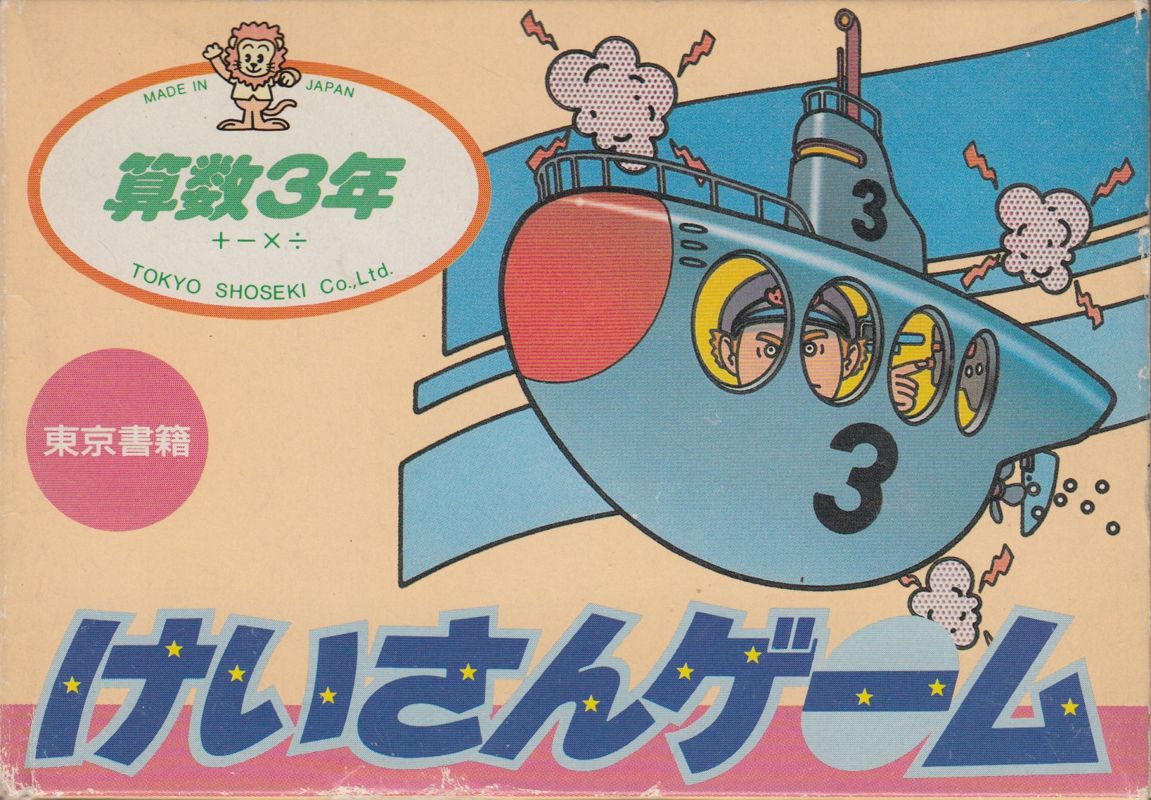
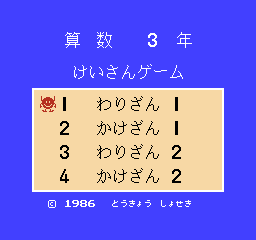
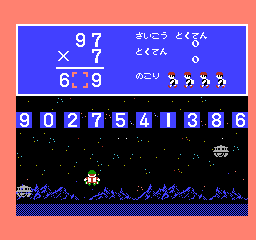
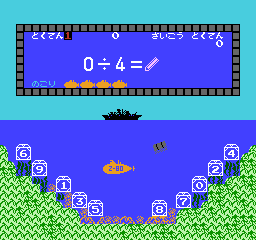
The first few minutes make the pitch clear: read the problem, find the answer, and move before an obstacle catches you. That extra layer of movement is not deep action design, but it gives routine arithmetic an immediate hook. In Division 1, you pilot a submarine toward the right answer while dodging demolitions dropped from a ship overhead; Multiplication 1 swaps the sea for space, with a jetpack-equipped man navigating around passing flying saucers. You are doing schoolwork, but you are doing it with enough urgency that the answer has to come quickly.
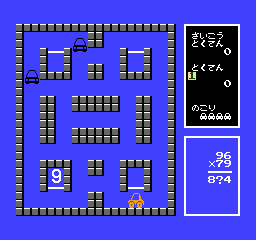
The stronger ideas are the two games that turn a full problem into a small route. Division 2 has you run through a multi-floored building, selecting the number that completes each part of a division problem before moving upstairs. A monster on every floor keeps you from treating it like a leisurely quiz. Multiplication 2 puts a car in an overhead maze, where you reveal numbers by driving into boxes and must identify the one that solves the current problem while avoiding roaming cars. These modes make the process of solving feel a little more active than simply aiming at a displayed answer.
That said, the action can also be the source of the frustration. A player who knows the answer can still be tripped up by an oncoming saucer, a demolition drop, a monster, or another car. For a child practicing basic multiplication and division, that tension may make repetition less tedious; for someone who wants calm, methodical practice, it may feel like the game is getting in the way of the lesson. Two difficulty levels and alternating two-player support help, especially if you want to turn drills into a family challenge rather than a solitary exercise.
Graphics
The imagery is built around clear, compact situations: a submarine beneath a ship, a jetpack pilot in space, a man climbing through a building, and a car viewed from above in a maze. The side-view activities and overhead maze give each lesson a distinct look, while the answer numbers remain the focal point because they are where you need to drive or fly.

Story
Each activity uses a simple scenario rather than a continuing tale. You are not asked to follow a larger adventure; the submarine, space flight, building climb, and maze drive are quick setups for the next calculation.
That lightweight approach fits the game’s purpose. The threat in each scene gives the problem a reason to matter right now: reach the correct number before you collide with something, then move on to another question.
If you want characters or a plot to carry you from one stage to the next, this will not be the draw. The small scenarios work more like playground dressing for arithmetic, and their value comes from making repeated sums feel less static.
Overall Experience
Sansū 3-nen: Keisan Game is more successful as a lively arithmetic drill than as an action game, and that is perfectly fine. Its best quality is that it does not settle on one gimmick: four different setups stop multiplication and division practice from becoming immediately monotonous. The games are simple enough to understand at a glance, which matters when the real challenge is supposed to be the calculation.
You should give it a chance if basic multiplication and division practice needs a little competition, motion, and pressure. The alternating two-player option is especially welcome, since taking turns can turn a lesson into a low-stakes contest. It is less persuasive if you dislike being timed or obstructed while thinking through an answer.
The payoff is modest but real. Once you accept that every mode is a short math drill wearing arcade clothes, the variety of submarine dodging, jetpack flying, building climbing, and maze driving gives the package more staying power than a single quiz screen. It will not replace more thorough teaching, but it can make repetition easier to return to.


Reviews
There are no reviews yet.