 Retro Replay Retro Gaming History, Reviews & Emulation
Retro Replay Review
Gameplay
The first hour of Civilization V has a wonderful, dangerous pull. You place your first city, send a warrior into the fog, and begin making decisions that seem modest until they start shaping the next hundred turns. Is that hill worth settling near? Do you rush a worker, train another scout, or start building military protection before a neighbor gets ideas? A nearby source of iron or a luxury resource can change your priorities immediately, and that constant adjustment is where the game stays lively.
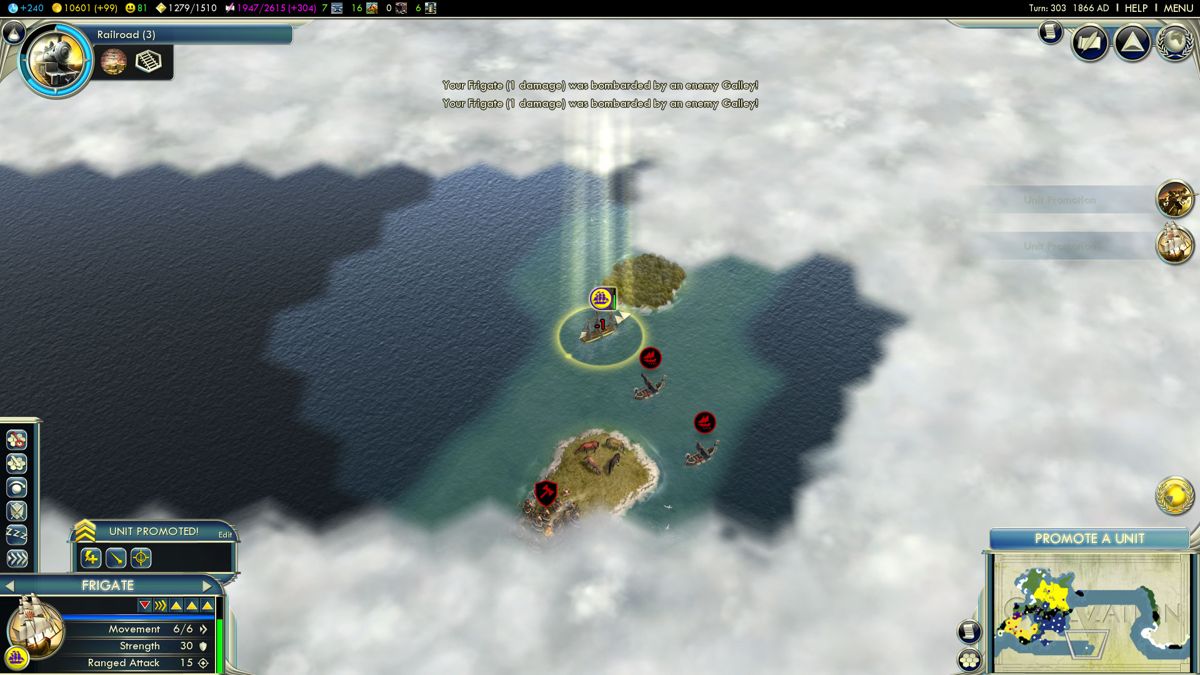
The switch to hexes matters. Terrain is easier to think about as a connected landscape of hills, forests, plains, coasts, and chokepoints, while one-unit-per-tile combat stops armies from becoming an unreadable pile. War asks you to arrange melee troops, protect ranged attackers, use elevation and flanking, and respect zones of control. Taking a city is not a casual errand either: it can bombard attackers, and a sloppy siege can leave valuable units stranded or dead. When a plan works, the payoff is much stronger than in a strategy game where raw numbers alone settle every fight.
Outside war, the real challenge is deciding what your empire is trying to become. Cities need productive tiles and useful buildings; workers need time to put down farms, mines, and roads; science pushes you along the technology tree; culture buys social policies; and happiness can curb an empire that has expanded too greedily. None of these systems exists in isolation. Chasing territory may demand more happiness. A military campaign may hinge on the strategic resources needed for stronger units. That friction makes each turn purposeful, though it can also be frustrating when a promising plan is delayed by a shortage you did not prepare for.
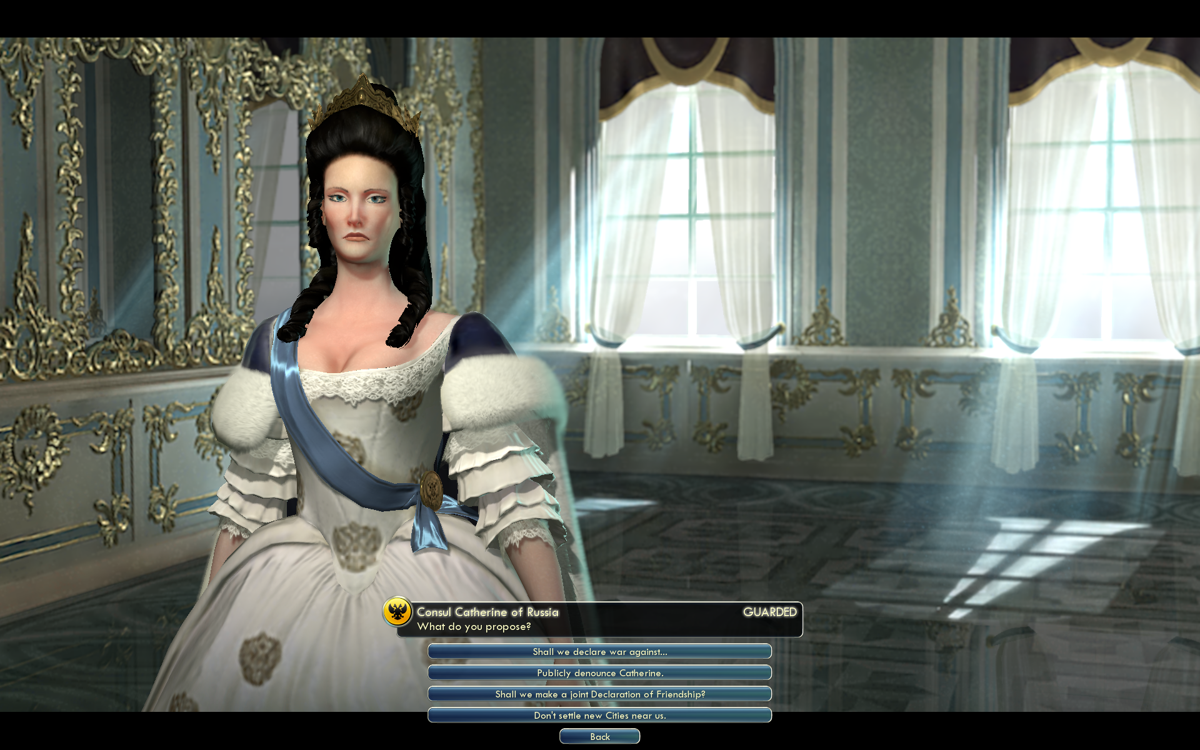
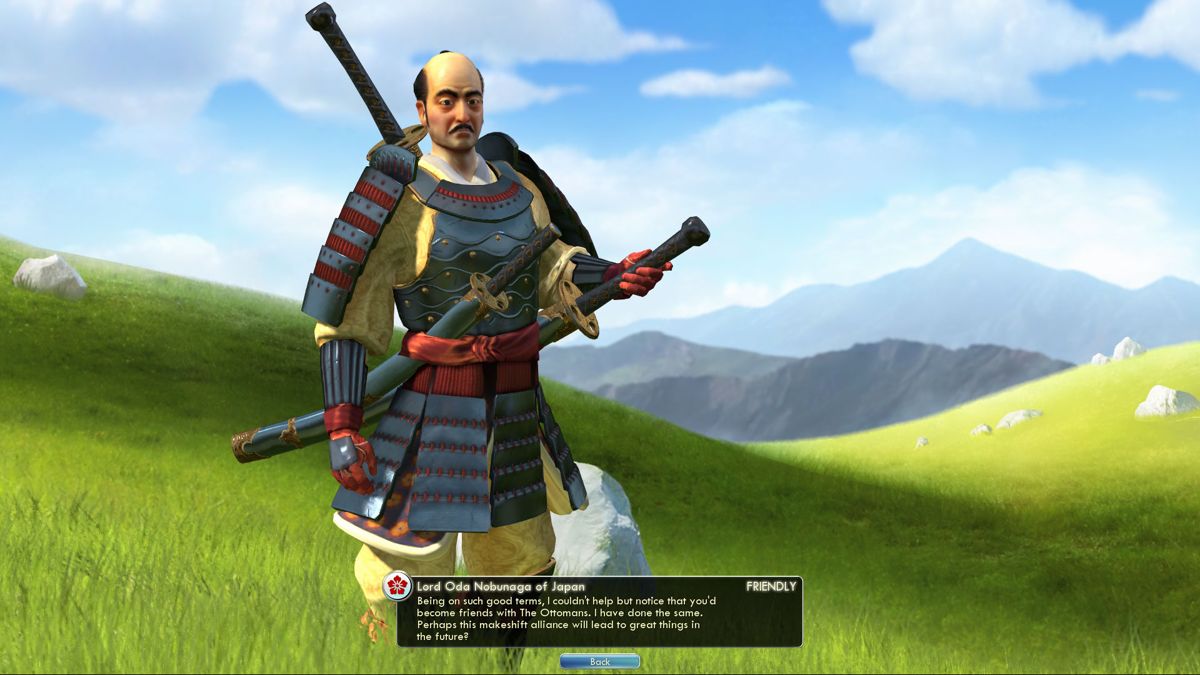
Diplomacy gives the map another layer of pressure. Rival civilizations can become trade partners, research collaborators, defensive allies, or the source of a long-running grievance. City-states are especially useful pieces on the board: completing quests, offering gifts, or promising protection can win influence and bring luxuries, units, or culture into your orbit. You can pursue domination, science, culture, or diplomacy, and the best sessions come from recognizing which route fits the land, your rivals, and the momentum you have built rather than forcing the same opening every match.

Graphics
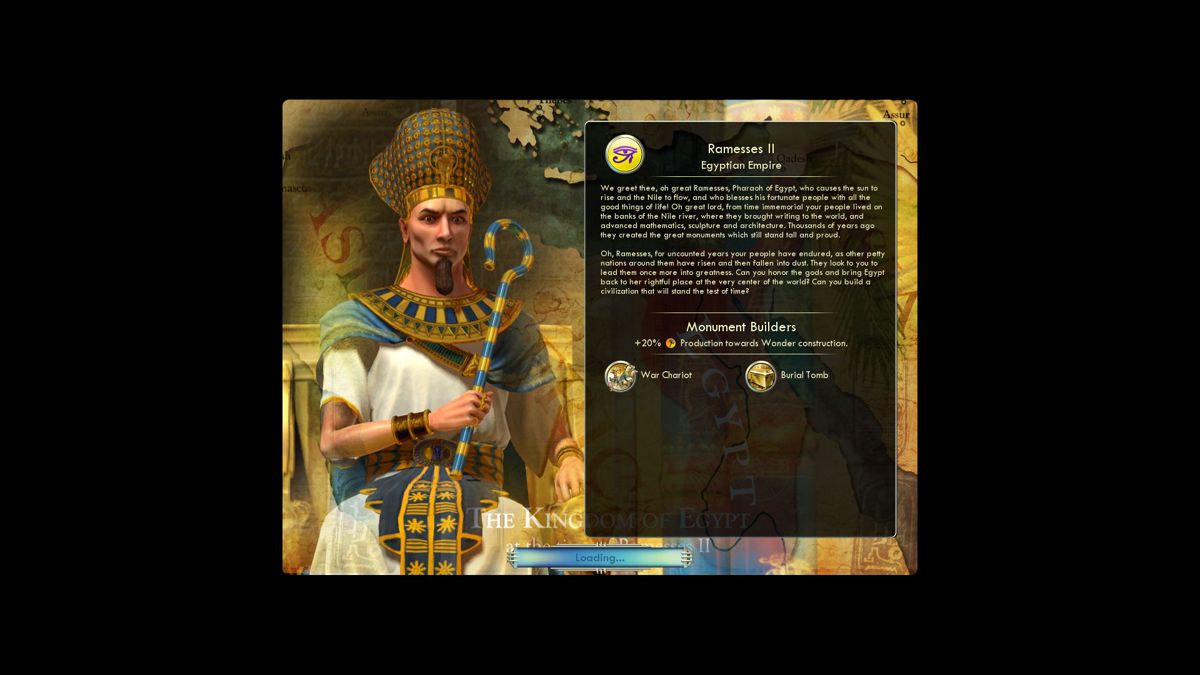
The game is viewed from an angled, freely movable perspective over a colorful hex map. Plains, hills, forests, coastlines, cities, and improvements are laid out clearly enough that you can scan the terrain and understand why a particular location matters. On battle turns, the spacing between units makes troop positions and firing lines much easier to follow than a crowded stack of icons.
Story
Civilization V does not tell one fixed campaign story. Its story is the history you assemble from the first settlement onward: a small nation finding room to grow, encountering rival leaders, bargaining for resources, and deciding when coexistence is no longer possible.
That open structure gives victories their own flavor. A scientific push toward a space project feels different from building cultural strength through social policies, winning global support through diplomacy, or capturing every original capital. The game is strongest when a practical choice slowly becomes part of an empire’s character—perhaps a cautious settlement plan turns into a wealthy trading network, or an early border dispute hardens into a war that defines the rest of the match.
Rival civilizations and city-states keep that history from feeling like solitaire. Treaties, open borders, defensive pacts, resource trades, and the resentment caused by territorial disputes give your decisions consequences beyond your own borders. You are not following authored plot beats; you are dealing with the accumulating results of ambition, compromise, and occasional bad judgment.
Overall Experience
Civilization V earns its reputation because it turns a huge historical strategy premise into a chain of understandable, often agonizing choices. You can play peacefully for dozens of turns and still feel tension in every border, resource deposit, and diplomatic exchange. Then a war or a sudden shift in priorities forces you to reconsider the carefully laid plan that seemed so secure.
It is not a breezy game. The deeper you get, the more systems ask for attention, and poor planning can leave you wrestling with unhappy cities, a thin military, or a technological gap. Yet the game usually makes those setbacks legible: you can look back at your expansion, production choices, research path, and relationships and understand how the trouble started. That makes losing instructive rather than merely punishing.
Give it a chance if you enjoy strategy games where planning a few turns ahead is satisfying but adapting over an entire civilization is the real test. Multiplayer’s simultaneous turns, custom maps and scenarios, and mod support add room to experiment, but the core single-player loop is already potent: explore a little farther, make one more decision, and discover that bedtime can wait for just one more turn.



Reviews
There are no reviews yet.