 Retro Replay Retro Gaming History, Reviews & Emulation

Retro Replay Review
Gameplay
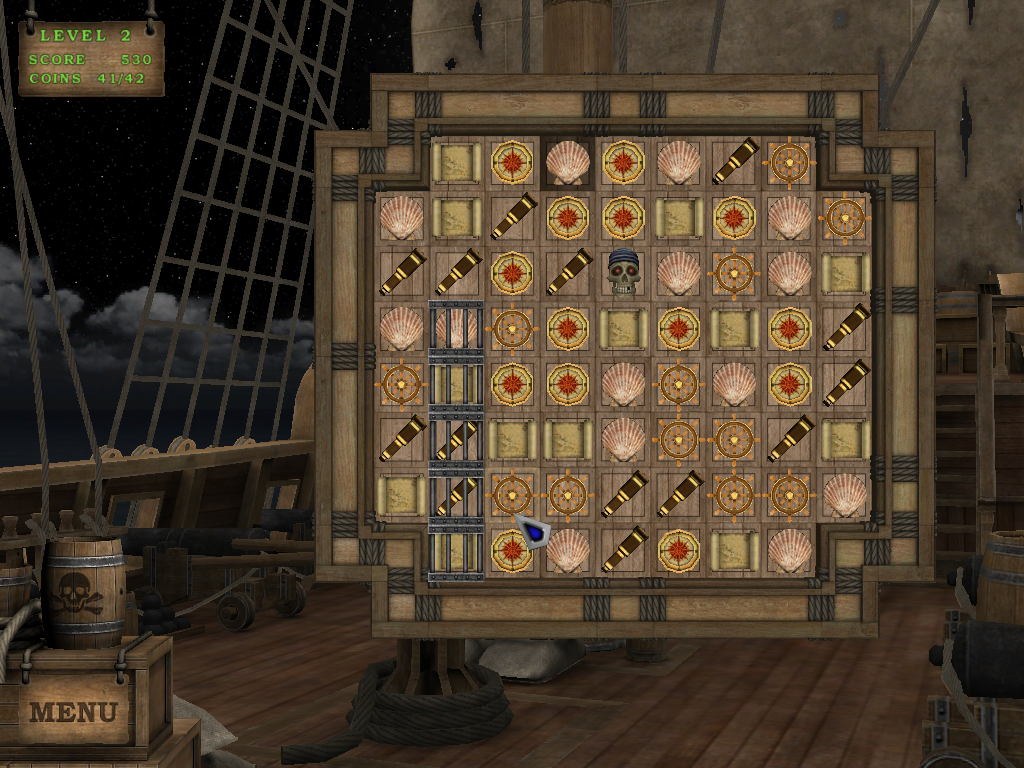
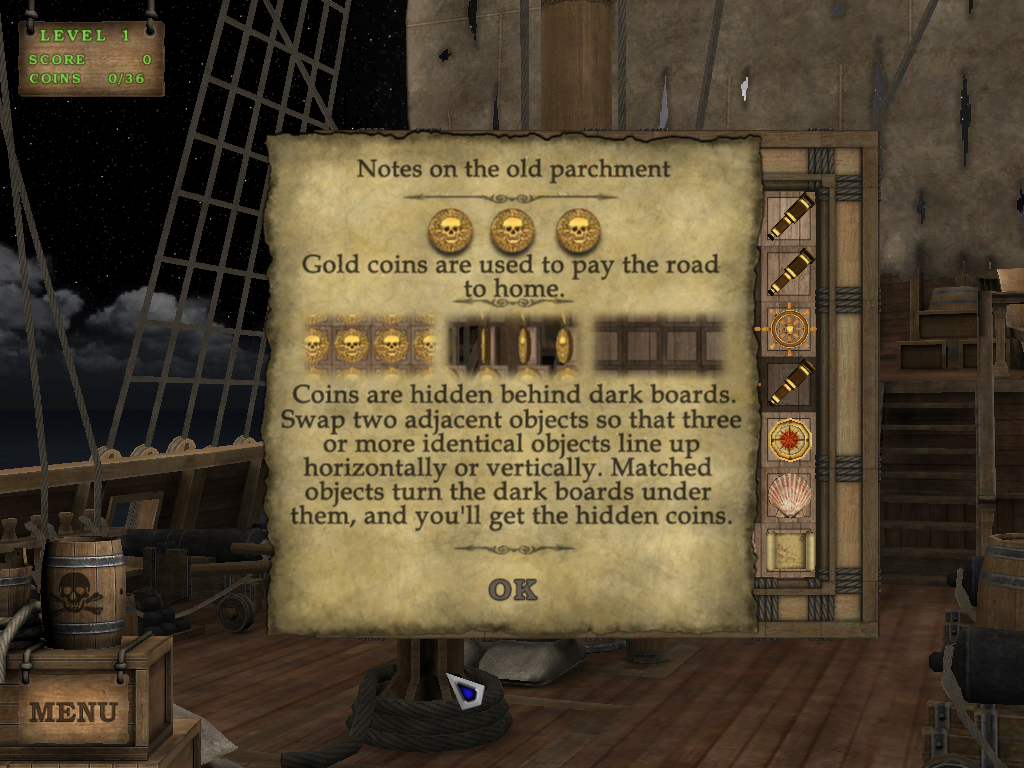
The first few boards are immediately legible: swap two neighboring items, form lines of three or more, and break matches on top of dark crates to uncover the gold underneath. That crate-clearing goal is more involving than simply running up a score. You are constantly looking at the board and deciding whether a convenient match actually helps open the route to the last buried gold.
Ghost pirates give the routine a welcome bite. Leave a matching line beside one and it can curse tiles, gradually making the board more restrictive. Match three ghost pirates in a straight line, on the other hand, and you clear them and earn extra bonuses. That creates a nice little tension between chasing the gold you need right now and cleaning up a threat before it turns the board ugly.
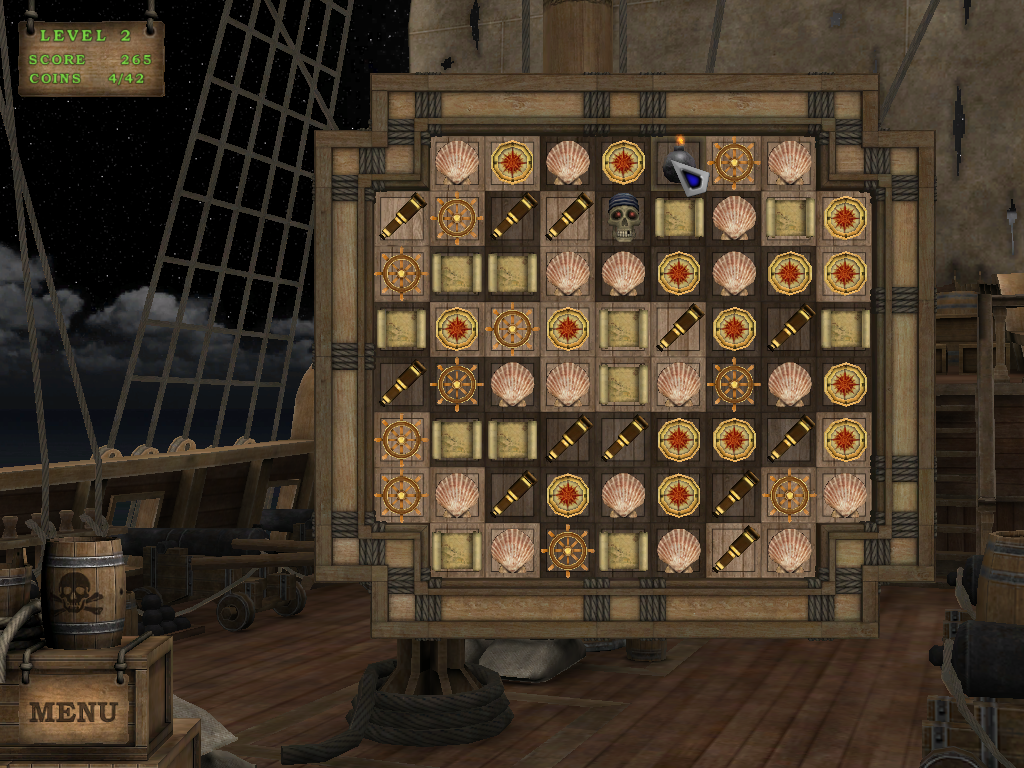
The power-ups are straightforward but practical. Bombs wipe a three-by-three area, lightning clears an entire straight line, holy water removes curses in a broad circle, and holy fire destroys nearby ghost pirates. Since you can trigger these by double-clicking or moving them, they feel like tools you can save for a useful moment rather than random fireworks. A bomb near clustered crates or holy water after several curses land can rescue a board that looked headed for a slow, annoying finish.
Choose Relaxed mode if you want the puzzle-solving side without a clock hanging over every swap. Quest mode adds a fuse on a barrel, and the time limit changes the mood fast: promising setups can become a liability when the finish line is still buried under crates. The timed option is the better fit if you like quick decisions; Relaxed is the safer choice if you would rather plan out each clearing move.
Graphics
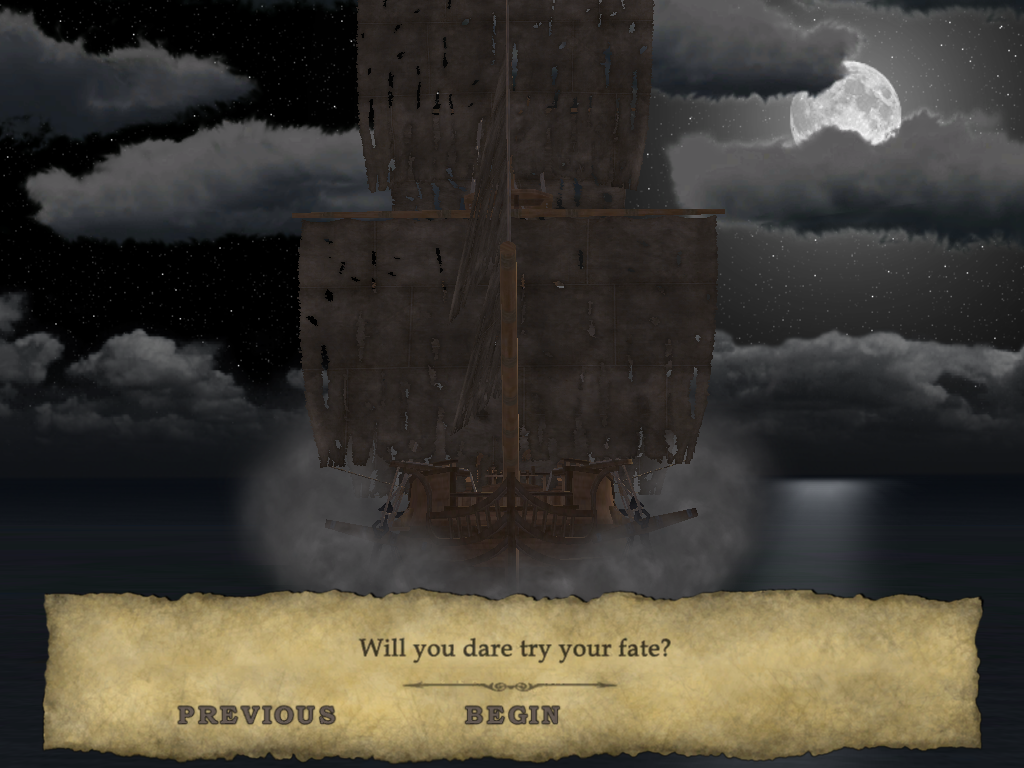
The game uses a pirate-and-ghost theme built around item-filled puzzle boards, dark crates, gold, and ghost pirates. The most useful visual distinction is functional: crates mark where the gold is locked away, while the ghost pirates stand out as threats that can curse tiles or be matched away.
Story
You begin shipwrecked and looking for passage back to your home port. The catch, naturally, is that the ship offering that ride is the Flying Dutchman.
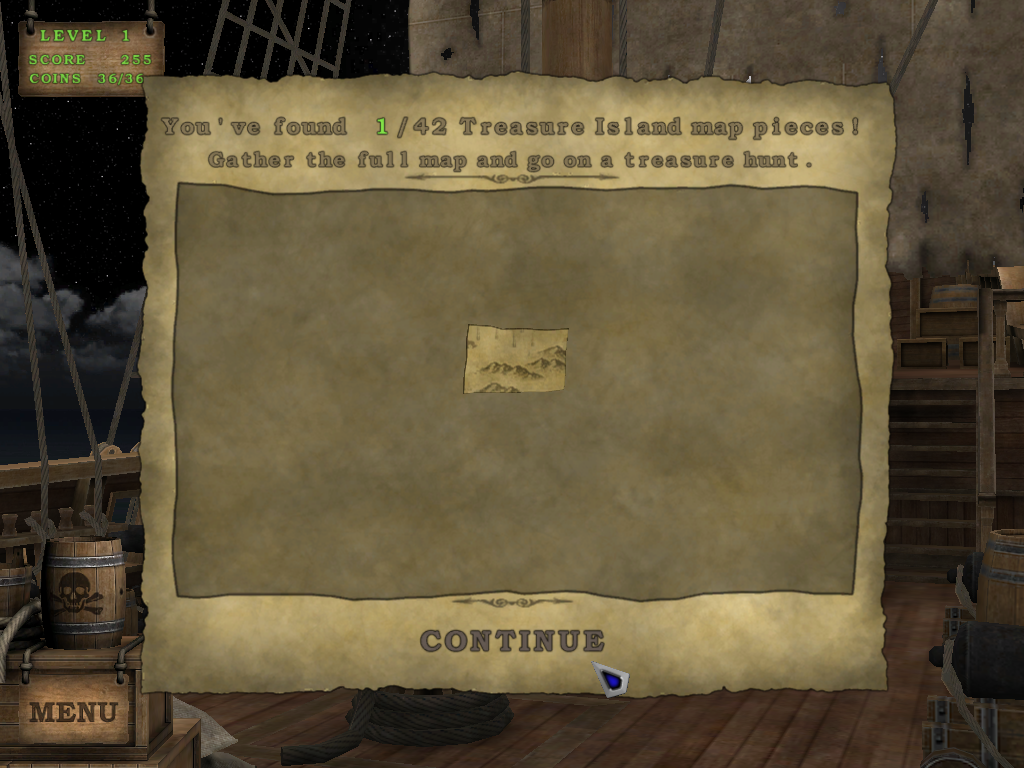
That setup gives the puzzle rounds a light pirate-adventure frame: collect gold, solve boards, and assemble pieces of a treasure map while avoiding spectral pirates. It is a simple excuse to keep moving from one board to the next, not a narrative that asks you to invest in characters or twists.
The nautical language and threat of Davy Jones’ locker suit the game’s playful stakes, especially in Quest mode where the fuse gives failure a themed punchline. Come for the board-clearing, not an elaborate ghost story.
Overall Experience
The Flying Dutchman in the Ghost Prison earns its keep when the board becomes a messy little cleanup job: gold still trapped under crates, ghosts creeping into bad positions, and a well-placed bonus ready to turn the whole situation around. Its ideas are familiar, but the combination of obstacle clearing, curses, and targeted tools gives individual boards more direction than a bare match-three loop.
Frustration is most likely to arrive in Quest mode, where the fuse makes inefficient swaps hurt and cursed tiles can steal your breathing room. That is also where the game has the most urgency. If that sounds more draining than exciting, do not force it; Relaxed mode preserves the core puzzle without the deadline.
This is an easy recommendation for match-three fans who like concrete board objectives and a bit of defensive play mixed into their swapping. The pirate theme is a pleasant wrapper rather than the main draw, but clearing the final gold from a stubborn board is satisfying enough to make the voyage worthwhile.


Reviews
There are no reviews yet.