 Retro Replay Retro Gaming History, Reviews & Emulation


Retro Replay Review
Gameplay
The Great Pharaoh gets to its point quickly: swap neighboring items with the mouse, line up three or more, and turn those matches into gold. Quest mode gives that familiar match-three routine a useful direction by setting a gold requirement for each level. You are not just clearing the board because it is there; you are trying to hit the number before the clock runs out and continue rebuilding the City of the Dead.
The mummies are the rule that gives the game some bite. Let three matching tiles sit beside one and it curses the board, stealing gold and either draining the color from tiles or freezing them in place. Both penalties make the next few moves more awkward, especially when time is already slipping away. On the other hand, lining up three or more mummies removes them and takes their gold, so the board can force a satisfying change in priorities: sometimes the smartest move is not the largest ordinary match.
That tension is also where frustration can set in. A timed gold target leaves little room to casually poke around for the ideal chain, and cursed tiles can make a board harder to read or restrict the swaps you want to make. Still, the rules are easy to grasp, and the trade between chasing high-paying symbols, meeting the goal, and dealing with mummies gives the puzzle loop more to think about than simple color matching. Finish Quest mode and Score mode strips the goal down to a six-minute attempt to gather as much gold as possible.

Graphics
The board leans into its ancient-Egypt setting with gold-bearing tiles, symbol-marked pieces, and mummies stationed among the matches. The curse effects are easy to understand from the board itself: some tiles lose their color, while frozen tiles remain visible but cannot be moved. That direct visual change matters because it tells you at a glance why a planned swap may no longer work.

Story
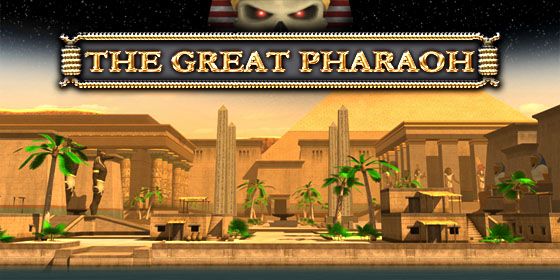
The story is a light frame rather than a reason to linger. Ancient rulers’ treasure sits in magical blocks inside the abandoned temples of the City of the Dead, guarded by the dead and their mummies. You take the role of the Great Pharaoh, the one figure able to unlock that gold.
That premise fits the puzzle goals neatly. Each required gold total is tied to restoring the temples, which at least gives Quest mode a sense of forward movement beyond a row of disconnected boards. It is simple, but it makes collecting gold feel more purposeful than chasing points for their own sake.
Do not come in expecting a deep Egyptian adventure or a heavily developed tale. The City of the Dead, magical blocks, treasure, and curses mainly exist to give the matching rules a theme. For this kind of game, that is enough: the story stays out of the way and lets the shifting board carry the momentum.
Overall Experience
The Great Pharaoh is a solid choice when you want a match-three game with a little more pressure than its basic controls suggest. The first few boards should feel immediately familiar, but mummies soon demand attention because they can cost you gold or leave behind troublesome tiles. That small complication gives the timer real weight.
Its best moments come when you spot a way to remove mummies while still advancing the gold total, rather than treating every match as interchangeable. High-paying symbols add another reason to scan the board carefully, and the curses prevent the routine from becoming entirely automatic. The design is not trying to reinvent tile matching; it is trying to make each quick decision matter.
Give it a chance if you like timed puzzle games that ask you to manage a board under mounting inconvenience. The quest structure supplies a clear payoff, while the unlocked Score mode is there for anyone who wants to turn the same rules into a more direct high-score challenge. It will suit a focused puzzle session better than a relaxed, consequence-free one.


Reviews
There are no reviews yet.