 Retro Replay Retro Gaming History, Reviews & Emulation

Game Overview
Gameplay
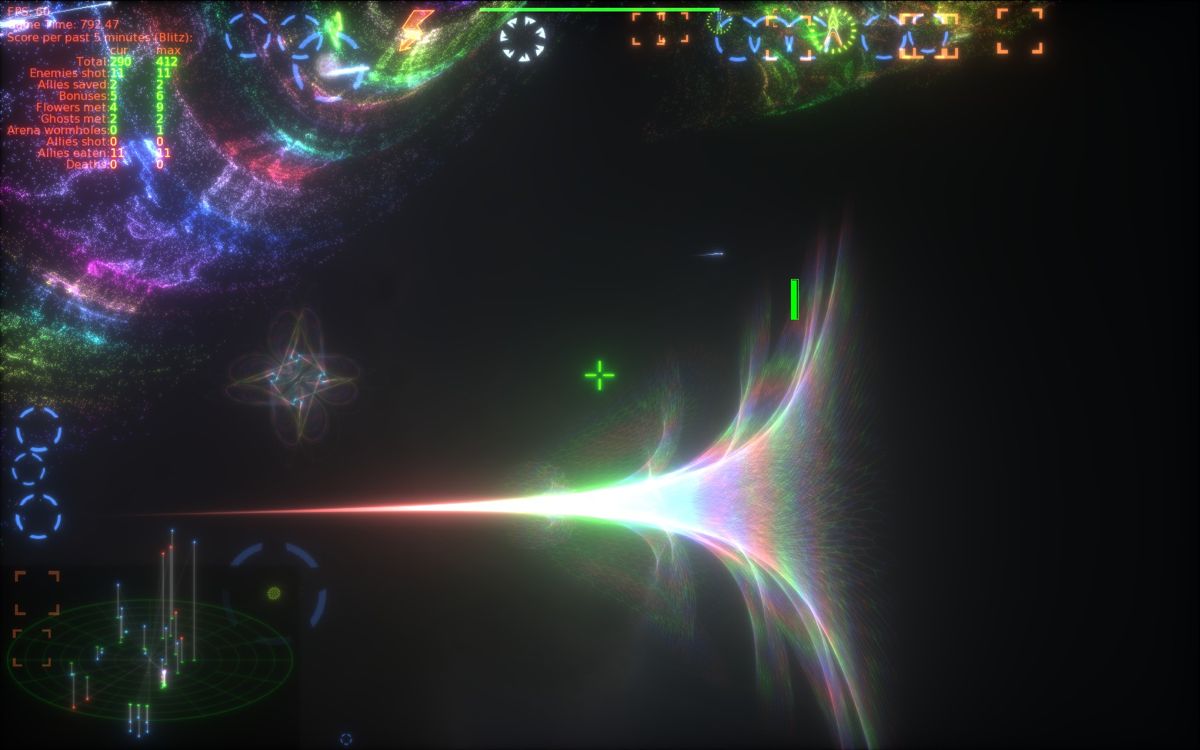
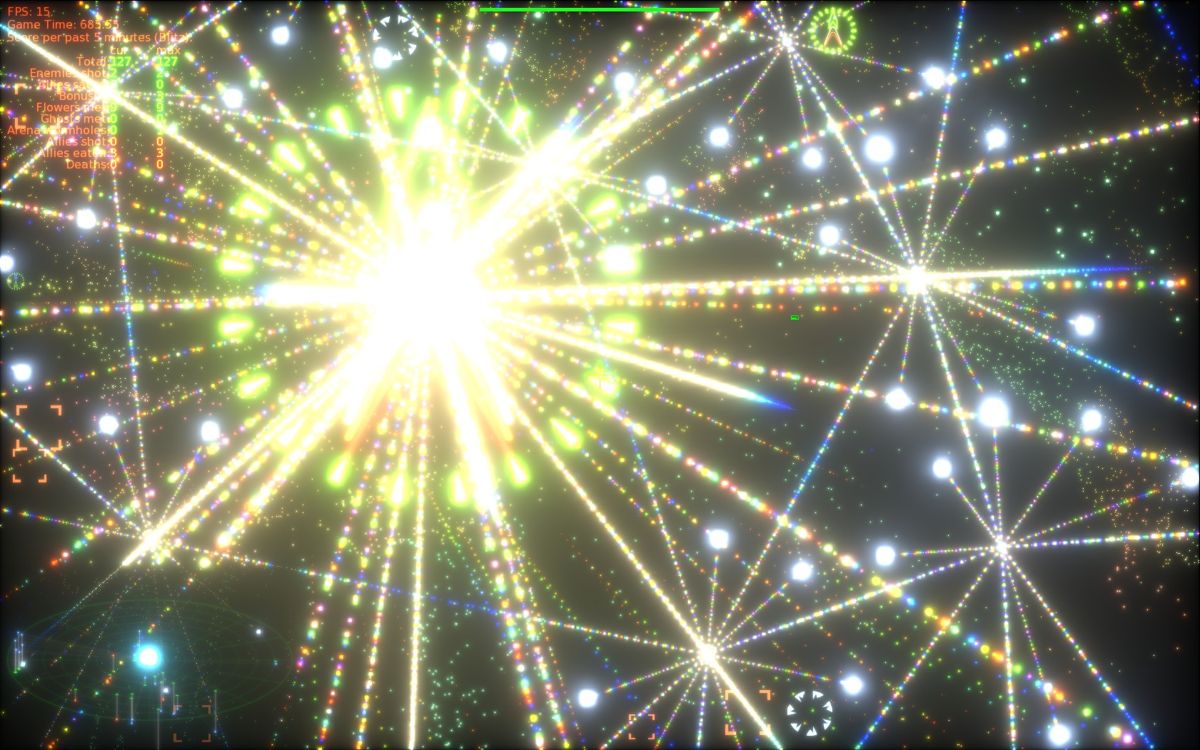
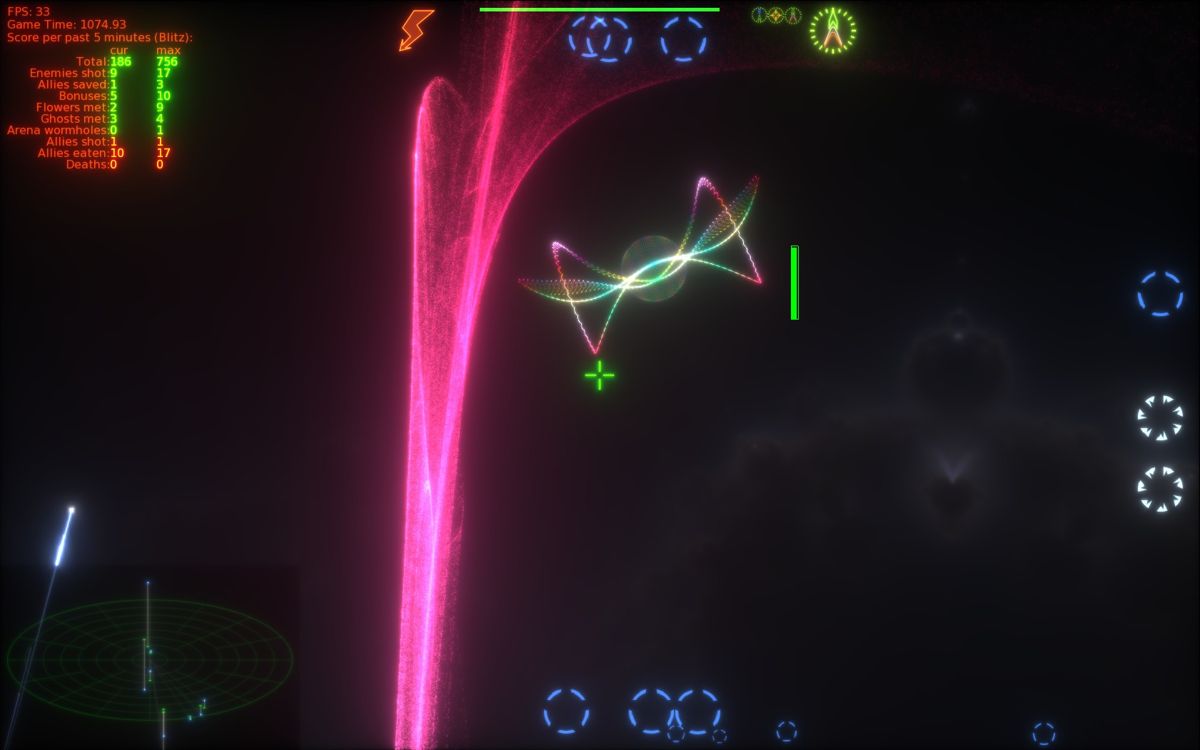
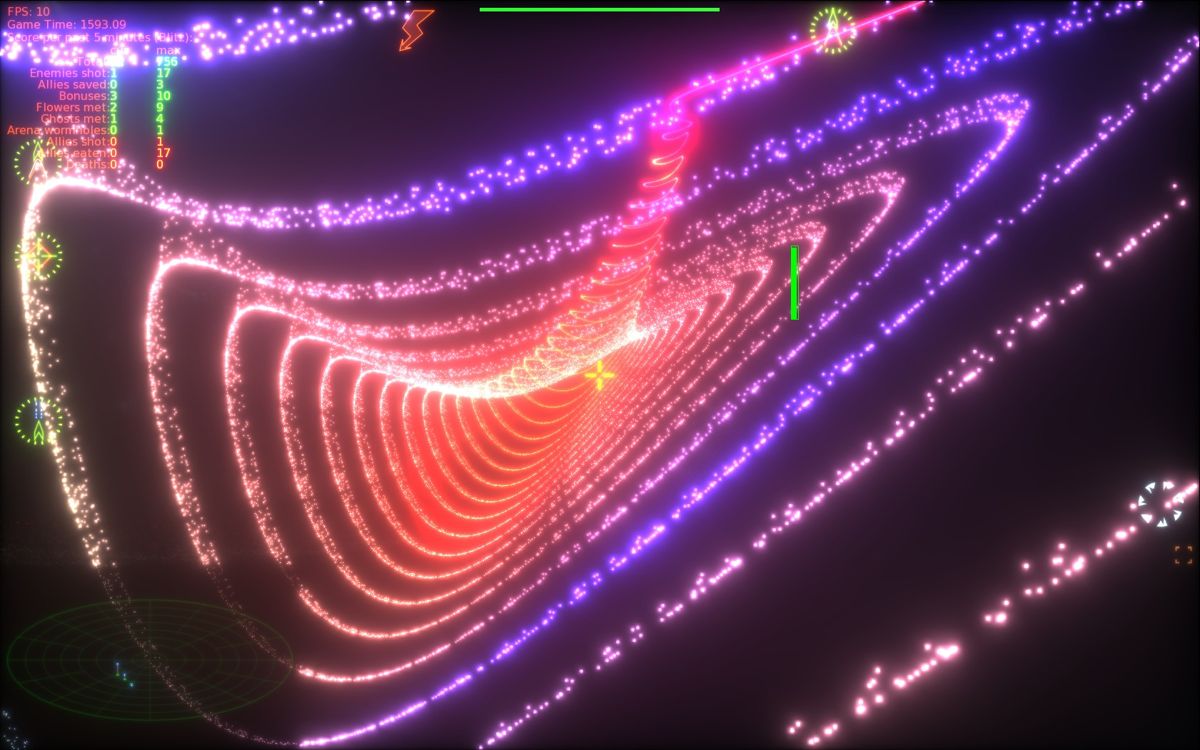
The first few minutes are likely to feel less like entering a conventional space shooter and more like being dropped into an album visualizer that suddenly wants you dead. You fly freely through 3D worlds, pick off strange swarming enemies, and steer through friendly ghosts that can restore your ship or provide a speed boost. That blend of shooting and constant movement gives every run a pleasantly restless momentum.
There is more to chase than enemy kills. Flowers, wormholes, ghosts, and power-ups all feed the score, while upgrades such as faster bullets, autoaim, and speed boosts can change the immediate rhythm of a run. The scoring also tracks your recent activity across one-, five-, 20-, and 60-minute windows, which makes sustained play matter. You are not merely surviving a wave; you are trying to maintain a productive streak of movement, collection, and destruction.
Difficulty is where the game separates a casual fly-through from a serious score attack. Higher settings offer more points, but ask you to deal with more pressure, while the no-difficulty option removes enemies entirely. That is a smart split: you can use The Polynomial as a hostile arcade game when you want a challenge, or simply cruise through its worlds when you want to explore. The lack of a traditional objective beyond scoring may wear thin if you need missions and set-piece progression, but it suits the game’s repeatable, music-led structure.
Graphics
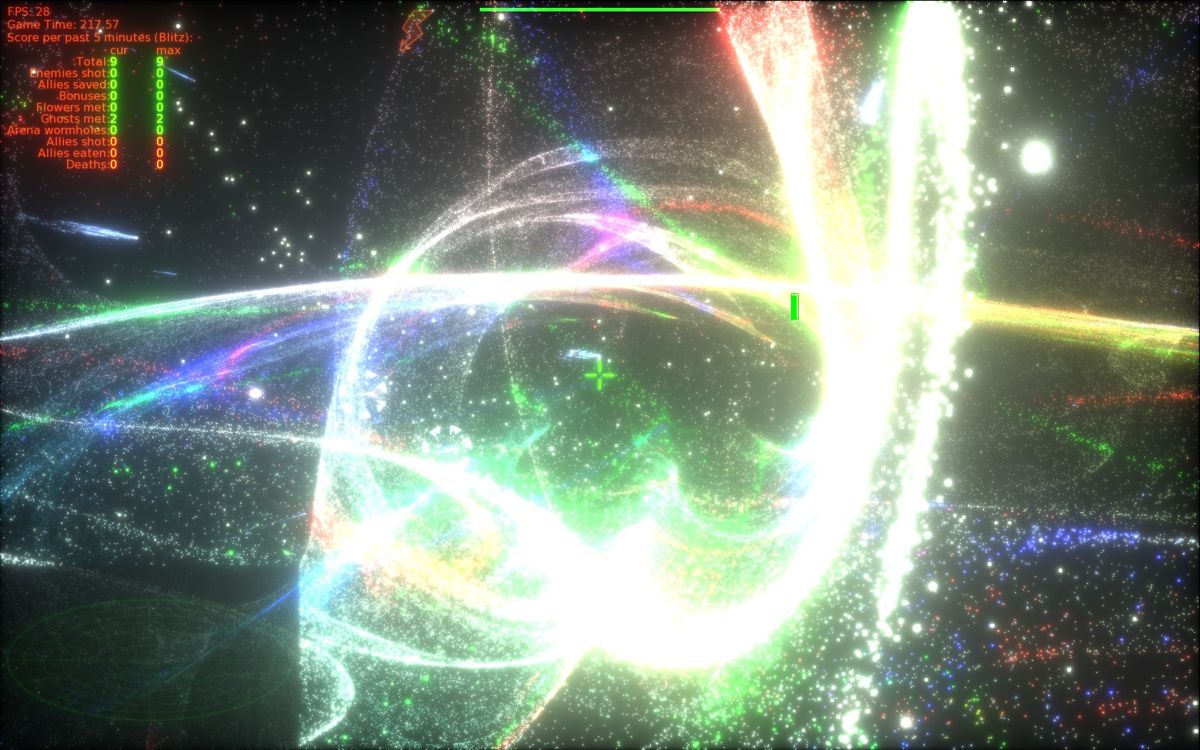
The worlds are built from mathematically generated, fractal-like imagery, with 38 levels offering different graphical effects. Rather than depicting familiar planets and starships, the game surrounds your craft with intense abstract 3D spaces and odd creatures drifting through them. Four music-driven animators make those patterns move with the soundtrack, and importing your own music gives the visuals a personal pulse.
Story
The Polynomial does not hang its interest on a character journey or a dramatic sci-fi plot. Its stated goal is bluntly arcade-minded: score as many points as you can while moving between distinct worlds. That leaves the music and imagery to provide the atmosphere instead of dialogue or narrative stakes.
For some, that sparseness will be a relief. You can start a run without memorizing lore, then let the shifting space around you supply the sense of travel. The friendly ghosts and hostile space creatures establish a clear enough relationship for play: avoid or destroy the swarms, pass through the ghosts when their benefits are useful, and keep moving.
The resulting “story” is the one you make out of a run: a stretch where you find repairs at the right moment, hit wormholes, collect bonuses, and extend a score. It is thin by design, so do not come here for a narrated adventure. Come for a game that turns forward motion and music into its own loose form of sci-fi travel.
Overall Experience
The Polynomial: Space of the Music is a peculiar, committed little shooter that earns attention because it does not separate its soundtrack from its action. Music affects the animation, and your own tracks can drive the worlds as well. When that clicks, shooting becomes only part of the pleasure; you are also flying through a reactive abstract space that changes the mood of a session from song to song.
The 38 built-in worlds give the game variety, while the in-game fractal editor offers a deeper rabbit hole for anyone who wants to make personal spaces rather than only visit them. That creative angle is more than a side attraction: it fits a game built around individual music choices and score runs. You can treat it as an arcade challenge, an audiovisual toy, or both.
Give it a chance if you enjoy unusual score-based shooters, abstract imagery, and games that let a music library shape the session. Skip it if you need a strongly authored story or a checklist of mission objectives to stay engaged. For the right mood, its mix of free-flight combat, collectible-driven scoring, and music-reactive fractals has a pull few shooters attempt.


Reviews
There are no reviews yet.