 Retro Replay Retro Gaming History, Reviews & Emulation

Retro Replay Review
Gameplay
The first hour of Total War: Shogun 2 makes its central promise immediately clear: you are not merely moving pieces across feudal Japan, but trying to turn one of nine clans into the country’s dominant power. On the campaign map, every province feels like part of a larger argument about where your attention belongs. Expand toward a useful territory, invest in trade, pursue a diplomatic opening, research an advantage, or shore up what you already own? The short and long campaigns give the march toward Tokyo a firm destination, but the route there is where the game earns its reputation.
What starts to click is the way management systems feed into military decisions. Mastering the arts can advance civilian or military aims, while experienced agents add a more personal layer to the map. Ninjas can assassinate, monks can demoralise enemies, and both improve with experience. Supporting characters add bonuses as well, so there is plenty to weigh before a war even begins. This is a lot to track alongside eight resources, diplomacy, and trade, yet that busywork has purpose because it shapes the strength and flexibility of the armies you eventually field.
Then an invasion turns the game into real-time tactics. Units have meaningful strengths and weaknesses against one another, so simply selecting everything and charging is a quick route to a bad outcome. Sieges and naval fights broaden the conflict, while auto-resolve is there when you want to keep the campaign moving. The friction comes from ambition: as your clan becomes successful, rival clans can declare war at once, and there are 37 other factions to consider beyond the main clans. That pressure can feel punishing, but it prevents expansion from becoming a lazy victory lap.

Graphics
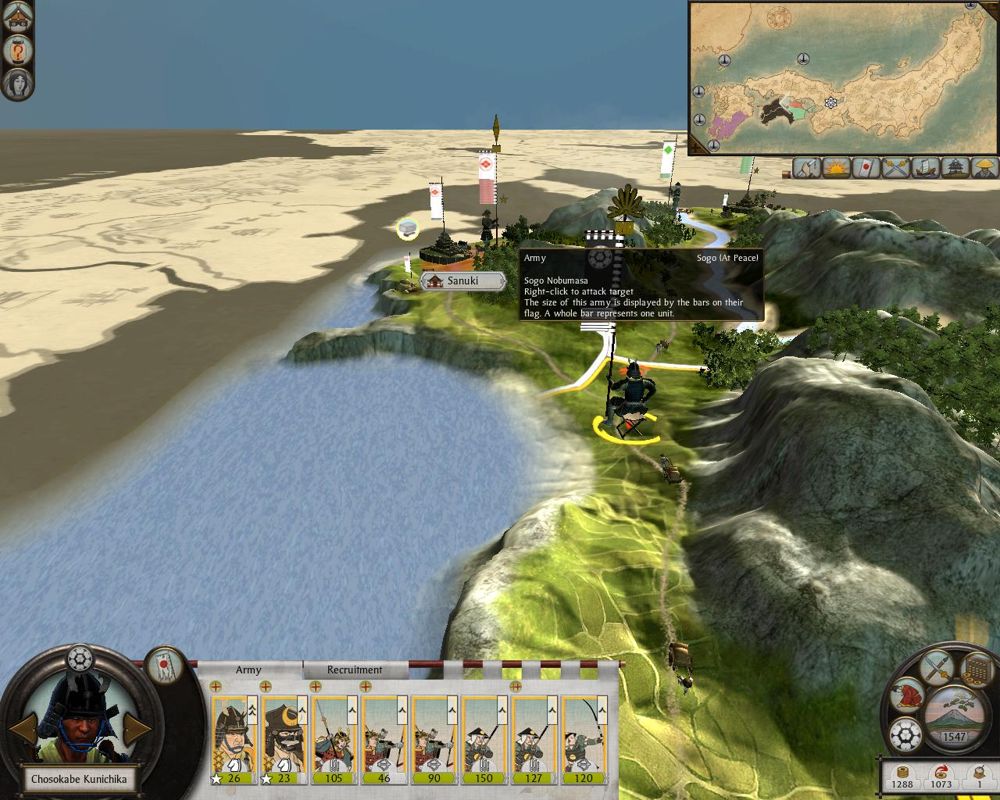
The game shifts between a diagonal-down strategic map and free-camera real-time battlefields. In combat, the camera gives you room to watch separate formations engage across land, around sieges, or at sea, which matters when you need to judge several unit matchups at once.

Story
This is a conquest story more than a tightly authored tale. You begin as a clan in feudal Japan and write the important beats through your own decisions: the province you choose to seize, the rival you try to placate, and the war you trigger by growing too threatening to ignore.
Tokyo is the campaign’s clear prize, and the requirement to conquer and hold it gives the whole map a useful sense of direction. The additional province target, which changes between short and long campaigns, lets you decide whether you want a more focused push or a broader commitment to domination.
The best narrative moments are the ones the strategy layer creates for you. A trusted agent gaining experience, a trade relationship becoming relevant to a military plan, or several enemies turning on you after a period of success gives your campaign its own rise-and-fall drama. If you want scripted character scenes, this is not that kind of story; if you enjoy making your own war chronicle, it has real momentum.
Overall Experience
Total War: Shogun 2 is strongest when it makes you live with your decisions. A turn spent improving your position can lead to a battle that demands tactical care, and a battlefield victory can create political trouble across the map. That back-and-forth is what keeps the campaign from feeling like either a pure board game or a string of disconnected skirmishes.
There is enough going on to frustrate anyone looking for a light strategy game. You need to think about province management, research, agents, resources, diplomacy, trade, rival clans, and real-time battles—often while success itself paints a target on your back. Still, the systems connect well enough that the pressure usually feels like the point rather than needless clutter.
Give it a chance if you enjoy planning several turns ahead and then being asked to execute under pressure when armies meet. Auto-resolve offers a path for campaign-minded commanders, but the payoff is greatest when you engage with both halves of the design. Winning Japan feels earned because supremacy is never just a matter of taking ground; it is a matter of holding it when the rest of the country decides you have become the problem.


Reviews
There are no reviews yet.