 Retro Replay Retro Gaming History, Reviews & Emulation



Retro Replay Review
Gameplay
The first hour leans on a dependable hidden-object rhythm: explore a location, find a list of objects amid the clutter, then use key finds to open the next problem. Because Catalina is investigating threats to both herself and her father, the usual hunt for a useful object has a little more narrative momentum than it would in a purely disconnected scavenger game. You are not mastering elaborate systems here; you are following clues through an estate and slowly prying open its locked corners.
The adventure sections are the stronger half. Items move into an inventory tray, where you drag them onto sensible hotspots or combine them into a new tool. That familiar point-and-click structure gives the searches a purpose, and it is gratifying when a strange object picked up earlier turns out to solve a blockage elsewhere. Still, the game repeatedly returns to the same scenic backgrounds for its hidden-object challenges. If you like clearing a busy screen item by item, that reuse feels efficient. If you want every revisit to reveal a fresh place, it can become a drag.
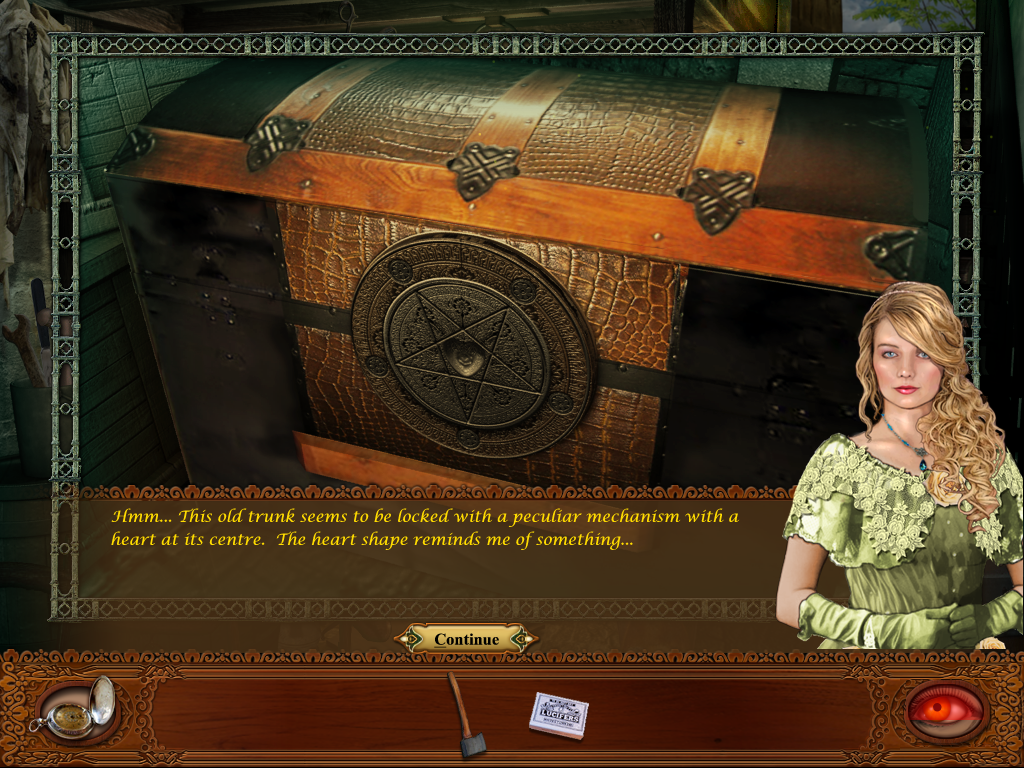
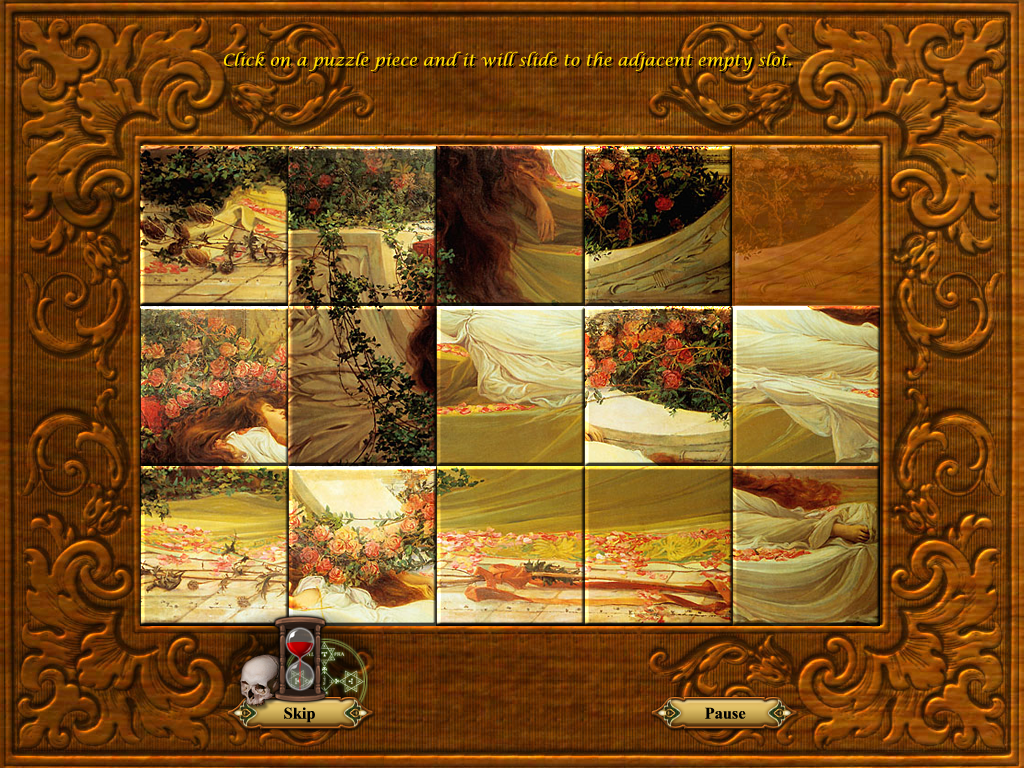
Mini-games break up the searching with sliding tiles, clockwork gear arrangements, and other puzzle-box standards, plus some less routine challenges. Their separate screens make them clean diversions rather than extensions of the world, which is both their strength and limitation. You can skip one after a few minutes, a welcome escape hatch when a puzzle has stopped being fun. The rechargeable eye hint also softens the most frustrating item hunts without letting you spam solutions through every scene.
Graphics
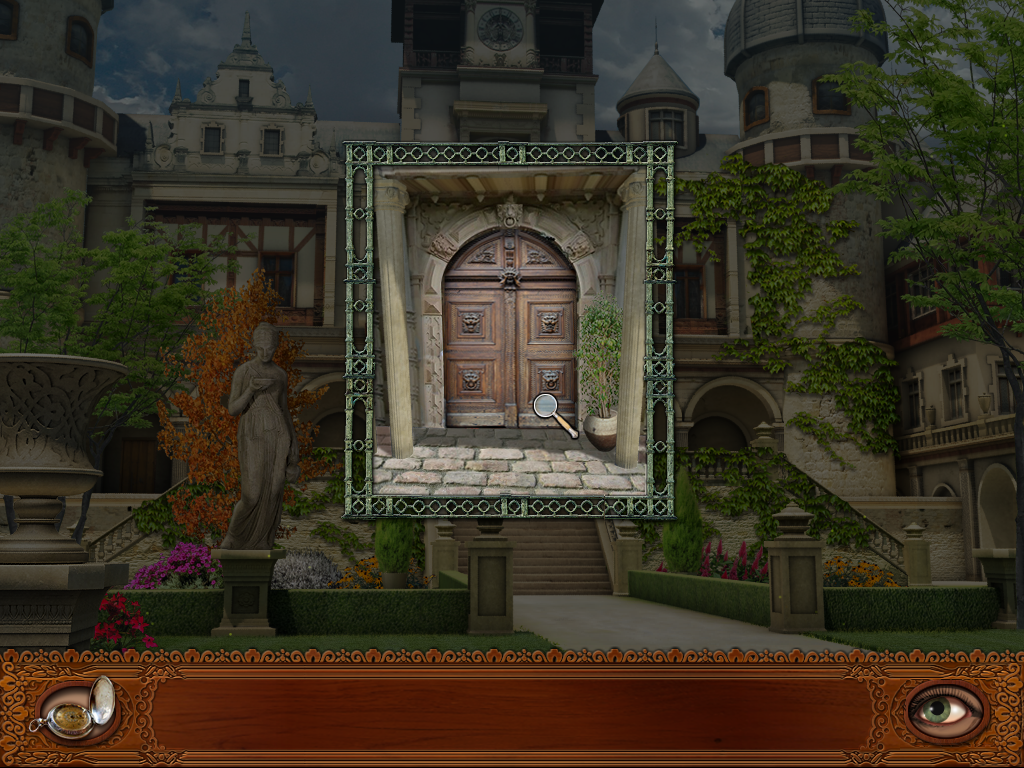
The game uses first-person views of the family estate and its surrounding locations, then reuses those same painted backdrops as crowded hidden-object boards. The lists run along the bottom of the screen, the inventory sits in a lower tray, and the eye-shaped hint button rests at the bottom right. Expect landscapes and rooms piled with miscellaneous objects for you to pick through, rather than clean, sparse scenes.
Story
This is old-fashioned Gothic melodrama, and it knows it. The 1865 wartime prologue gives Vladimir Tepes an immediately suspicious supernatural aura when he survives a bullet wound no ordinary soldier should survive. From there, the story shifts to Bogdan Moldoveanu’s losses: an early marriage, Elisabeta’s fatal unexplained illness, and the burden of raising Catalina alone.
Catalina becomes the focus as her eighteenth birthday approaches and her father’s health declines. Bogdan’s decision to arrange her marriage to the older Lord Roma is deliberately unpleasant, giving her investigation a personal urgency beyond curiosity about vampires and family secrets. The central choice—protect her own life or sacrifice herself for her father—fits the heightened romance-horror tone well.
The plot is not subtle, but subtlety is not really the point. Names such as Tepes and Roma, a sickly family line, a reluctant bride, and an ominous inheritance all point toward a story built to be savored as haunted-house fiction. If you enjoy uncovering a dark family past through letters, objects, and puzzles, the premise does enough to keep the routine gameplay moving.
Overall Experience
Vampire Brides: Love Over Death is most enjoyable when you settle into its modest pace and let the mystery carry you from one task to the next. The mix of searches, inventory use, and mini-games is very much from the established hidden-object playbook, but the Gothic stakes make the loop feel more purposeful than a pile of unrelated puzzles.
Its main weakness is familiarity. Reused scenes for hidden-object searches and recognizable mini-game formats mean experienced fans will often know exactly what kind of obstacle is coming. That does not make the game tiresome by default; it simply means the reward is comfort and atmosphere, not surprise. Use hints freely when the clutter crosses the line from observant to irritating, and skip a mini-game when it becomes a roadblock.
Give it a chance if you want a self-contained supernatural romance with a classic estate mystery and a forgiving set of genre tools. The payoff is a solid evening or two of Gothic scavenging rather than a reinvention of hidden-object adventures. Anyone hungry for inventive puzzles or constantly changing locations will likely find it too well-worn, but fans of the format should find enough drama in Catalina’s predicament to see it through.


Reviews
There are no reviews yet.