 Retro Replay Retro Gaming History, Reviews & Emulation
Retro Replay Review
Gameplay
Voltage starts from a familiar futuristic-racing fantasy—hovercraft, distant planets, high-speed circuits—but its most useful distinction is the lack of conventional weapons. The bonuses scattered around a course are for manipulation rather than destruction. Teleportation, time slowdown, and tachyon strikes invite you to think about when to disrupt the flow of a race, not merely how to knock someone off the track.
That gives the first stretch of races a promising tactical pull. A bonus is not just a pickup to fire immediately; it can be a way to alter positioning at a crucial moment. If you enjoy arcade racers that ask for a little opportunism alongside clean driving, Voltage has the right ingredients. If your favorite part of futuristic racing is aggressive weapon combat, its more restrained approach may feel like a trade-off.
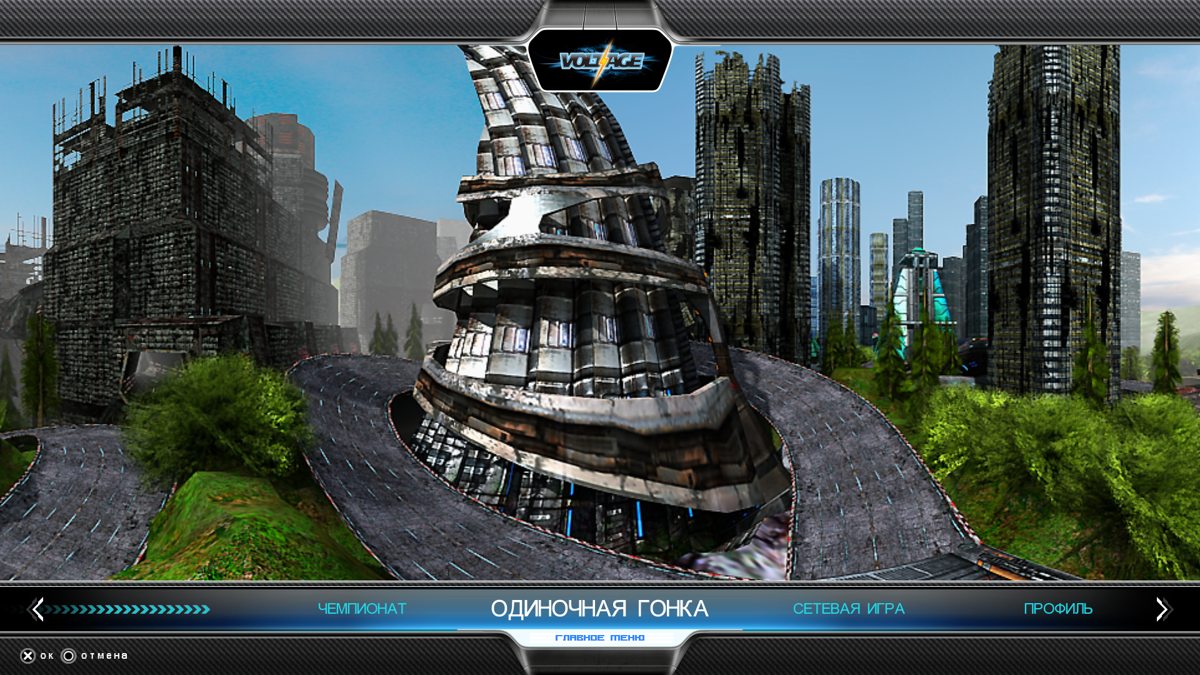
The championship is the mode with the strongest sense of direction, taking you through staged races and assigning a particular vehicle to each stage. That restriction matters because the hovercraft have different characteristics, so you are asked to work with the machine at hand rather than always defaulting to a favorite. Single race is the better fit when you want to return to championship-unlocked tracks and tune the field, while LAN multiplayer brings the same quick-race setup to a room of human competitors.
Graphics
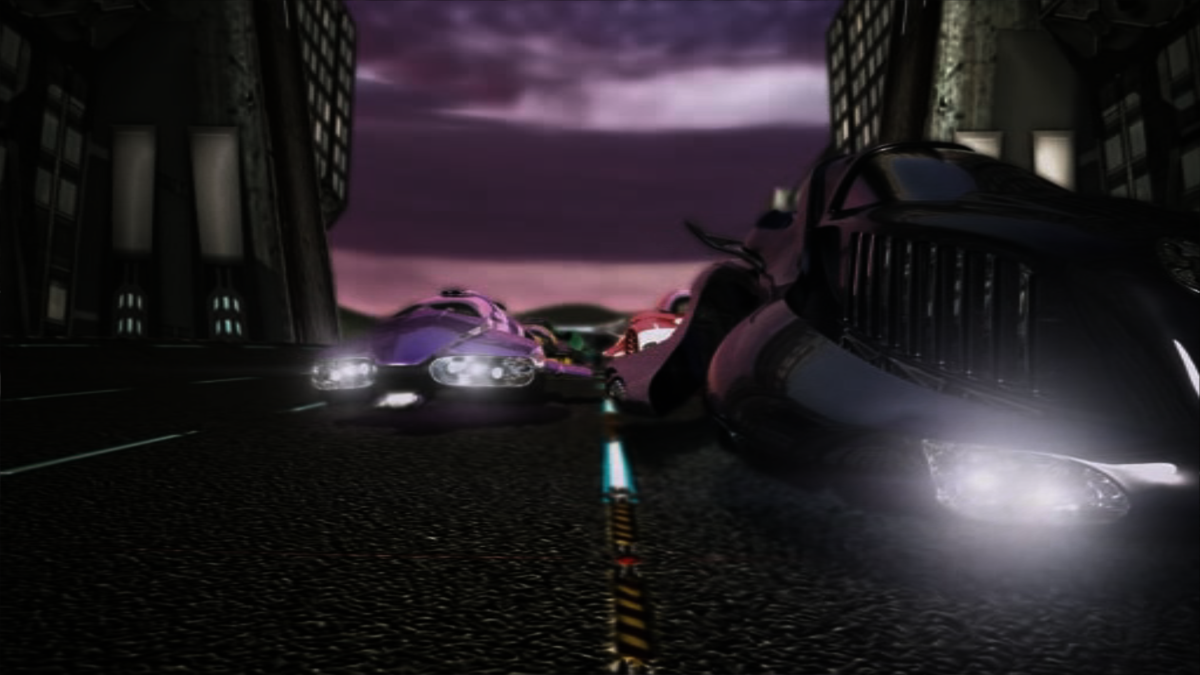
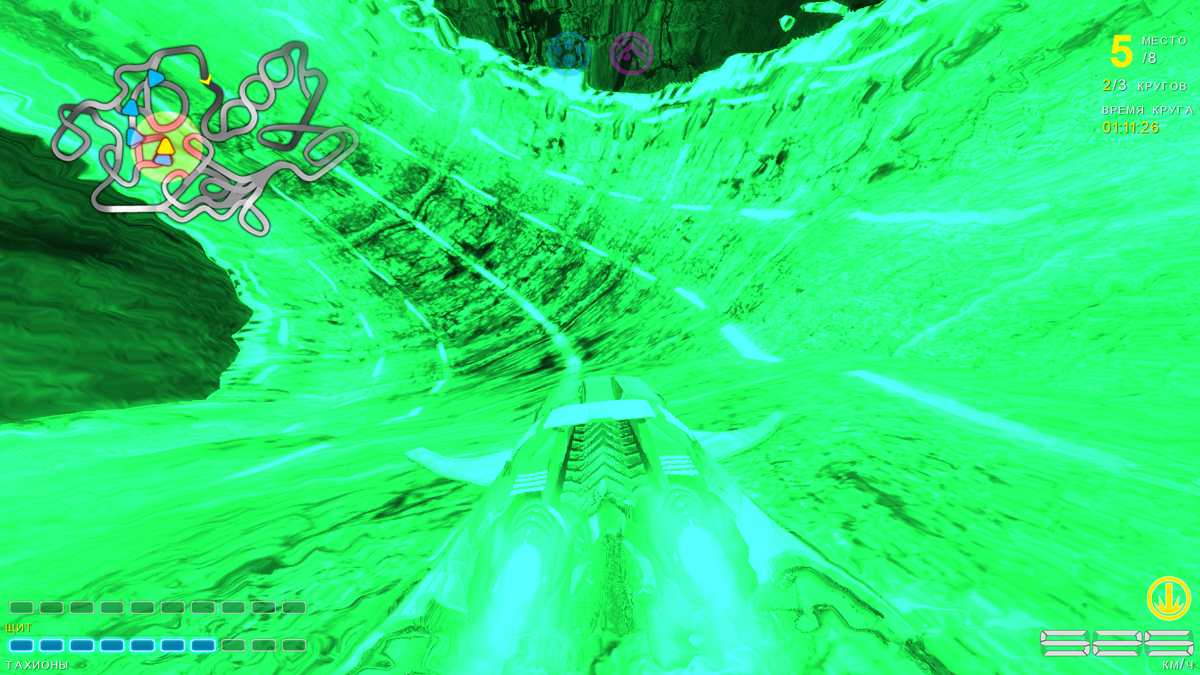
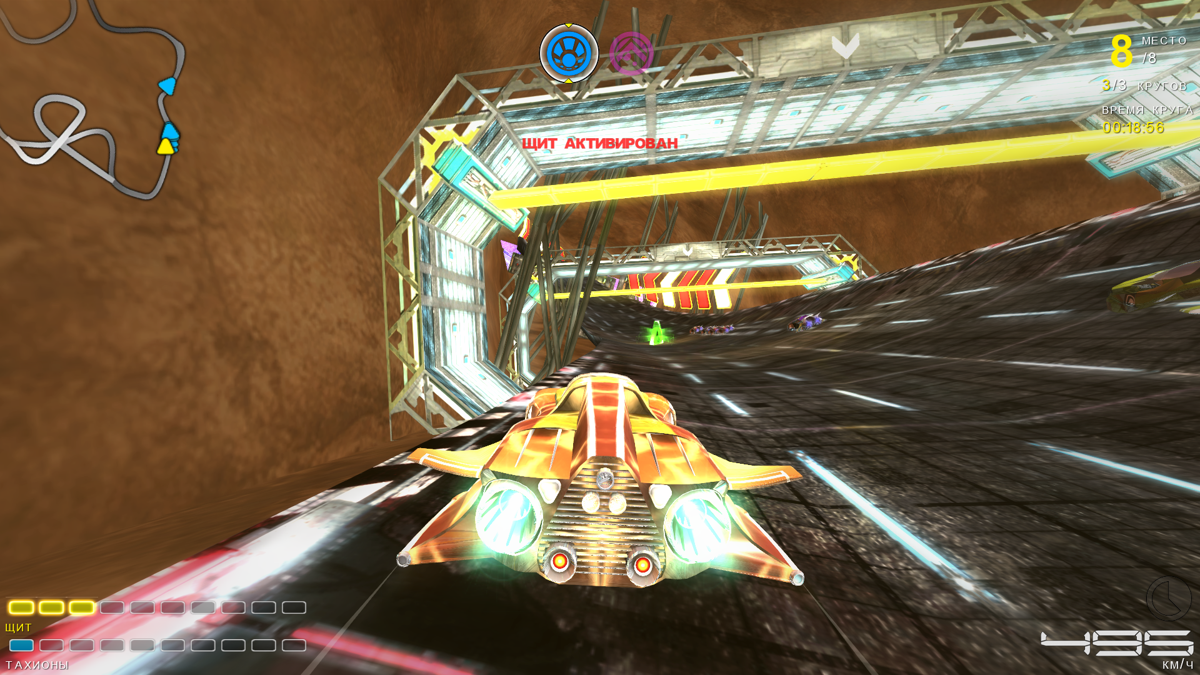
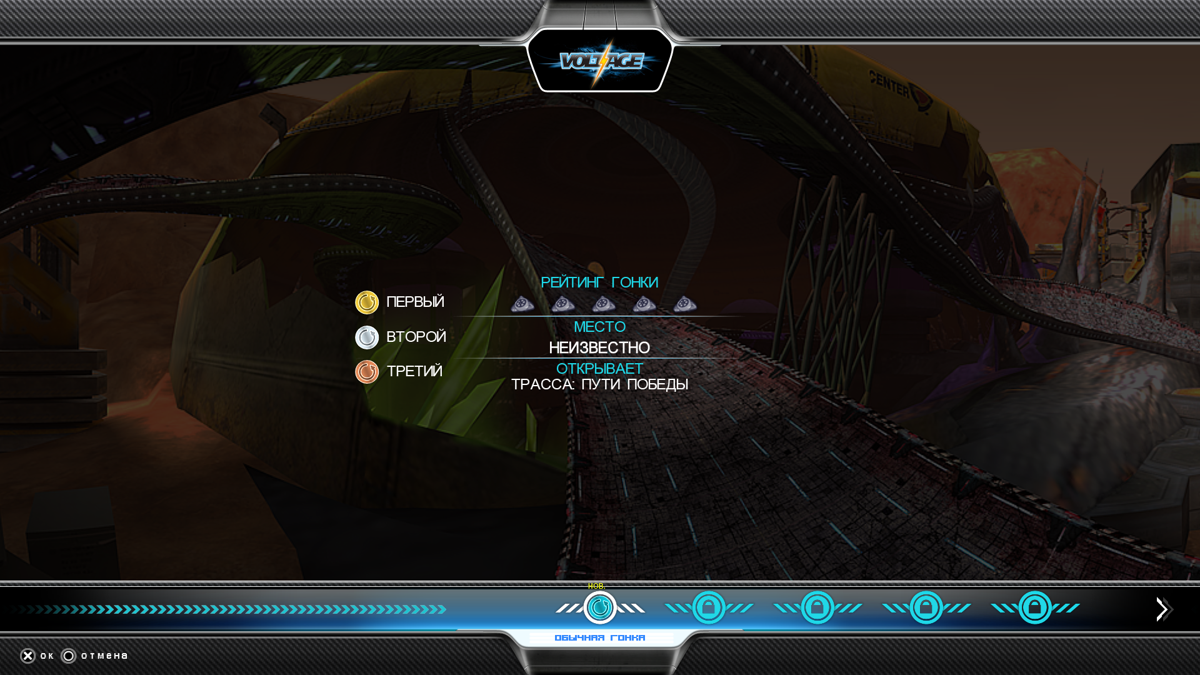
You race from a behind-the-vehicle camera in anti-gravity craft across tracks on planets in the Solar System. The imagery is squarely in the classic futuristic-racer lane: sleek hovercraft, alien-course locations, and a distant-future setting built around the view of the road ahead.
Story
Voltage frames its races as competition in a distant future, with the Solar System serving as the circuit map. It is a clean excuse to move the action between planetary locations and put you in a hovercraft, rather than a story that competes with the races for attention.
The championship supplies the closest thing to a campaign arc. Progress comes from moving through its series of stages, opening tracks for later single races, and dealing with the vehicle assigned to each event. That is a practical kind of momentum: the next race matters because it advances your access and changes the machine you must use.
The sci-fi theme works best when you treat it as flavor for the contest. You are here for the changing tracks, craft characteristics, and race-altering abilities—not for a heavily authored drama. That straightforward focus suits an arcade racer, even if it leaves the journey defined more by events than by characters.
Overall Experience
Voltage is an interesting pick for you if you want futuristic arcade racing without turning every event into a weapon brawl. Its ability pickups offer a more tactical kind of interference, and the mix of championship progression, configurable single races, and LAN competition gives that core format several ways to be played.
The strongest reason to give it a chance is the combination of varied hovercraft and non-lethal race abilities. Being locked into specific vehicles during championship stages could frustrate anyone who wants total freedom, but it also keeps the mode from becoming a simple loop of choosing one familiar craft every time.
It is not trying to reinvent the futuristic racer so much as put a distinct spin on its combat. Give Voltage a look if the Wipeout-style idea of fast anti-gravity circuits appeals to you, but you would rather win through timing, positioning, and disruptive tricks than missiles and guns. LAN multiplayer is especially worth using when you can gather opponents who will make those tactical choices matter.


Reviews
There are no reviews yet.