 Retro Replay Retro Gaming History, Reviews & Emulation
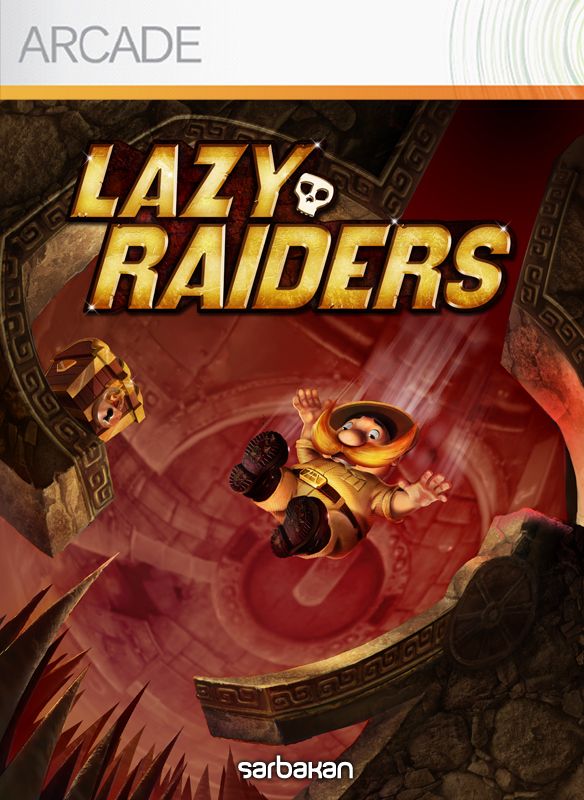
Retro Replay Review
Gameplay
The first few rooms of Lazy Raiders are instantly legible: rotate the world, let gravity take over, then rotate again before your explorer lands somewhere unfortunate. Because he refuses to move under his own power, every successful trip through a room feels like you have arranged a tiny physics puzzle rather than simply steered a character. The dedicated 180-degree turn is especially useful when you need to reverse direction without slowly working the stick around.
Its best moments come when you stop reacting and start reading the whole maze. Zooming out lets you identify the idol, exits, traps, and awkward corridors before committing to a route. Gems and cleared traps build the cash needed to reveal an idol’s location, while finding a pick opens the way out; grabbing a shining golden pick quickly adds a time bonus. That creates a welcome tension between taking a safe line and moving decisively enough to earn more.
Difficulty ramps up through temporary gates, switches, fire traps, rolling boulders, spikes, moving walls, icicles, clockwork blades, snowballs, and rolling platforms. You cannot attack directly, so danger is often solved by turning the room until something else does the work. TNT can permanently disable traps, flips can deal with fire traps, and a turned maze can leave a bat rolled into a ball. Later thieves raise the stakes further by stealing gems and forcing you to guide them into hazards.
That helplessness is clever, but it can also sting. As rooms demand tighter timing, it is easy to see the right answer and still lose control of the explorer’s path after one poorly judged rotation. The gear puzzles add another layer, asking you to drop correctly coloured gears into place, and lucky coins offer brief health or doubled rewards. If you enjoy mastering a strange movement system through repeated attempts, the growing complexity pays off; if failed precision puzzles quickly sour your mood, this may feel more punishing than playful.
Graphics
The game is built around enclosed treasure-room mazes viewed from an adjustable, rotating perspective. Zooming in and out is useful for inspecting a room before setting the explorer loose, while the turning playfield makes hazards, loose objects, bats, TNT boxes, and the explorer’s sliding route easy to track as gravity changes direction.
Story
The story is deliberately lightweight: a spectacularly lazy explorer wants sixteen lost relics hidden behind sixteen treasure rooms, but will not take a step to retrieve them himself. It is a broad comic premise, yet it neatly explains why the world—not the hero—does all the moving.
There is no need for a larger narrative to carry the game. Each room turns the relic hunt into its own compact problem, with idols acting as the immediate prize and the treasure rooms serving as the larger goal.
The fellow thieves add a little friction to the journey by snatching gems and threatening the explorer, but their value is mainly mechanical. This is a game where the premise earns a smile and then gets out of the way so the maze-solving can take over.
Overall Experience
Lazy Raiders is an inventive puzzle-platformer that gets a lot out of one odd constraint. Rotating a room to move a hero who cannot move himself remains funny, but more importantly, it produces genuine route-planning and timing challenges. The gradual introduction of traps, enemies, temporary gates, and puzzle mechanisms keeps the central idea from running dry too quickly.
You will get the most from it if you like examining a compact level, spotting a sequence, then executing it under pressure. The need to collect gems, reveal idols, locate picks, and chase time bonuses gives rooms more to think about than a straight trip from entrance to exit. Even failures can be informative once you understand which trap or enemy can be manipulated by a particular rotation.
Its rough edge is inseparable from its charm: you have no direct rescue button when momentum carries the explorer toward trouble. That makes success satisfying, but can make late mistakes feel harsh. Still, for a player who wants a platformer with puzzle-room logic and a memorable control twist, Lazy Raiders is worth a look. It is clever enough to outlast its initial joke, even when it occasionally makes you pay for one bad flip.


Reviews
There are no reviews yet.