 Retro Replay Retro Gaming History, Reviews & Emulation
Retro Replay Review
Gameplay
Madrism gets moving immediately: rooms, doors, kitchens, and toilets arrive on a blueprint, and you have to turn that growing clutter into sensible little floor plans before space disappears. A connected set of rooms clears only after it includes both a kitchen and a toilet, so simply placing pieces neatly is never enough. You are constantly asking whether a door should join the rooms in front of you or stay available for a more useful connection later.
That requirement gives the puzzle a pleasingly practical rhythm. Doors are not just filler; they decide which rooms belong to the same clearing group. When a chain finally has the required facilities and vanishes, the release of pressure is the reward. The best moments come from spotting a compact arrangement that solves several problems at once: it opens room on the board, turns stray facilities into a complete group, and keeps future placements possible.
The harsh edge is the overlap rule. Any overlapping rooms end the game, which makes a crowded blueprint feel dangerous fast. You can discard doors and other items, and that safety valve matters, but it does not erase bad planning. Frustration can set in when a layout seems workable until the next piece exposes how little room remains; still, that is also where the game’s score-chasing tension lives. If you like real-time puzzles that punish hesitation and reward clean spatial thinking, Madrism has a sharp hook.
Graphics
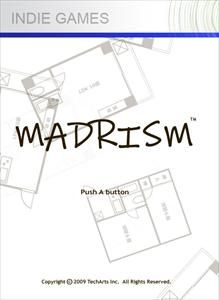
The action plays out on a top-down blueprint, with rooms, doors, kitchens, and toilets represented as the pieces of a growing architectural plan. That direct view suits the puzzle: you can see the board filling up and follow which rooms a door has connected without hunting through a busy scene.
Story
Madrism is built around its building-plan puzzle rather than a narrative campaign. The theme is simple and effective: you are assembling usable room groups under pressure, then clearing them once they have the necessary facilities.
That light framing works because the rules already create their own small dramas. A kitchen or toilet can be the piece that completes an entire cluster, while an inconvenient room can turn a tidy plan into an emergency.
Do not come to it for characters or plot turns. The satisfaction comes from reading the blueprint, repairing a messy arrangement, and watching a completed set disappear at exactly the right time.
Overall Experience
Madrism is a narrowly focused action puzzle, but it understands how to turn a modest idea into pressure. Its room-and-door theme is more than decoration because every placement has a structural consequence. You are not merely matching pieces; you are trying to make a cramped plan function before it becomes impossible.
The game is easiest to recommend to score-minded puzzle fans who enjoy fast board management and do not need much ceremony around the central loop. It asks you to learn from failed layouts, use discards with purpose, and stop treating open space as something you will always have later.
It can feel unforgiving, especially when an overlap ends a promising run, but the failures are closely tied to the decisions that created them. That makes another attempt tempting rather than pointless. Madrism is not broad, but its compact architectural puzzle has enough tension and satisfaction to be worth a look if arranging connected spaces under real-time pressure sounds like your kind of problem.


Reviews
There are no reviews yet.