 Retro Replay Retro Gaming History, Reviews & Emulation
Retro Replay Review
Gameplay
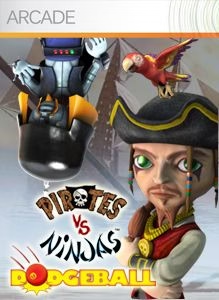
The first few minutes of Pirates vs. Ninjas Dodgeball are lively because it does not ask you to play careful schoolyard dodgeball. You are fighting in a free-moving arena, draining the other team’s health with throws, catches, deflections, melee hits, and character powers. Four goofy factions make the pitch easy to grasp, and the game is at its most entertaining when everybody is scrambling for a ball and somebody suddenly lands a decisive shot.
There is more to the throwing than simply mashing a button. Charging changes a throw’s strength, while passing can set up power shots, so a coordinated team can turn possession into real pressure. Being able to switch among members of your team is useful too, especially when the character you control is out of position. This is a much looser, more combative spin on the sport than Super Dodge Ball, and that freedom gives it a distinct party-game spark.
Unfortunately, the same disorder that makes a good match funny can make a bad one irritating. Balls and similarly sized fighters can disappear into the arena clutter from the distant camera angle, leaving you to react late. AI teammates are inconsistent, and unreliable hit detection can turn certain enemy combinations into a chore. Local matches for two to four are the safest bet because human opponents make the nonsense feel mutual; online play supports up to eight, as outlined in the original Xbox Live Arcade launch announcement.
Graphics
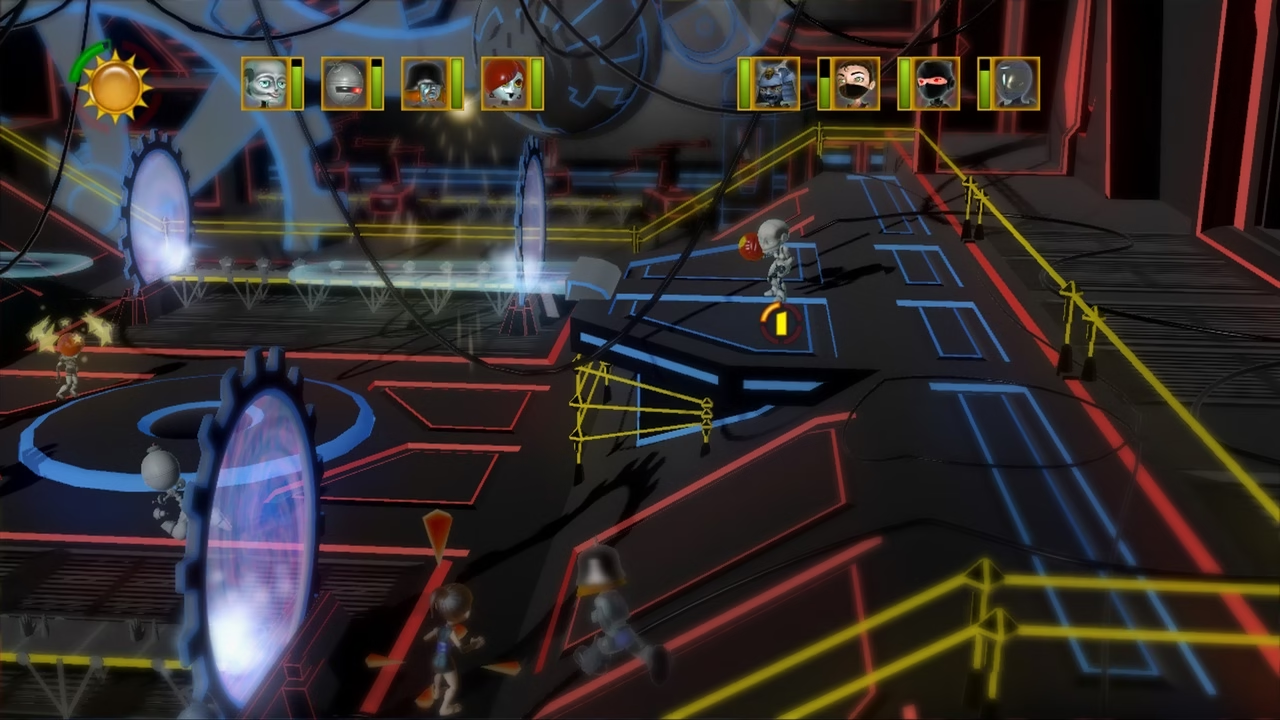
The active matches have a toy-box look: tiny big-headed pirates, masked ninjas, and silver robots run around a black industrial platform marked with red and blue floor lines. Yellow rails, ramps, hulking machinery, and glowing blue oval portals give the arena some welcome comic-book weirdness, while the three-quarter camera keeps the whole fight in view.
Other arenas add brighter scenery, including pale sand, wrecked wooden boats, anchors, rocks, and turquoise surf. The extravagant locations suit the joke, but the small character silhouettes are a real drawback when several teams collide near obstacles.
Story
The campaigns give each faction a short comic reason to pick a fight. Pirates, ninjas, robots, and zombies each get enough framing to make the next set of matches feel like part of a rivalry instead of a detached exhibition.
Do not come in expecting an adventure with major character arcs or a carefully built world. The story is light connective tissue, delivered in brief comic-style framing, and it knows the teams themselves are the punchline.
Campaign progress does have a practical reward: larger team matches unlock as you move through the rival groups. That makes the solo material worth sampling, even if its main purpose is to feed you more ways to make the arena chaos bigger.
Overall Experience
This is a game with a genuinely good party-game premise and a shaky foundation underneath it. When throws, passes, powers, and close-range attacks all collide at once, the absurd team lineup delivers exactly the kind of loud, low-stakes fun its title promises.
The trouble is that the frustrations are not small. Camera distance, obstructive arenas, flaky contact, and unreliable AI interfere with the basic act of tracking a ball and trusting the result of a hit. A game this chaotic needs dependable feedback, and it too often makes you argue with the match instead of the other team.
Give it a chance if you have friends on the couch and want an offbeat Xbox 360 multiplayer oddity with pirates fighting zombies and robots. Solo campaigns and serious competition reveal the cracks much faster. The payoff is a few memorable brawls, not a polished long-term favorite.


Reviews
There are no reviews yet.