 Retro Replay Retro Gaming History, Reviews & Emulation

Retro Replay Review
Gameplay
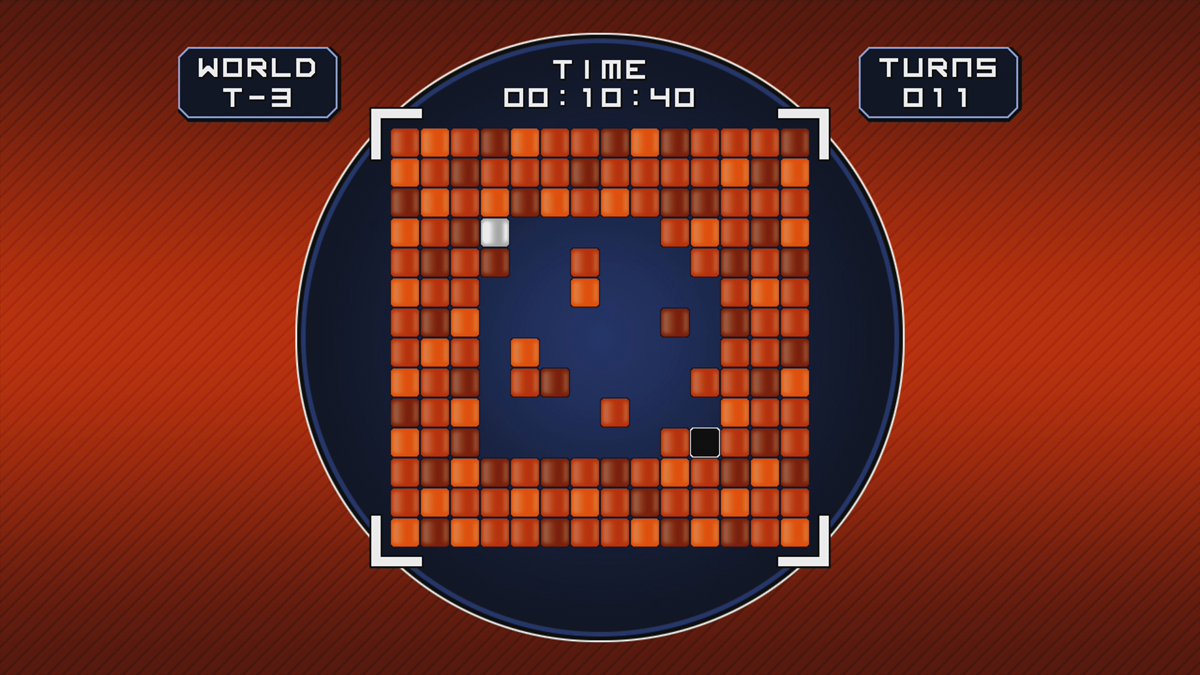
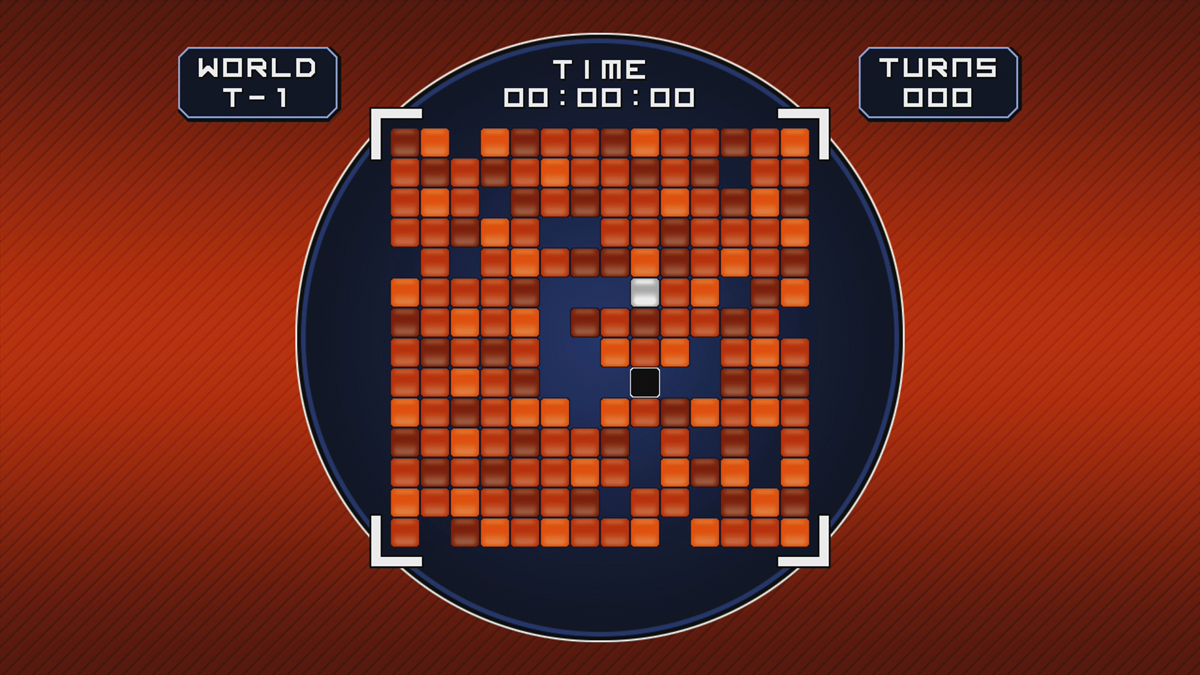
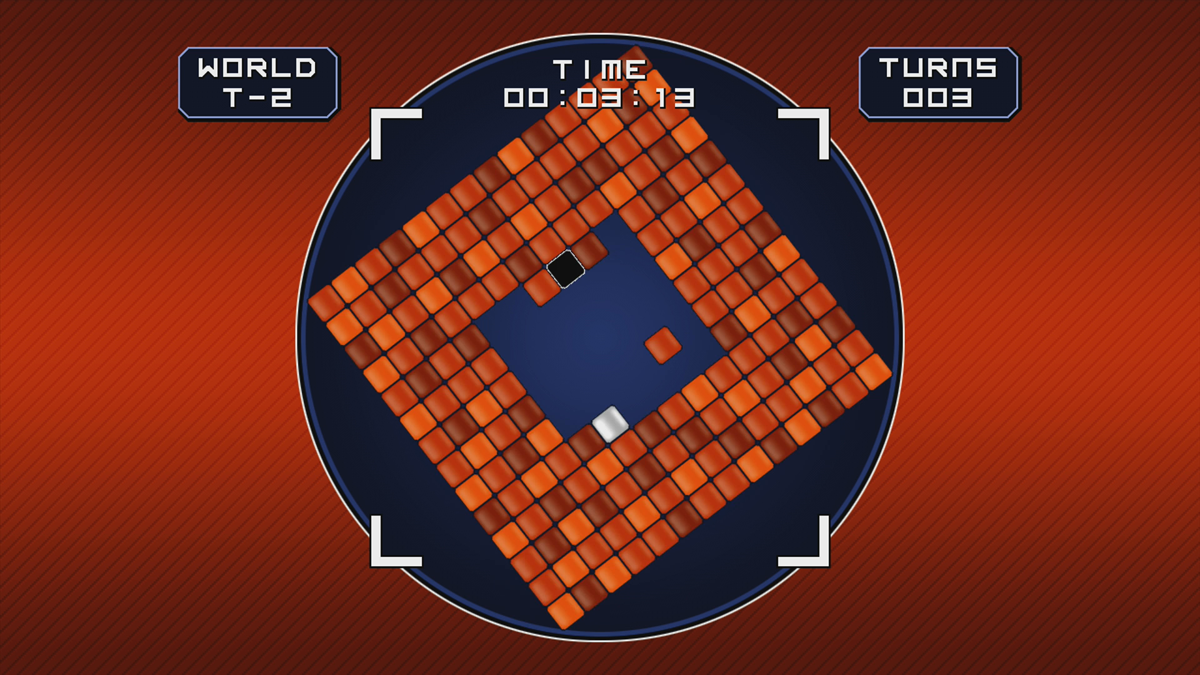
Vexis starts with a rule that is easy to understand and immediately awkward to master. Your white block has no direct controls; instead, you rotate the field 90 degrees left or right and let every non-stationary piece fall. The first few attempts at a puzzle can feel almost too simple—turn, drop, turn again—but that confidence disappears as soon as one bad rotation leaves the block stranded.
What clicks is the shift from guiding a character to arranging consequences. You are not plotting a path one step at a time so much as asking where gravity will send everything after the next turn. That makes successful solutions satisfying: the board suddenly stops looking like a pile of obstacles and starts looking like a sequence of controlled falls.
The stage elements give the idea enough bite to last beyond its initial novelty. Blocks that vanish at intervals and blocks that wait through a countdown before falling force you to think about timing as well as direction. Frustration can set in when a nearly correct plan collapses because one piece moved too soon, but that same rigidity is why a clean solve feels earned. Several dozen stages give the central trick room to develop without needing to become something else.
Graphics
The view keeps the puzzle board front and center: a white block, the surrounding field, and the goal are the important sights. Since each 90-degree rotation changes which way every loose object falls, the board itself becomes the star, and following the movement of blocks is the visual focus from one turn to the next.
Story
Vexis tells its tale through changing puzzle situations rather than a character-driven plot. Each stage begins as a stubborn arrangement of blocks and ends, ideally, with the white block reaching its goal.
That stripped-down approach suits the game. A puzzle about rotating gravity does not need dramatic detours when the real tension comes from seeing whether your mental picture of the next fall was right.
The small narratives are mechanical ones: a route opens, a disappearing block changes the plan, a delayed block becomes the key, and a solution finally snaps into place. If you want a story to carry you between challenges, this is not the draw; if you enjoy making meaning out of a puzzle’s moving parts, the stages have their own quiet momentum.
Overall Experience
Vexis is a focused puzzle game with a smart central constraint. Rotating the whole world instead of moving the block directly sounds like a minor twist on paper, but it changes the way you read space and makes gravity feel like both your only tool and your constant enemy.
Give it a chance if you like deliberate, single-screen brainteasers that reward planning and patience. You will get the most out of it by resisting the urge to spin the field repeatedly; pause, trace where each loose block will fall, and treat every rotation as a commitment.
The payoff is the moment a stage that seemed arbitrary becomes legible. Vexis will not win you over through spectacle or story, but its best puzzles turn a very small set of rules into satisfying little acts of problem-solving.



Reviews
There are no reviews yet.