 Retro Replay Retro Gaming History, Reviews & Emulation
Game Overview
Gameplay
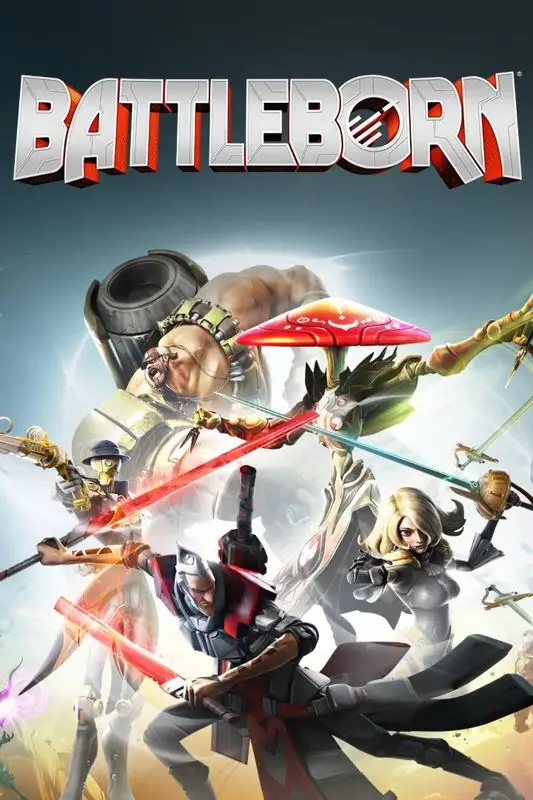
Battleborn is at its most enjoyable when you stop treating it like a straightforward shooter and start paying attention to the whole match. You are firing in first person, but the real work is in supporting the push: holding Capture points, shepherding minions toward the center in Meltdown, or creating an opening for those minions to bring down Incursion’s protected robots. That broader objective focus gives the matches more texture than simple team deathmatch.
The mid-match leveling is the hook that keeps individual rounds from feeling static. Every hero begins at level one, reaches a maximum of ten, and repeatedly asks you to choose between upgrades. Those decisions let you tailor a character to what the team needs right now, rather than merely waiting for a match to end so you can adjust a loadout. With 25 heroes built around different abilities, team composition matters enough that a well-rounded squad can feel much stronger than five people chasing kills.
There is a lot to track in the more elaborate modes. Incursion mixes enemy players, AI minions, robot targets, camps, deployable towers, and purchasable stat boosts into one crowded battlefield. That can be exciting when your team understands the priorities, but it can also turn into a frustrating mess when nobody protects minions or responds to the objective. Battleborn rewards cooperation more clearly than individual highlight-reel play.
The campaign offers eight maps plus a tutorial and supports up to four players, but it is a weaker fit for a solo shooter night. Missions boil down to raids, wave defense, and escorts, and losing all team lives forces a complete restart. That consequence can make a hard-earned run tense with friends, yet it also makes repeated failures feel like wasted time. Use the campaign as a cooperative warm-up and a way to unlock more heroes, not as the game’s main reason to play.
Story
The campaign frames its missions around stabilizing the Battleborn alliance and defending the galaxy from the Varelsi. It supplies a clear reason for the varied heroes to fight together, though the stronger draw is the multiplayer conflict and the changing demands of each objective rather than the narrative itself.
Overall Experience
Battleborn has a genuinely strong idea at its center: blend hero abilities, shooter action, lane-pushing AI, and match-long character growth into a team game where objectives matter. When you have four teammates willing to communicate, the mode design gives everyone something useful to do beyond landing shots. The victory feels earned because it usually comes from several moving parts finally working together.
That same ambition makes it demanding. A new player has heroes to learn, upgrades to choose, AI minions to manage, map objectives to understand, and team roles to respect. The game is far less forgiving when a group ignores any one of those layers, and the campaign’s restart rule adds another source of irritation. You will get more from it with a regular group than by relying on solo play or random teammates to sort out a complex objective game.
At 7.2, Battleborn lands as an inventive but uneven shooter. Give it a chance if you enjoy hero-based team games that ask you to think about positioning, composition, and objectives instead of just your kill count. Skip it if you mainly want a clean single-player campaign or instantly readable multiplayer matches. Its best rounds have real strategic spark, even when the game sometimes asks too much patience to reach them.


Reviews
There are no reviews yet.