 Retro Replay Retro Gaming History, Reviews & Emulation

Game Overview
Gameplay
Far Cry: Primal starts from a simple, effective fantasy: you are vulnerable, under-equipped, and surrounded by things that can eat you. Without guns or vehicles, every encounter becomes more intimate. You stalk with a bow, throw spears, swing a club when the plan goes wrong, and learn that charging headlong into a camp is much less comfortable when your best protection is a hide-and-leather outfit.
Crafting gives those basic tools some welcome texture. Scavenging plants and animal materials feeds directly into ammunition and upgrades, while fire, poison, and berserk-inducing shards offer ways to disrupt enemies rather than merely trading hits. Hunting is not just busywork either, since Oros is full of dangerous animals that can abruptly turn a resource run into a fight for survival. That steady risk makes wandering off the path more exciting than it has any right to be.
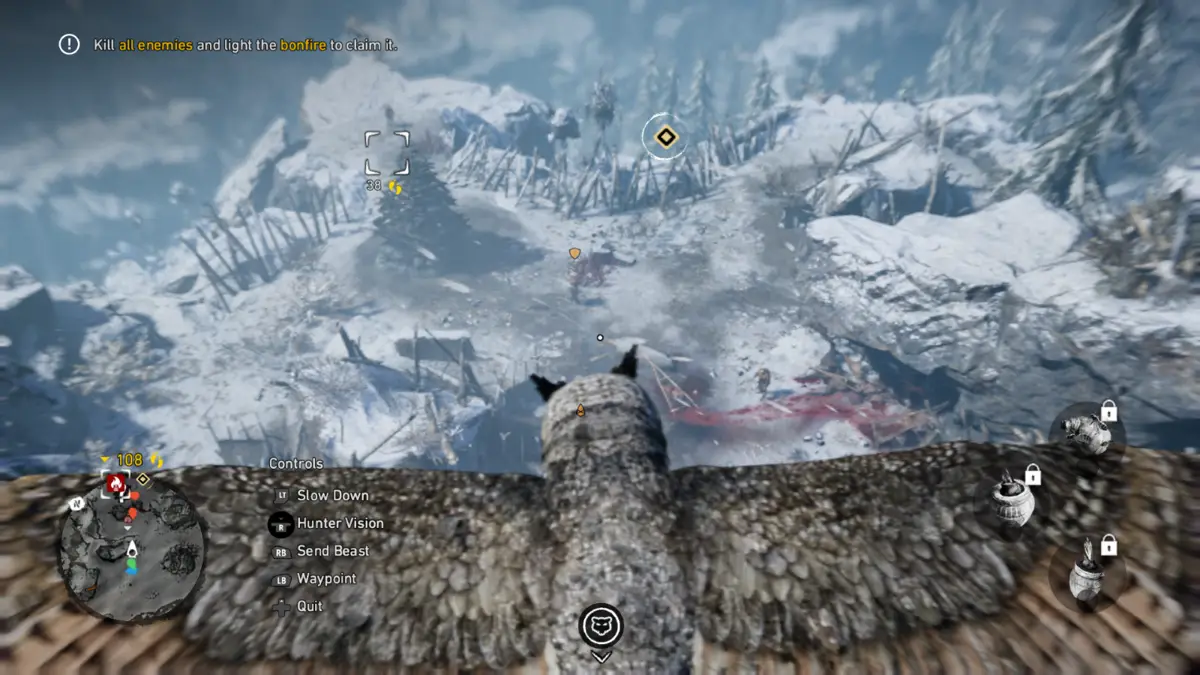
The best addition is Takkar’s ability to tame beasts. An animal companion makes stealthier camp assaults and open combat feel less solitary, and the owl is a smart scouting tool before you commit to a fight. Riding a large animal through the valley has real novelty, too. These systems give you several approaches to the familiar work of taking outposts and lighting bonfires, though the basic open-world loop does eventually show its seams.
Rebuilding the Wenja village supplies a steady stream of unlocks, quests, crafting options, and character-based skill upgrades. It is a useful reason to keep exploring, but it can also turn the middle of the game into a checklist of materials, camps, and side activities. If you already know you are tired of repeated territory-clearing, Primal will not radically change your mind. If that loop still works for you, its primitive tools and animal companions make it feel fresher than a mere reskin.
Graphics
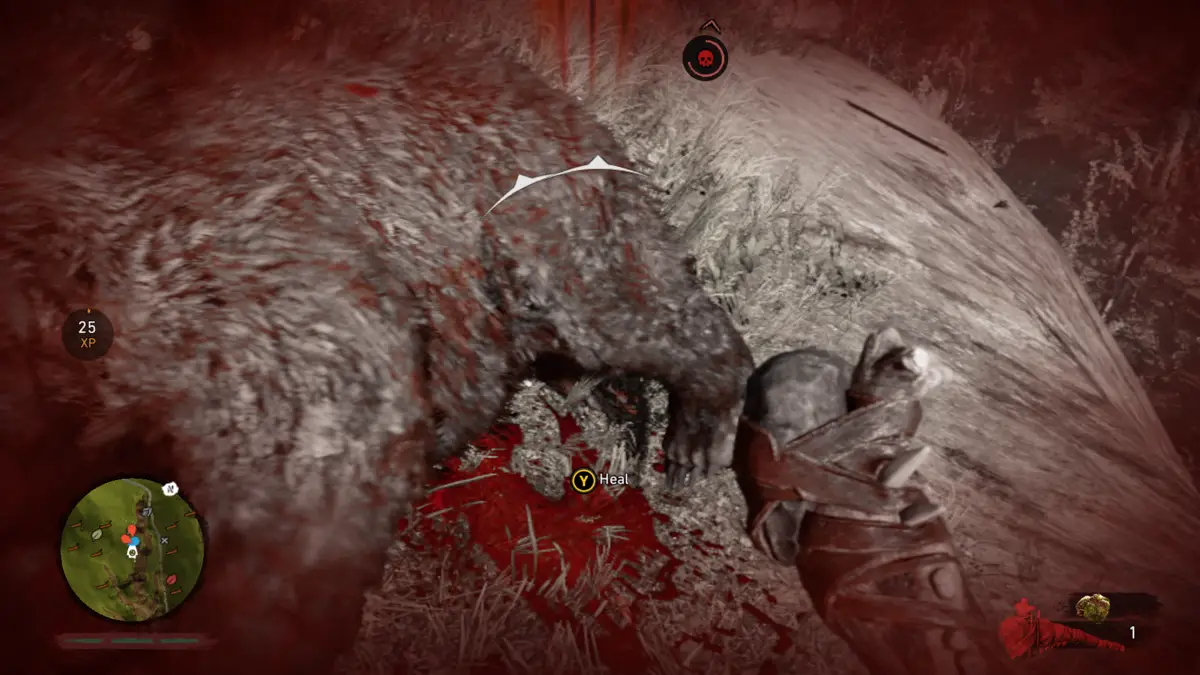
On Xbox One, Oros looks strongest when its wildlife fills the first-person view. The shaggy bulk of a bear at arm’s length and the thick fur of a mammoth beneath you give the animals real presence. Snowy hills, pale winter light, bare trees, and wooden enemy camps create a convincing cold, harsh stretch of wilderness, even if some ground textures and distant scenery look softer than the creatures up close.
Story
Takkar’s effort to rebuild the Wenja and bring the tribe together gives the game a clear purpose, with the hostile Udam and Izila providing opposition. But the story is mostly a frame for expanding the village and unlocking more things to do. Do not come expecting a big, escalating narrative with memorable turns. The stronger draw is living in the valley and making it safer one dangerous expedition at a time.

Overall Experience
Primal works because it commits to the inconvenience and danger of its era without making the action feel stripped down. A spear is not as instantly powerful as a rifle, but landing one when an animal or enemy rushes you is satisfying precisely because you had to get close enough to risk everything. The setting changes the rhythm of exploration in a way few franchise experiments manage.
Its shortcomings are familiar ones. Capturing locations, collecting materials, and pushing village upgrades can become repetitive, and the central conflict does not have enough narrative weight to disguise that repetition. You will get the most from it by treating side trips, hunts, and animal taming as the point rather than rushing from mission marker to mission marker.
Far Cry: Primal is worth your time if you want an open-world action game whose weapons and companions make every encounter feel a little more physical and unpredictable. It is not the series’ deepest story, but it is one of its most distinct settings, and the moment you are riding a mammoth toward a snowy camp with a spear ready, the experiment feels justified.



Reviews
There are no reviews yet.