Christian Bauer took his Amiga 4000 to a meetup of Mac users and showed them text scrolling in an editor. It was running inside ShapeShifter. The reaction, he remembers, was considerable. An Amiga running Mac software was not necessarily the slow curiosity people expected. Basilisk II grew out of that earlier work, but by 1999 its job included hosts without a real 68000-family processor. The Mac desktop could move again, this time… Read: The History of Basilisk II: ShapeShifter, UAE, and the Portable Macintosh

The History of UAE: From Unusable to Everywhere
The Amiga’s startup hand was holding something that looked roughly like a Workbench disk. Roughly was the problem. Bernd Schmidt’s emulator had produced a badly distorted version of the familiar picture, and there was still work to do before anyone could call this an Amiga they would want to use. Schmidt fixed his blitter code, and the picture improved. Later, Workbench booted from a floppy image with a convincing color display and… Read: The History of UAE: From Unusable to Everywhere
Bernd Schmidt Interview: UAE and the Amiga Emulator That Worked
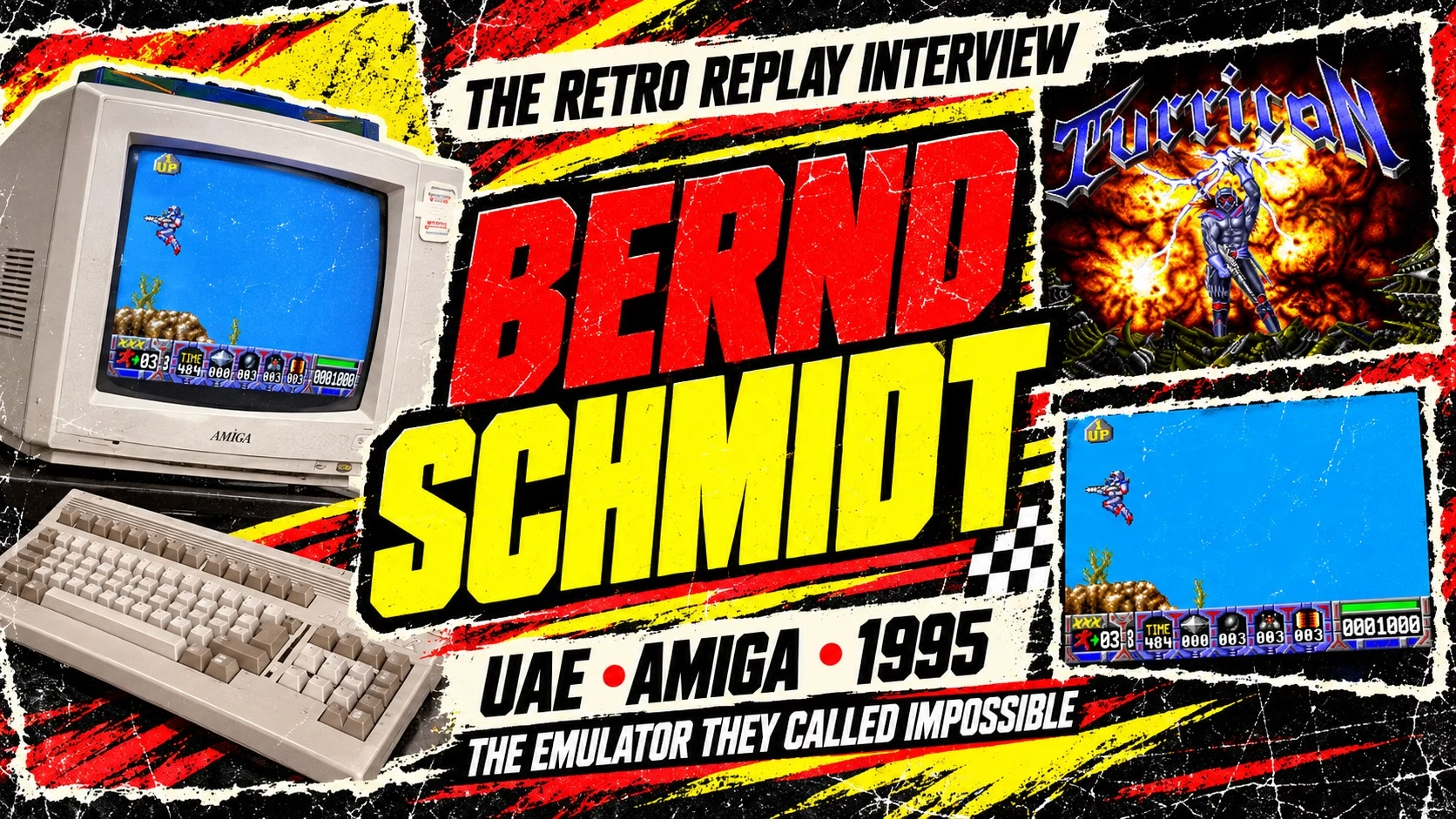
The first hand on Bernd Schmidt’s emulated Amiga screen was badly misshapen. It was supposed to be holding a Workbench disk, but his early blitter code still had bugs. Fixing those brought the picture closer to the familiar startup screen, and the next job was getting the rest of the machine to behave. Schmidt wanted to keep using Amiga software as he moved toward PCs, including the music from Turrican. Some Usenet… Read: Bernd Schmidt Interview: UAE and the Amiga Emulator That Worked
Retro Replay Retro Gaming History, Reviews & Emulation