 Retro Replay Retro Gaming History, Reviews & Emulation
Retro Replay Review
Gameplay
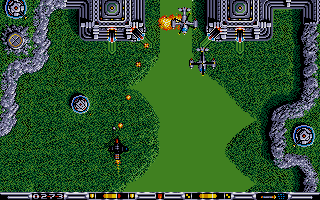
Black Hornet puts you in the cockpit quickly: steer the fighter across a top-down, vertically scrolling combat zone, fire at whatever comes into range, and keep moving before the incoming resistance closes in. The directness works. You are not waiting for a complicated system to reveal itself; you are immediately threading a plane through enemy fire, ground installations, vehicles, and buildings with a clear incentive to blast as much as possible.
The fuel gauge is the pressure point that stops the shooting from becoming a lazy cruise. Progress steadily drains your reserves, so you have to watch for airfields and aircraft carriers, then land by pushing forward and firing at their edge. That is a wonderfully awkward requirement in the right way: even when you have found safety and need supplies, the enemy can still damage you. A refuelling stop can become the most nervous moment of a run.
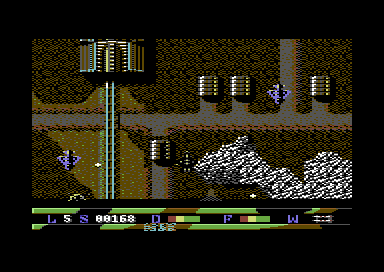
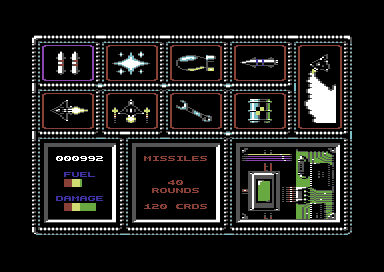
Buying weapons and fuel with points gives the score a purpose beyond bragging rights. Destruction funds survival, but spending too freely can leave you short later; hoarding points while your fuel dwindles is hardly a winning plan either. Weapon selection through the space bar is simple, and the game keeps the important information—lives, score, damage, fuel, and current weapon—on screen. If you like shooters that make you balance aggression against basic resource management, this has a sharper hook than its straightforward setup suggests.
Graphics
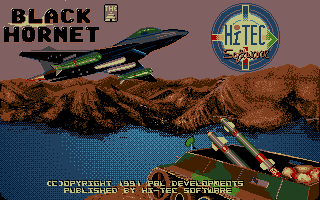
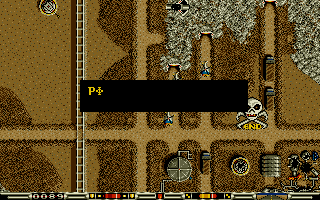
The action is viewed from above, with the Black Hornet flying through deserts, valleys, mountains, sea, and space while enemy units and ground targets fill the scrolling route. The separate play area and status display make it easy to keep an eye on the fighter, damage, fuel, and weapon choice during a busy attack run.
Story
The story is pure mission briefing: a madman threatens the world, and you are sent in aboard the advanced Black Hornet to stop him. It is deliberately thin, but it fits a shooter built around immediate action rather than long stretches of explanation.
What matters is the fantasy of an isolated strike craft slipping into hostile territory and dismantling its defenses. The fighter is described as a silent stealth machine, while the levels throw enemies and installations at you with no suggestion that diplomacy is on the table. You fly in to destroy the threat, period.
That bare-bones framing leaves the stages to carry the sense of escalation. Moving from desert and mountain terrain to the sea and eventually space gives the mission a broad, globe-spanning shape without interrupting the arcade momentum. Do not come for character drama; come for an old-fashioned save-the-world excuse to fly hard and shoot constantly.
Overall Experience
Black Hornet earns its interest through the collision of two simple ideas: destroy targets for points, then spend those points to stay armed and airborne. That loop makes every burst of fire feel useful and every fuel warning feel personal. You can see the immediate temptation in the first few minutes, but the landing-and-resupply pressure is what gives the game its bite.
Frustration is likely to set in when you need to land under attack, particularly if a weak fuel reserve has turned that stop into an emergency. Yet that friction is central to the game rather than an incidental nuisance. You are meant to plan ahead, build a score, and make the approach to a carrier or airfield before desperation takes over.
The payoff is a focused shoot-’em-up with enough economy to reward attention beyond aim alone. It will suit you if you enjoy the tension of watching gauges while carving through enemies and scenery, and if you can accept a spare story in exchange for continuous arcade action. Black Hornet is not trying to be anything grander than a combat run where every destroyed target might buy the supplies that get you through the next one—and that is a solid reason to give it a chance.


Reviews
There are no reviews yet.