 Retro Replay Retro Gaming History, Reviews & Emulation
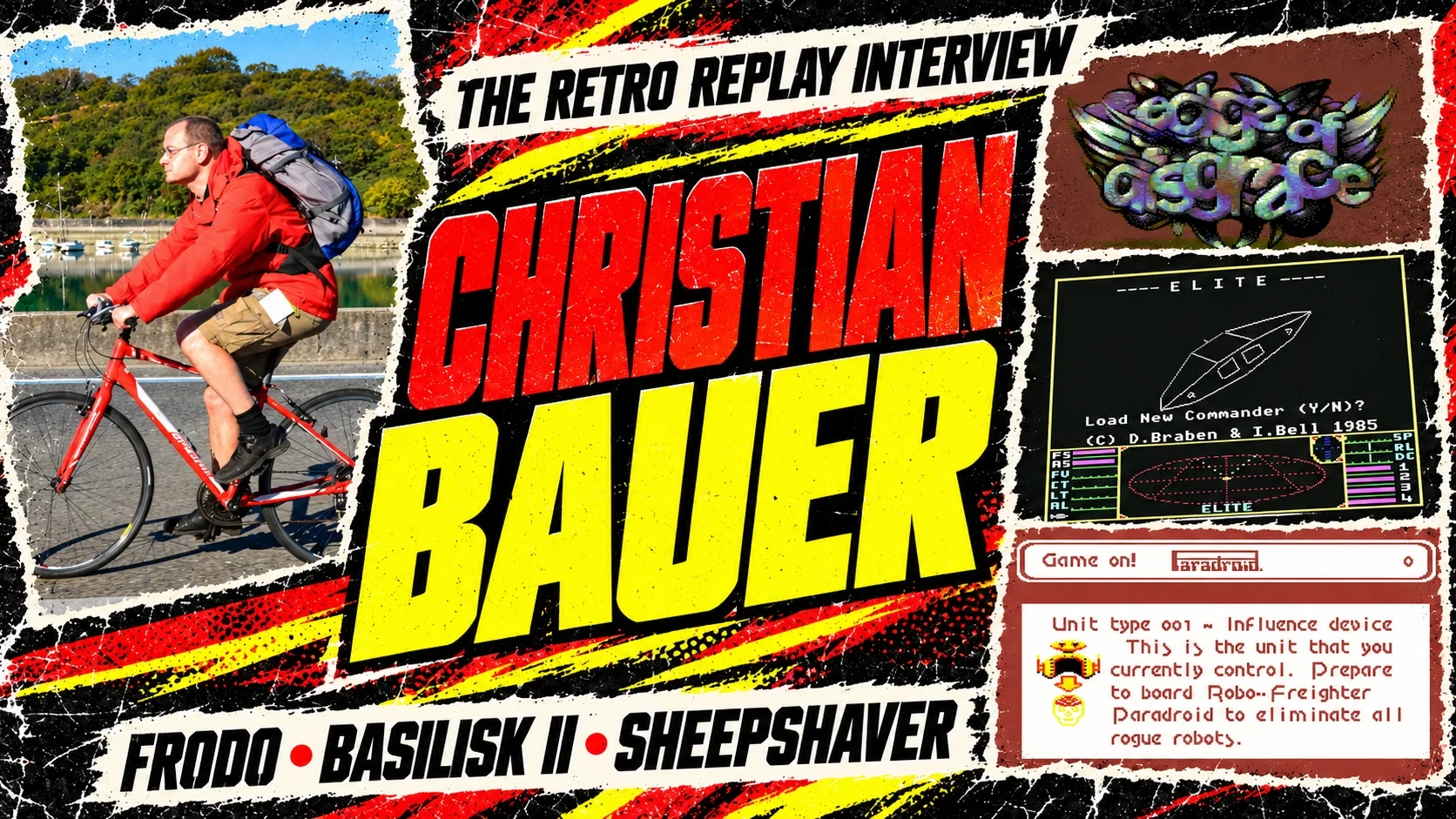
Before Christian Bauer owned a Commodore 64, he wrote programs on paper and tried them on the computers displayed in department stores. A few commands could draw a fractal or play some music. That was enough to get him hooked.
Music also supplied the first reason to write Frodo. Bauer wanted to hear SID tunes while working on his Amiga, so he built a card that could hold a real SID chip and wrote the CPU emulation to feed it. The project eventually grew into a C64 emulator, with graphics and sound problems that still send him back to the hardware decades later.
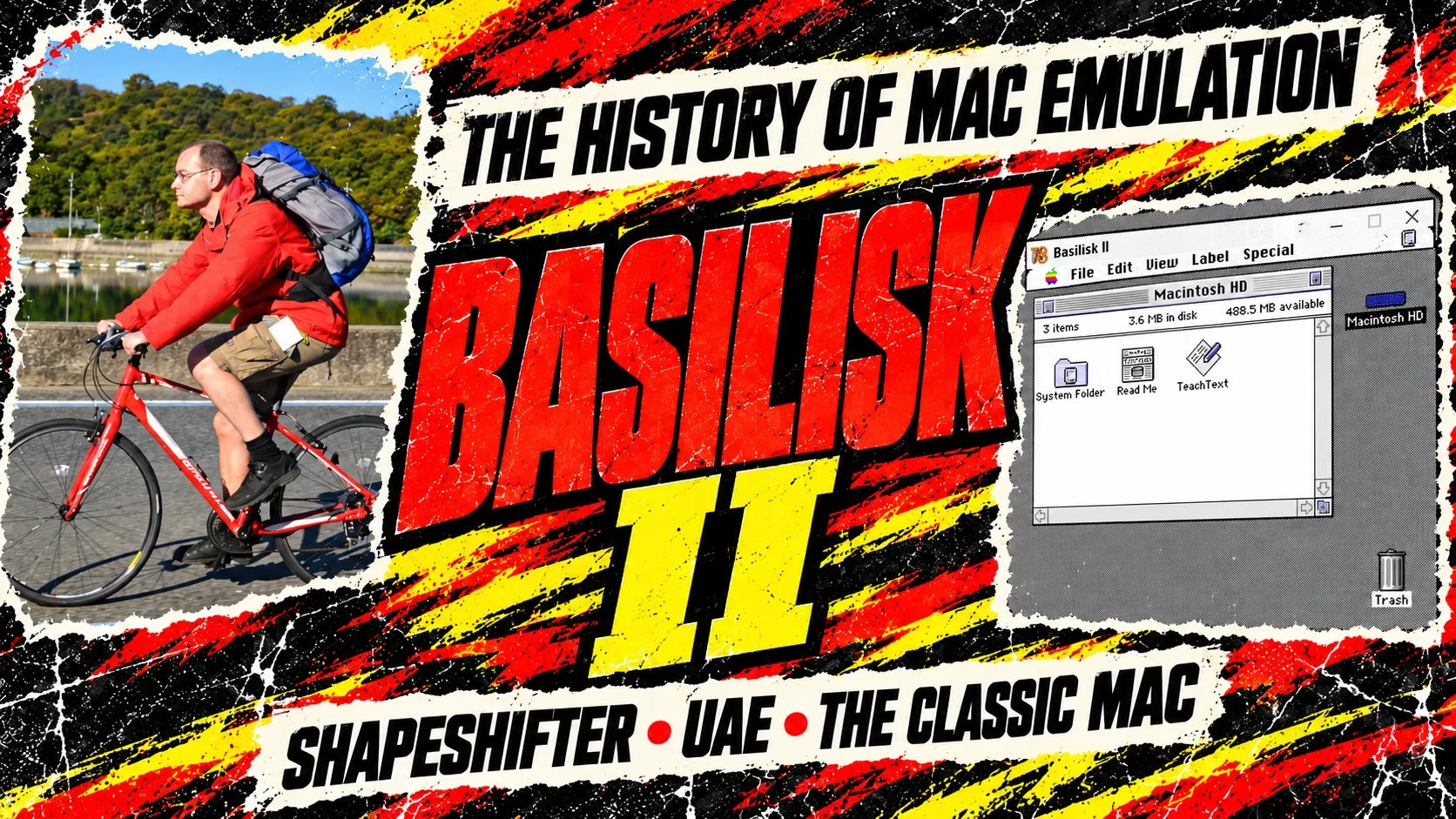
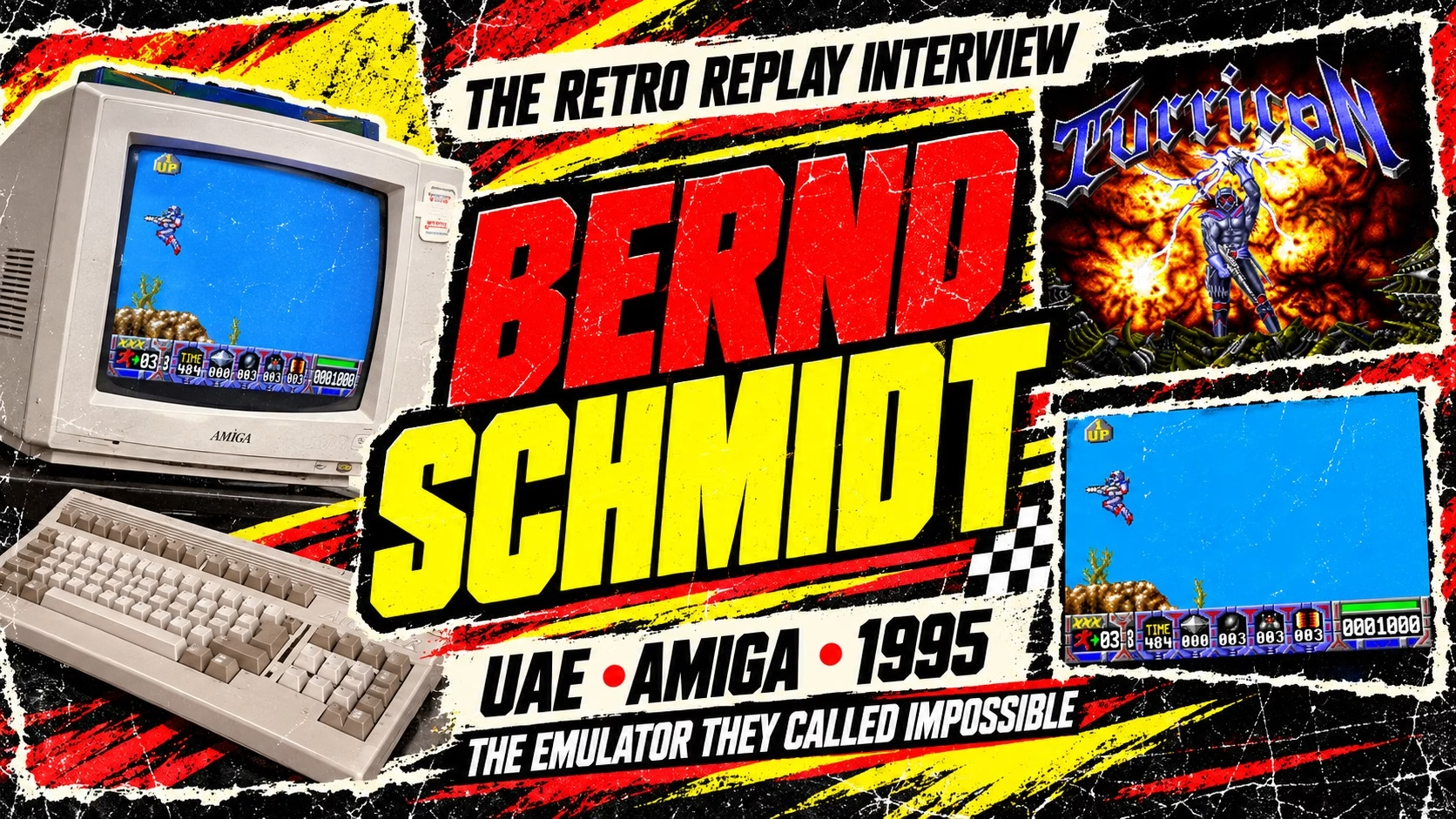
In this interview, Bauer talks through those experiments, the return to Frodo, and the different approaches behind ShapeShifter, Basilisk II, and SheepShaver. Basilisk II’s use of UAE’s 68k CPU code also connects his work to the story in our history of UAE. We finish with his BeBox, an Intel 8008 project, and the work he would like readers to explore today.
For more on these projects, our histories of Frodo, Basilisk II, and SheepShaver follow the work beyond this conversation. Christian’s biography also connects his projects to their places in our emulation timeline.
Interview by David Becker for Retro Replay, October 2026.

Explore the interview
- Paper programs and a smoking monitor
- Frodo begins with a SID chip
- The demo that sent him back to the SID filters
- Documenting what the VIC-II actually does
- Sounding good and choosing the compromises
- The computer inside the disk drive
- Portable code and returning to Frodo
- Favorite games and a demo worth keeping
- Making the Amiga behave like a Macintosh
- Basilisk II and the shared UAE core
- SheepShaver, BeOS, and the BeBox
- Frodo, Sam, and the names from Archon
- Old software, system ROMs, and the machines worth keeping
- An Intel 8008, experimental models, and current work
Paper programs and a smoking monitor
Retro Replay: Let’s start with a traditional one for readers who may not know your story. What was your first computer, and when did programming go from something you were curious about to something you knew would remain part of your life?
Christian Bauer: The first computer I owned was a Commodore 64 my parents gave me for birthday as a kid. But I had already started learning some BASIC and assembly from magazines before that. I’d spend my time after school trying out programs I’d written back at home on paper on the computers they had on display in department stores at the time. I was hooked immediately. You’d punch in a few commands and the thing would draw a fractal or play some music – it was amazing.
Retro Replay: Before I drag you back into emulator history, what technical subject or project is occupying most of your attention these days?
Christian Bauer: Right now, I’m trying to resurrect my Commodore 1084S monitor, which unfortunately didn’t survive the last move. It looks fine on the outside, but when I turn it on, a little plume of smoke comes from the deflection coils. I’m not an electronics expert, but I’m pretty sure that’s not supposed to happen…
Frodo begins with a SID chip
Retro Replay: What originally made you decide to write Frodo? By the time you started it, were you primarily trying to play old C64 software, or had understanding and reproducing the hardware itself become the more interesting challenge?
Christian Bauer: Actually, Frodo started out as a player for C64 music. I’m a huge fan of SID music and wanted to hear it while working on my Amiga without having to fire up the C64 every single time. So, I built a Zorro-2 card for my Amiga 4000 that could hold a SID chip, and Frodo was the software that emulated the 6510 processor to make the whole thing go. One of my first tests was seeing if the CPU emulation could boot a C64 ROM and produce that classic “38911 BASIC BYTES FREE” message, which I could then inspect in the debugger at address $0400. At some later time, I tried an existing C64 emulator for the Amiga that sort of worked but had problems with even moderately complex games, and I thought, “Yeah, I can probably do better than this.” The real challenge, however, didn’t start until a bit later…
Retro Replay: Frodo placed an unusually strong emphasis on reproducing the C64’s strange graphical tricks correctly. Why was that so important to you?
Christian Bauer: …when in the mid-90s, I got in touch on Usenet with some people (specifically Marko Mäkelä and Andreas Boose) who were busy analyzing the C64 hardware. Their methods were absolutely fascinating, and I tried to include their results into my emulator. And yeah, obviously: the point of these retro emulators is to run the software that actually pushed the hardware to its limits. I mean, is there anyone today who’s going to set up a C64 emulator to write their master’s thesis on Vizawrite? Probably not. Unless the thesis was about retrocomputing. In which case it would be pretty cool. 🙂
The demo that sent him back to the SID filters
Retro Replay: The C64 demo scene routinely did things with the VIC-II that the machine was supposedly never designed to do. Was there a particular demo or graphical trick that forced you to substantially rethink part of Frodo?
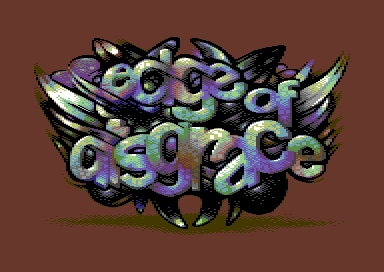
Christian Bauer: Let me extend that to the sound department: The music in the demo “Edge of Disgrace” forced me to completely scrap Frodo’s SID filter emulation about two years ago. As you might know, the SID has three modes for its analog filters: low-pass, high-pass, and band-pass (plus combinations of these). Up until then, Frodo had been emulating the filters using a single algorithm (2nd order IIR) that it configured for the current mode setting. It was fast because you only have to run one digital filter at a time (and 25 years ago you couldn’t spare too many CPU cycles on the sound emulation). In reality, though, the SID chip has three separate filter circuits that are all active simultaneously. “Edge of Disgrace” multiplexes bass, percussion and effects on one voice, and switches between filter settings almost every note, multiple times per second. With the old emulation, that sounded completely hideous since there was audible clicking every time the filter parameters did change. So, I used a long weekend at a local hacker meetup where I re-measured the filter curves of real SID chips (using much better equipment than I had available 20 years ago), and redesigned that part of the emulation from the ground up. The first time I tried out the new implementation there was just pure noise coming from the speakers. It was already 2am so I thought “screw this” and went to bed. The next morning I discovered I had swapped the parameters of a function somewhere. Fixed it, tried Edge of Disgrace again, and the result was stunning. It sounded so good I almost cried. 😀
Retro Replay: How different is writing an emulator that runs ordinary commercial games from writing one that survives software deliberately manipulating raster timing, open borders, sprite multiplexing, FLI and other hardware edge cases?
Christian Bauer: Well, many commercial games, especially later ones, did use those tricks, so it’s not like these are separate worlds. But the challenge is that you can’t just take a chip’s datasheet and turn that specification into program code. It’s more like trying to reconstruct the hardware without having the original schematics at hand, just by observing how it behaves experimentally.
Documenting what the VIC-II actually does
Retro Replay: Your VIC-II article grew out of information you discovered while developing Frodo. At what point did you realize you weren’t simply implementing existing documentation anymore, but were actually documenting the hardware yourself?
Christian Bauer: Yes, creating a model for the hardware and documenting it was the goal from the very start. So I came up with block diagrams and possible signal flows based on some educated guesses about graphics chip design. The extra info that you can already find in the official VIC-II datasheet was just thrown in to make it a complete, standalone piece.
Retro Replay: Was there a VIC-II behavior that surprised you because contemporary documentation was incomplete, misleading, or simply wrong?
Christian Bauer: The very first thing that blew my mind as a kid was reading an article in a C64 magazine about how to open the top and bottom borders. I had read Commodore’s “C64 Programmer’s Reference Guide” (which includes the VIC-II datasheet) but that said absolutely nothing about disabling the border being even a remote possibility. From that moment on, it was clear to me that there was way more going on inside this machine than it appeared at first glance.
Sounding good and choosing the compromises
Retro Replay: SID emulation has been argued about for decades. What makes reproducing the sound of the SID so much harder than simply implementing a documented set of registers?
Christian Bauer: It’s a hybrid digital/analog design, and a lot of it isn’t fully described in the documentation. For musicians, that’s probably fine – they can just play around with the settings until it sounds the way they want it to. But if you’re trying to recreate it, you have to dig a lot deeper. Also, because of the way the designers of the SID (mis)used digital circuitry to implement the analog filters means the thing doesn’t always behave as the textbooks on filter theory say it should (although later revisions of the SID chip are much more tame in that respect).
Retro Replay: Do the differences between actual SID revisions mean that the concept of one perfectly “correct” emulated C64 sound is somewhat misleading?
Christian Bauer: As an emulator developer it gave me the luxury of knowing I didn’t have to be perfect here, because the real hardware also has such a wide variability. The sound emulation in Frodo is actually designed differently than in most emulators because my primary goal wasn’t to be “correct” but to “sound good”. For example, I deliberately didn’t implement the bugs of the SID’s envelope generator (the “hiccups” you hear in some early tunes), and Frodo’s sound emulation also isn’t cycle-locked to the rest of the emulator. It runs asynchronously, similar to how my SID card worked in the Amiga. The upside is that it always sounds quite good and distortion-free, even if the emulator can’t keep up with the original hardware speed or when you’re fast-forwarding or rewinding in the emulator. The downside is that more recent sampling tricks that rely on precise timing won’t work on Frodo. But overall I’m happy with the result and keeping it that way.
The computer inside the disk drive
Retro Replay: The 1541 disk drive is essentially a computer in its own right, and fast loaders and copy protection schemes often rely on extremely specific behavior. How much harder did accurate drive emulation make Frodo compared with emulating the C64 alone?
Christian Bauer: Yeah, I always mainly focused on the VIC-II, and I treated the whole floppy, GCR encoding, and serial bus stuff of the C64 as a bit of an afterthought, to be honest. But with a C64 emulator, you can’t just hide the 1541 behind a nice API like you can with the CD-ROM drive on a PlayStation emulator, for example. It’s probably the weakest part of Frodo, but even for more precise emulators some copy protection schemes are still quite a challenge to this day (and also a challenge for software preservation).
Retro Replay: Is there a fast loader, demo, game, or copy-protection scheme that gave you a particularly memorable fight?
Christian Bauer: I mostly tried to make 1541 emulation work on a general level, not tuned for a particular game or demo. I do remember the loaders of “Psi-5 Trading Company” and the demo “RGB” by Fairlight being particularly stubborn, though…
Portable code and returning to Frodo
Retro Replay: Frodo has existed on an almost absurd variety of host systems. Did making it portable across AmigaOS, BeOS, Unix, Mac OS, Windows, RISC OS and other platforms change the way you thought about emulator architecture?
Christian Bauer: I used several of those platforms myself back then, and it was nice that computing power had finally reached a point where you didn’t have to optimize for one specific target hardware – you could actually afford to have some portability. And at that time (the late 90s), computer architectures were evolving so fast. The very first versions of Frodo (and all versions of ShapeShifter) were written entirely in 68000 assembly, which, unfortunately, also made them become obsolete pretty quickly.
Retro Replay: You returned to Frodo with substantial new releases decades after its original era. What drew you back into actively updating it?
Christian Bauer: The main reason was that I finally found the time to do it! I’d taken a sabbatical from work and started delving back into some old projects, including Frodo (and the abandoned Frodo 5). I tried to build and run Frodo again and realized: “Good grief, this doesn’t even compile! No, it can’t stay like this…” And then it kind of spiraled from there. I ported it to SDL2, stripped out the support code for all the old systems which I don’t use and can’t maintain anymore anyway, ported the tape emulation back from Frodo 5 (huge success), fixed embarrasing VIC bugs (yeah, should have read my own VIC article, I guess…), finally repaired the CIA timers after 25 years, reimplemented the SID filters (see above), and even did some crazy stuff like simulating the “Datasette as a controller” trick for “Aquarius”.
Retro Replay: Is there one C64 game or demo you always like to try after making a significant emulator change because you know exactly how it should behave?
Christian Bauer: I always run the “Edge of Disgrace” demo by Booze Design. It’s almost 20 years old now, but in my opinion it’s still the best pure effect demo for the C64. Plus, I’ve watched and listened to it so many times now that I would notice any little glitch – including the music.
Favorite games and a demo worth keeping
Retro Replay: Forget testing for a moment: what is your personal favorite C64 game?
Christian Bauer: “Elite” is the one I played the most back in the day. I loved the space flight and the open-ended concept. Honorable mentions go to “Archon”, “Paradroid”, and “Spindizzy”.

Retro Replay: And if you could preserve only one C64 demo to show somebody why that machine was technically remarkable, which one would you choose?
Christian Bauer: I’d probably go with “13:37” by Fairlight. Because that one’s not just a couple of effects strung together but it has a really good and funny story. Even for someone who has zero connection to the C64 and doesn’t know the limitations of the machine, it would still be very entertaining to watch.

For more of the games Bauer remembers fondly, explore Elite and Paradroid in our game database.
Making the Amiga behave like a Macintosh
Retro Replay: Then you moved into another fascinating area with ShapeShifter, allowing Macintosh software to run on Amiga hardware. What originally made you look at an Amiga and think, “This should also be able to be a Macintosh”?
Christian Bauer: The fact that they shared the same processor, and that the classic Mac hardware architecture was so simple. I thought to myself: “I should be able to run some Mac software on my Amiga, right? Let me see how far I can get with this…” And then a few weeks later the realization “holy crap, this actually works!”.
Retro Replay: ShapeShifter is particularly interesting because the Amiga and classic Macintosh shared Motorola 68k processors. How much did that shared CPU architecture change the problem compared with conventional CPU emulation?
Christian Bauer: The approach was completely different compared to, for example, Frodo. Strictly speaking, ShapeShifter isn’t an emulator – it’s paravirtualization. It doesn’t simulate any Macintosh hardware but patches parts of Mac OS at runtime to adapt I/O functions (video, sound, disk, keyboard, mouse…) to AmigaOS. Most people are not familiar with that term, of course, so for SheepShaver (which works in the same way) I preferred calling it a “run-time environment”.
Retro Replay: ShapeShifter could provide performance comparable to a real Macintosh using similar hardware. Did users sometimes have trouble believing that software emulation could be that practical in the 1990s?
Christian Bauer: On a high-end Amiga, it was actually often faster than a real Mac, especially regarding disk and graphics performance. I remember going to a meetup with Mac users with my Amiga 4000 and showing them how fast text scrolled in an editor under ShapeShifter. Let’s just say their jaws hit the floor so hard it landed in the basement… 😀
The main reason for the performance is, of course, the paravirtualization approach. People who has used hardware-level emulators for home computers and consoles were used to needing a machine several times more powerful than the original to get it running smoothly. That was why I preferred the term “run-time environment” for SheepShaver – most people in the 1990s equated “emulator” with “slow and clunky”.
Basilisk II and the shared UAE core
Retro Replay: Basilisk and later Basilisk II moved classic Macintosh emulation beyond an Amiga-specific solution and toward something portable across many host systems. What architectural lessons from ShapeShifter carried directly into Basilisk II?
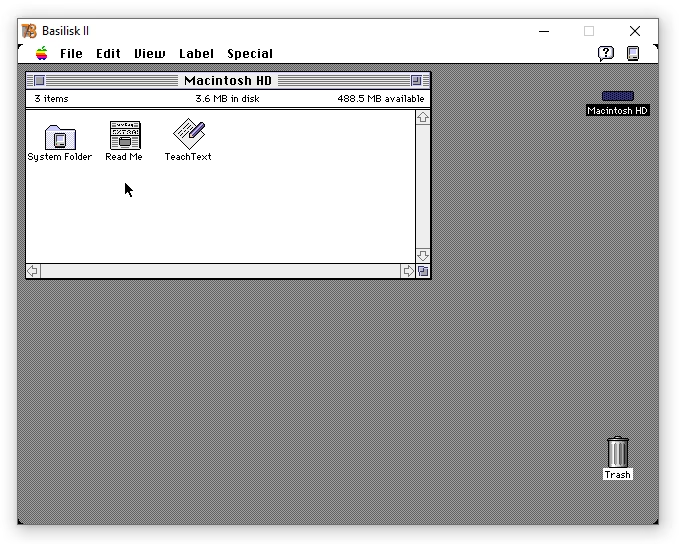
Christian Bauer: Basilisk II follows basically the same approach as ShapeShifter with paravirtualization, but this time (on 68k machines) it uses a “real” hypervisor that intercepts privileged CPU instructions in the guest system and simulates them in software. Macintosh software back then typically ran in the CPU’s supervisor mode, and ShapeShifter had to emply some serious trickery to get the emulated Mac to run within the preemptive multitasking environment of AmigaOS. Otherwise, Basilisk II is pretty similar to ShapeShifter, except it was written in C instead of assembly, and also has the option to use a software-based 68k emulation. Everyone was moving away from 68k hardware at the time, so portability became a major issue.
Retro Replay: Basilisk II incorporated the 68k CPU emulation from UAE. Was being able to reuse a mature CPU core one of those moments where open-source emulator development suddenly demonstrated how powerful shared work could be?
Christian Bauer: Yes. I don’t think I could have built a 68k emulator on my own in a reasonable amount of time. The 680×0 has a pretty complex instruction set, you have to account for many edge cases, and you need automated tests to gain confidence in this piece of software which is going to be the very foundation of your emulator. And on top of all that, it also has to be performant, too. So why reinvent the wheel?
SheepShaver, BeOS, and the BeBox
Retro Replay: SheepShaver moved the problem into PowerPC Macintosh emulation. What was fundamentally different about reproducing a PowerPC-era Mac compared with the 68k machines you had already worked with?
Christian Bauer: Fortunately, they weren’t that different. The first PowerPC Macs had to be able to run all the old 68k software, so the architecture was still pretty similar to a certain level. The main difference was the “nanokernel” of the PowerPC Macs, which (in its original version) was more or less just a small hardware abstraction layer with a built-in 68k emulator. In a sense, running 68k code was still the default mode for those machines. The biggest difference was that every interrupt had to go through the nanokernel. That was my biggest headache back then – trying to get interrupts to work reliably.
Retro Replay: SheepShaver originally appeared commercially on BeOS before later becoming open source. Looking back, what was appealing enough about BeOS that you wanted to build serious emulator projects around it?
Christian Bauer: Like many Amiga developers at the time, I jumped ship to BeOS after Commodore went bust. And the BeBox (which I still have up and running) took over as my main workstation, replacing my Amiga 4000. I was thrilled that a small team of developers was daring enough to build a new hardware platform (with two CPUs even!) along with new OS from scratch. You don’t see that anymore…
Retro Replay: When BeOS disappeared from mainstream relevance and SheepShaver was eventually released as open source, did you expect people would still be using and developing descendants of it decades later?
Christian Bauer: Yeah, I actually did. I knew the “doing productive work” use case for emulation would shift toward “software preservation”, and there are always good reasons why people want to run old software.
Frodo, Sam, and the names from Archon
Retro Replay: I have to ask about the names. Frodo, ShapeShifter, SheepShaver, Basilisk, was naming emulator projects half the fun, and is there a story behind any of those names that people usually get wrong?
Christian Bauer: Frodo: I wanted a name that was unique and didn’t have “64” in it. Pretty much every other C64 emulator at the time (and still today, even) was called “SomethingOrOther64”, which I always found boring and uninspired (plus, today people might expect it to run Nintendo 64 games…). I’m a big Tolkien fan, and the name “Frodo” also gave me the chance to name the built-in monitor “Sam”. 🙂 A few people thought the name had some connection to the FTP server “frodo.hiof.no” (you do remember FTP, right?), which was famous in the scene because you could find a lot of C64 software and tools on there. That was just a coincidence, however. I guess the people at Østfold University liked Tolkien’s work as much as me.
ShapeShifter/Basilisk: Both are characters from the game “Archon”. Many people thought “ShapeShifter” referred to Odo from Star Trek: Voyager, which was on TV at the time, but that’s not where it comes from.
SheepShaver: A pun on “ShapeShifter” coined by a friend from a German Amiga IRC channel (you do remember IRC, right?). I thought the name was hilarious and adopted it for my next emulation project.
Retro Replay: Across Frodo, ShapeShifter, Basilisk II and SheepShaver, where do you personally draw the line between “emulation,” virtualization, and simply creating a compatibility environment? Does that distinction even matter to you technically?
Christian Bauer: Like I said above, Frodo is the only “true” emulator because it actually models the target hardware. The others are paravirtualizations with (a run-time patched version of) the original guest OS running inside them. I’d use “compatibility environment” for something where the guest OS is completely re-implemented or replaced, like in WINE. And while the end result is always the same – it lets you run software written for one machine on another one – the technology underneath is very different.
Old software, system ROMs, and the machines worth keeping
Retro Replay: C64 and classic Macintosh preservation both still depend to some extent on ROM images and proprietary system software. Have legal and licensing issues sometimes been a bigger obstacle to preservation than the technical problems themselves?
Christian Bauer: In practice, it’s not that big of a deal because users find out pretty quickly where to get those ROMs from. It is a problem for commercial use, though, like when someone wants to release a collection of retro games. Apple Germany once toyed with the idea of releasing ShapeShifter as an official product to lure Amiga users to the Mac after Commodore went bankrupt, but that would have required a hardware dongle with Mac ROMs on it. I’d love to see companies like Apple and whoever claims to own the rights to old Commodore stuff now, to just release the firmware and OS’s for free use in emulators after official support for the hardware has ended. After all, it doesn’t mean they have to give away the rights to the source code (which has already been leaked anyway).
Retro Replay: You have spent enough time studying both systems to know them far more intimately than most owners ever did. Which machine is more interesting to you purely as a piece of engineering: the Commodore 64 or the classic Macintosh?
Christian Bauer: The C64, hands down. I find the 68k Macs are pretty boring from a hardware perspective (with the sole exception of the IIfx, maybe) and also aren’t nearly as cleverly designed as, say, the Amiga.
Retro Replay: Fun hypothetical: if you were told you could keep only one physical retro computer and had to emulate everything else forever, what machine would survive the cut?
Christian Bauer: I would keep my BeBox because it’s so unique. Our last, best hope for a world beyond Unix and Windows. But some things are not meant to be, I guess…
An Intel 8008, experimental models, and current work
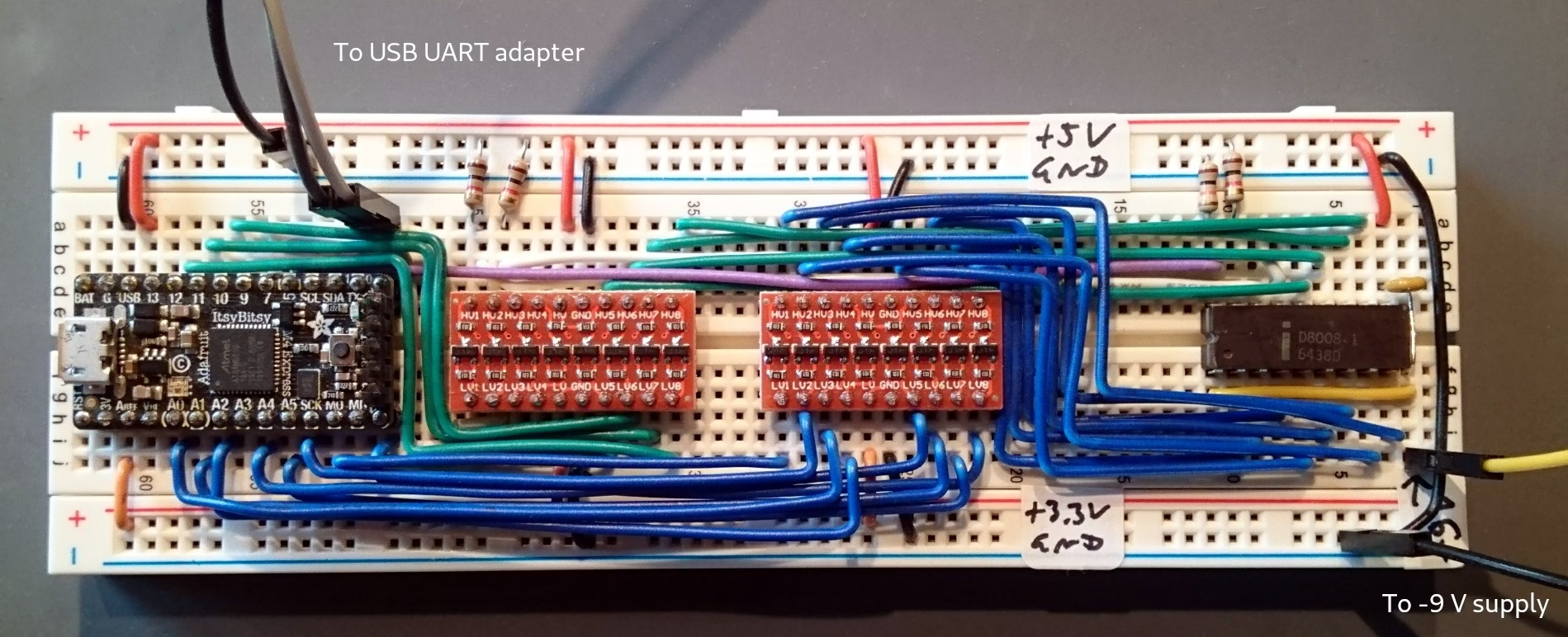
Retro Replay: More recently you built my8008 around the vintage Intel 8008. After spending years with far more sophisticated processors and systems, what is appealing about going all the way back to something that primitive?
Christian Bauer: It’s the only computer in my collection that’s older than I am. 😀 And the 8008 is genuinely primitive – no real stack, useless interrupts, a multiplexed bus… My 8008 came from a PDP-11 terminal card I managed to pick up at university. And initially I hadn’t even recognized it as a processor because its package was so small, with only 18 pins. Still, it’s fascinating to see how it all started with microprocessors. Without them, computers might never have escaped research labs and data centers. Imagine a world where you couldn’t do any useful computing at home but had to rely on online services and cloud providers! Oh, wait…
Retro Replay: Your current interests also include physics, retro computing and quantum computing. Does being a physicist influence the way you approach emulator development, particularly the habit of forming a model, designing tests, comparing predictions against real hardware, and refining the model when it fails?
Christian Bauer: Yes, absolutely. That’s just the way I work. The VIC article was basically an attempt to pour the experimental results of other people’s VIC-II research into a theoretical model. And isn’t physics kind of humanity’s ultimate reverse-engineering project?
Retro Replay: Finally, when this interview is published, are there any current projects, GitHub repositories, Frodo or Macintosh-emulation resources, technical articles, preservation projects, or anything else you would like me to direct readers toward?
Christian Bauer: Nothing too exciting at the moment. I’ve dabbled a bit in retro game modding with my tools for FF7 and Wild Arms, which are on GitHub.
Professionally, I’m currently involved to some extent in ESA’s CIMR mission [https://www.esa.int/Applications/Observing_the_Earth/Copernicus/CIMR]. I don’t work for ESA directly but for a supplier, but I’m really looking forward to seeing this thing fly in a few years.
Thank you, Christian
Our thanks to Christian Bauer for sharing the stories behind these projects, including the late-night bugs, the hardware experiments, and the music that made the work worth doing. We hope his monitor makes it back to the desk with considerably less smoke.
Explore Christian’s work
- Christian Bauer’s official website.
- Frodo and its source repository.
- The VIC-II article, Bauer’s hardware reference.
- ShapeShifter, Basilisk II, and SheepShaver.
- The Macintosh emulation source repository.
- FF7Tools and WA1Tools, his tools for the PlayStation versions of Final Fantasy VII and Wild Arms.
- my8008, his Intel 8008 hardware project.
- ESA’s CIMR mission. Bauer describes his involvement through a supplier in the final answer above.



The Frodo story is one of the great solo-emulator arcs – a C64 emulator accurate enough that people used it for real cassette-tape preservation work. Good to hear Bauer’s side of how Basilisk II and SheepShaver grew out of that same obsession with getting old platforms right rather than just bootable. Interviews like this are valuable because the technical trade-offs usually only survive as forum folklore.
Writing programs on paper and testing them on department-store computers is such a great origin story. Building a card for a real SID chip just to hear SID tunes on the Amiga, and having that grow into Frodo, shows how much music drove the early emulation work. Wonderful interview.