Retro Replay Retro Gaming History, Reviews & Emulation
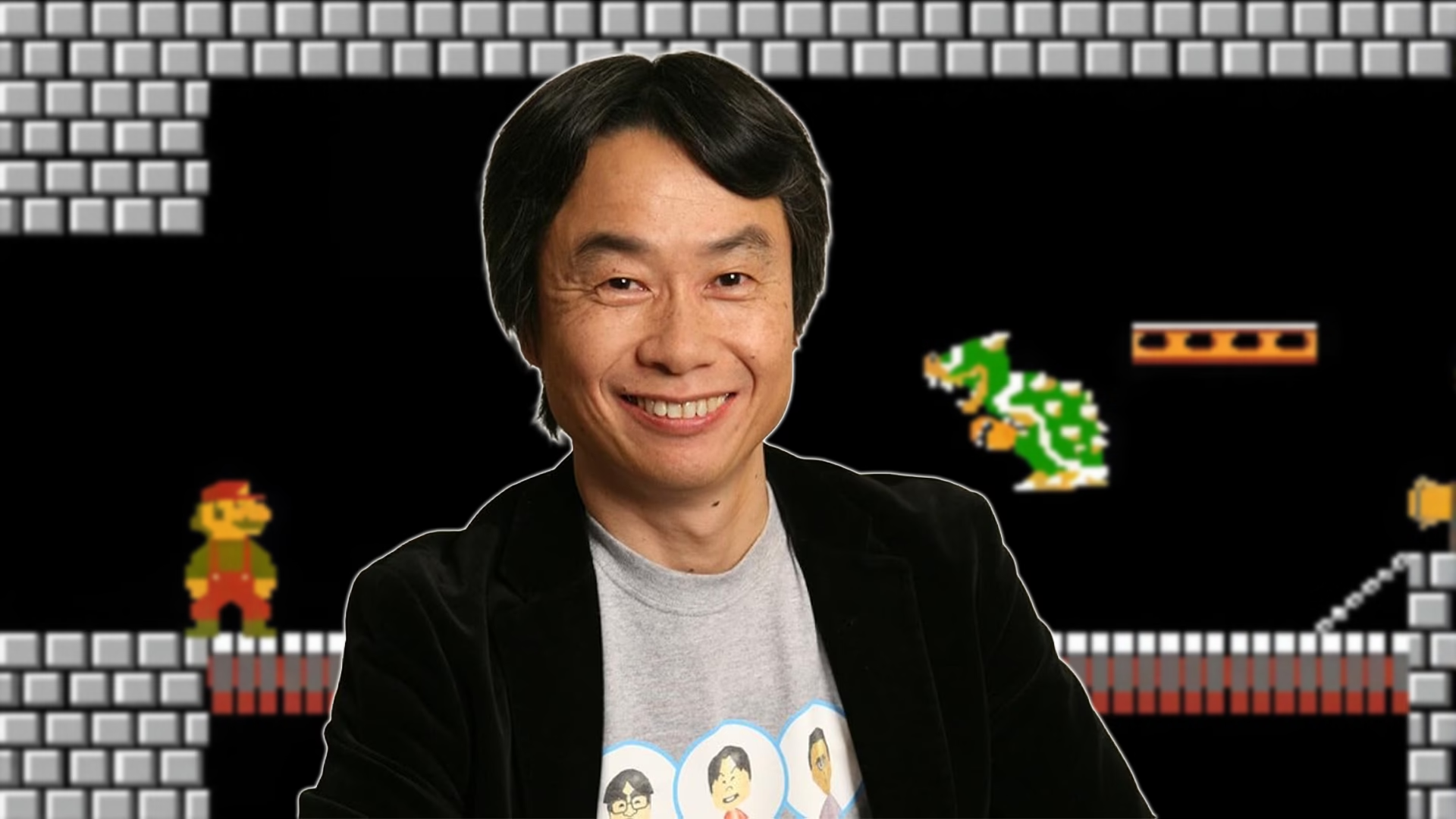
If you don’t know the name Shigeru Miyamoto, he’s someone you can thank for the video game industry being what it is. In 1981, Miyamoto created a small arcade game called “Donkey Kong,” which not only saved Nintendo of America from financial ruin but also helped solidify the video game industry at a time when it was in flux. Just four years after his success with “Donkey Kong,” Miyamoto released his next big hit, “Super Mario Bros.,” which is one of the games that helped make the Nintendo Entertainment System (NES) the industry leader it became.
All of that happened long ago, but Miyamoto hasn’t stopped making games, as he’s the Representative Director and Executive Fellow at Nintendo. Miyamoto’s influence on the gaming industry cannot be overstated, and his work has earned him several important accolades. One of the most impressive is the Order of Culture award, as he’s the first person in the industry to receive the honor. Previous winners include Nobel laureate in physics Hideki Yukawa, painter Yokoyama Taikan, and many others. At a press conference commemorating the event in October 2026, Miyamoto sat for a Q&A, where he discussed his work and contributions during his tenure at Nintendo.
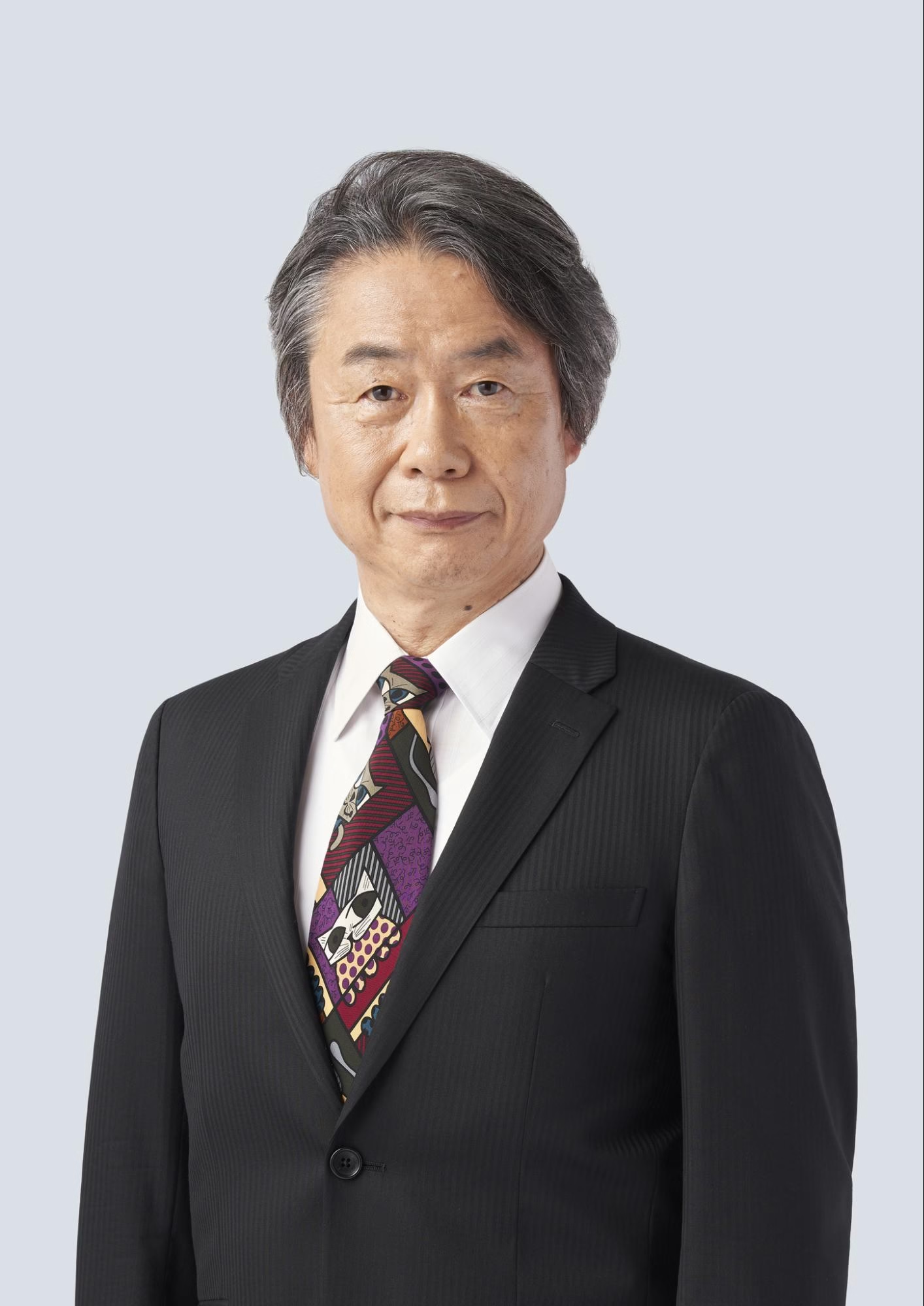
When he began speaking, it was clear that Miyamoto understood the gravity of the award, which he addressed, making sure that he explained that he’s never worked alone:
“I’m a little embarrassed. Games aren’t something you make alone; they’re the result of working together with many people. I accept this award with the feeling that it represents that.”
Miyamoto began working at Nintendo in 1977, so he’s been at it for nearly half a century. He described the industry, saying, “The fact that games have become a part of culture means that games have become commonplace.”
His words ring true: the video game industry, which was quite small in 1977, has ballooned into a leading entertainment juggernaut. According to Grand View Research, the video game industry’s market size in 2025 was $322.6 billion. That’s a lot of money, but compared with other industries like movies and entertainment, it dwarfs their market share. Grand View Research estimates the film industry at $112.9 billion in 2025, so video games are clearly making significant gains across global culture (and our wallets).
Getting back to Miyamoto, one of the topics he discussed after receiving the Order of Culture was “Super Mario Bros.” He made an interesting comment about what he believed was his biggest invention in the game, saying, “The biggest invention of “Super Mario” is that Mario doesn’t fight Bowser.”
If you’ve played the OG game, you know what he means: in World 8-4, Mario makes his way through Bowser’s castle, and instead of finding out the princess is in another one, he finally rescues her. To do so, he must run and jump over Bowser, since he’s immune to fireballs, and jumping on his shell doesn’t work for Mario, thanks to Bowser’s impressive array of shell spikes. Instead, he jumps onto a nearby axe, which makes the bridge disappear and sends Bowser into the lava. Mario then proceeds to the right, as he always does in the game, and rescues the princess.
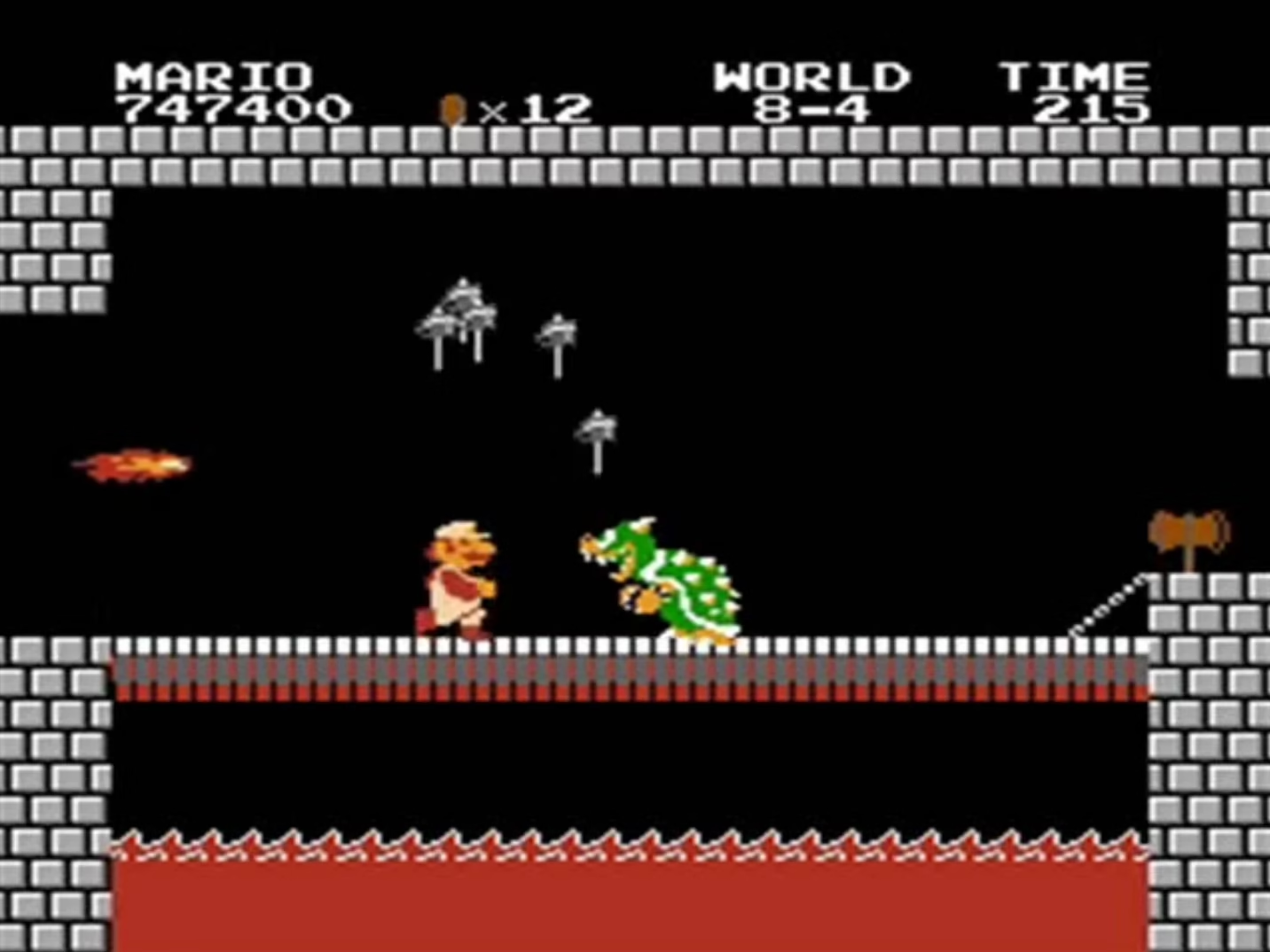
It’s a classic moment in retro gaming, and Miyamoto is correct; the player doesn’t actually fight Mario. He just jumps onto an axe, avoiding a direct confrontation. That’s not how a typical boss fight goes, but in “Super Mario Bros.,” Miyamoto felt it best to have the hero end the game without resorting to violence, though he had an interesting reason for this decision. That’s not unusual in modern Nintendo games, and you can trace it all the way back to the NES’ most popular pack-in title.
As he continued discussing “Super Mario Bros.,” Miyamoto compared it to other titles like “Pac-Man” and “Tetris,” neither of which features boss fights. He then referred to his first game, “Donkey Kong,” adding:
“There was something a little difficult about the game I created, “Donkey Kong.” It wasn’t something that everyone could easily understand that this person was going from point A to point B.”
“There wasn’t anything that made everything look nice once you cleared it, or something that made everything okay once you fulfilled all the requirements, so it was quite a struggle. To make it clear that you have to go from here to here, I made the game so that a gorilla runs away, kidnaps a girl, and you have to go and rescue her.”
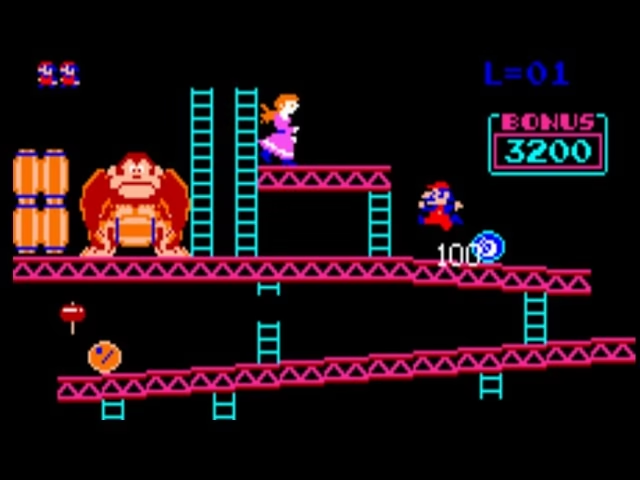
Miyamoto then explained that the difficulty of coding a fight led to his ‘invention’ in “Super Mario Bros.:”
“Normally, if there’s a boss at the end, you have to fight him, right? But creating a battle is really difficult, and we were really struggling with how to do it. When I thought, ‘I can’t create a battle like this,’ I realized that since it’s a game where you keep running to the right, how about making it so that the person who reaches the far right wins? Then I had a brilliant idea: ‘Why not just jump over the opponent instead of fighting?’ All you have to do is jump over Bowser, and he’ll fall. I found it surprisingly fun when I tried it, and I was really happy when I realized that. … That’s the backstory of “Super Mario.” So, as we made the second and third games, Mario gradually started to have proper battles with Bowser.”
So, there you have it! Miyamoto enjoyed the freedom of keeping Mario perpetually moving to the right side of the screen, and he reasoned that to win the game, you didn’t need to fight Bowser; all you had to do was move to the right side of the screen. It was certainly innovative, and while few games followed his lead, his impact on Nintendo and pop culture as a whole is undeniable.
Shigeru Miyamoto received the Order of Culture on October 23, 2026, for his decades-long career and global impact on popular culture.