Retro Replay Retro Gaming History, Reviews & Emulation
Eighteen years ago, I stepped out of Vault 101, squinted into the sunlight, and looked out over the ruins of Washington, D.C.
More than a thousand hours later, I’m still not finished exploring.
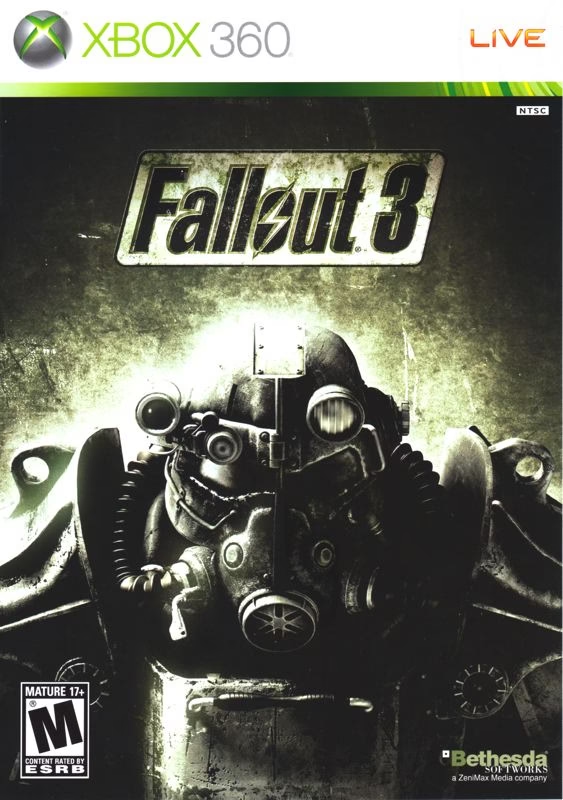
On 28 October 2008, Bethesda Game Studios released Fallout 3 for PC, Xbox 360, and PlayStation 3, bringing the legendary post-apocalyptic RPG franchise into a fully realized, three-dimensional world.
And for me, everything changed.
I’d already enjoyed the first two Fallout games, but this was something different. Something bigger, stranger, and more immersive than anything I’d experienced in the franchise before.
I’d been anticipating it for months. This wasn’t simply a game I planned to pick up eventually. It was a day-one pre-order, special edition and all, with the strategy guide to go along with it.
And I couldn’t wait to get started.
Welcome to the Capital Wasteland
There are certain moments in video games that stick with you long after you’ve forgotten the details of the quests, characters, or stories surrounding them.
Leaving Vault 101 was one of those moments.
 After spending the opening portion of the game growing up inside a sealed underground Vault, you finally emerge into the outside world.
The door opens. You step into a big sky. Your eyes adjust.
And there it is.
The Capital Wasteland.
A vast, devastated landscape stretches out before you, with the ruins of Washington, D.C., waiting in the distance.
And just like that, you’re on your own.
I remember that moment vividly. The sense of freedom, the anticipation, and the realization that there was an enormous world out there waiting to be explored.
I’d played plenty of open-world games by then, including Bethesda’s own The Elder Scrolls titles, but something about stepping into the Wasteland for the first time really grabbed me.
And it never quite let go.
Fallout Finally Found Its Personality
Now, I know there are plenty of longtime Fallout fans who aren’t particularly fond of Bethesda’s interpretation of the franchise.
Some prefer the deeper roleplaying mechanics, writing, and tactical combat of the original games. Others feel that Bethesda emphasized exploration and action at the expense of the series’ original identity.
And that’s fine.
I’m not going to tell anyone they’re wrong for preferring the classics.
I enjoyed Fallout and Fallout 2 myself. They were excellent isometric RPGs, with interesting stories, memorable characters, and plenty of choices.
But to me, they often felt like darker, post-apocalyptic versions of the other computer RPGs I’d been playing.
Fallout 3 was different.
For me, this was where the series really found its personality.
 The retro-futuristic technology, the 1950s-inspired culture, the propaganda, the ridiculous consumer products, the corporate satire, and that wonderfully twisted sense of humor all seemed to come together.
Those elements certainly existed in the earlier games. Bethesda didn’t invent them.
But in Fallout 3, they felt more prominent, more immediate, and more thoroughly woven into the world.
There was something wonderfully absurd about wandering through the radioactive ruins of America while listening to cheerful old songs about love and happiness.
Or discovering another piece of Vault-Tec technology that promised a brighter future while offering considerably more questionable results.
The world was grim, violent, and often depressing.
But it was also goofy, satirical, and occasionally downright ridiculous.
And I loved that combination.
A World That Rewarded Curiosity
One of the greatest strengths of Fallout 3 was its exploration.
Sure, there was a main story to follow. You were searching for your father, uncovering secrets, and eventually getting caught up in a much larger struggle over the future of the Capital Wasteland.
But there was so much more to discover along the way.
You could wander through ruined neighborhoods, explore abandoned buildings, investigate mysterious Vaults, stumble across strange settlements, and uncover little stories told entirely through the environments.
And sometimes those discoveries were more interesting than whatever quest you were supposed to be completing.
 Megaton, Rivet City, Underworld, the ruined Washington Metro (ugh), the museums, monuments, and countless forgotten locations scattered across the wasteland.
Everywhere you looked, there was another reason to stop exploring the main storyline and wander off in some completely different direction.
That’s one of the things I love most about Bethesda’s approach to open-world games.
They give you an objective, point you in the general direction of your destination, and then fill the surrounding world with so many distractions that you might not get there for another twenty hours.
And I’m perfectly fine with that.
I’ve explored practically every corner of Fallout 3, yet I still find myself thinking about another character, another approach, or another way to experience the Wasteland.
Even after more than a thousand hours.
War Never Changes. But Your Character Can.
Another thing I appreciated was the freedom to develop different characters.
The familiar SPECIAL system returned, along with skills, perks, equipment, and the ability to approach combat and conversations in different ways.
The biggest gameplay change, of course, was the shift away from the original games’ turn-based, isometric combat.
You could now fight enemies directly from a first- or third-person perspective, using firearms, melee weapons, explosives, and whatever other questionable equipment you could scavenge from the ruins.
And then there was V.A.T.S.
The game didn’t really work as an FPS, but the Vault-Tec Assisted Targeting System allowed you to pause the action, select specific enemy body parts, and watch the results play out in wonderfully gruesome slow motion.
It wasn’t traditional turn-based combat, but it retained a little of that tactical decision-making while fitting the new perspective.
I thought it worked well.
And the character progression gave me plenty of reasons to experiment with different builds.
As usual, I tended to play good characters.
I know the game offers plenty of opportunities to become a thoroughly unpleasant person, but that’s generally not how I like to play RPGs.

Although I did have to dabble in evil karma for a few achievements.
Apparently, my conscience is willing to make occasional exceptions when there’s Gamerscore involved.
But most of my adventures have involved trying to make the Wasteland a slightly better place.
Or at least leaving it in better shape than I found it.
Which isn’t always easy when half the population seems determined to shoot you on sight.
Some of My Favorite Wastelanders
Of course, the world wouldn’t have been nearly as entertaining without the characters who inhabited it.
And Fallout 3 had some great ones.
Fawkes was fantastic. A surprisingly intelligent and thoughtful super mutant who offered a welcome change from the endless parade of enormous green lunatics trying to smash my head in.
Then there was Charon.
The ghoul bodyguard from Underworld became one of my favorite companions in the game. There was something about having that quiet, intimidating fellow watching my back that I particularly appreciated.
But if I had to choose just one companion, Charon would probably get my vote.
And then there’s Moira Brown.
Ah, Moira.
The endlessly cheerful, slightly unhinged proprietor of Craterside Supply, determined to write the definitive guide to surviving the Wasteland.
By sending you out to perform increasingly ridiculous and dangerous experiments.
I mean, who doesn’t want to test the effects of radiation poisoning, land mines, or severe physical injury in the name of scientific research?
For the record: Moira might be one of the most entertaining characters in the game.

And let’s be honest.
Moira is waifu material. Right?
Maybe I just have a weakness for enthusiastic women who think getting shot at is a reasonable way to gather data.
There were plenty of other memorable characters, too, from Three Dog and the residents of Megaton and Tenpenny to the various eccentrics scattered throughout the Capital Wasteland.
They helped make the world feel like more than a collection of locations and enemies.
They gave it personality.
About Those DLCs…
Now, here’s an opinion that probably won’t win me many friends among the Fallout faithful.
I’ve played through all of Fallout 3‘s downloadable expansions, including Operation: Anchorage, The Pitt, Broken Steel, Point Lookout, and Mothership Zeta.
I’ve explored their locations, followed their stories, and experienced what they added to the game.
And while I enjoyed parts of them, I have to admit something.
I don’t like Fallout DLC nearly as much as many other fans seem to.
And that isn’t limited to Fallout 3.
Across the franchise, I’ve generally found the main games more enjoyable than their expansions.
It’s not that the DLCs are necessarily bad. Some introduce interesting stories, memorable locations, and entertaining new mechanics.
But they rarely capture the same feeling I get from exploring the main Wasteland.
Maybe it’s because I prefer having an enormous, interconnected world where I can wander freely rather than being pulled into a more self-contained adventure.
Or maybe I just enjoy the freedom of the base games more.
Whatever the reason, the DLCs have never been the main attraction for me.
Give me another excuse to explore the Capital Wasteland, and I’m happy.
Eighteen Years and a Thousand Hours Later
Here’s the thing about Fallout 3.
I’ve explored every corner of the map. I’ve completed the main storyline and side quests, played through the expansions, and created more characters than I can easily remember.
And I’m still looking forward to my next playthrough.
There are still different character builds to try, different moral decisions to make, and familiar stories to experience through a new set of eyes.
 And I think that’s the hallmark of a truly great RPG.
It isn’t simply about how many hours of content the developers have packed into the game.
It’s about how much you want to return to that world after you’ve already experienced what it has to offer.
I know Fallout 3 has its critics. I know the original games handled certain RPG mechanics differently, and I know some fans believe Bethesda took the franchise in the wrong direction.
But I love Bethesda’s Fallout games.
And I make no apologies for that.
The originals introduced me to the Wasteland, but Fallout 3 made it a place I wanted to explore again and again.
Eighteen years later, I’m still finding new ways to enjoy it.
And somewhere out there, another Vault Dweller is waiting to step into the sunlight for the very first time.
War never changes. Apparently, neither does my love for Fallout 3.
What about you? Was Fallout 3 your introduction to the franchise, or were you already a fan of the original games? And who’s your favorite companion in the Capital Wasteland?
#GamesWithGalt #Fallout3 #Fallout #BethesdaGameStudios #Xbox360 #PS3 #PCGaming #RPG #OpenWorldGames #GamingHistory #VideoGames