 Retro Replay Retro Gaming History, Reviews & Emulation

Retro Replay Review
Gameplay
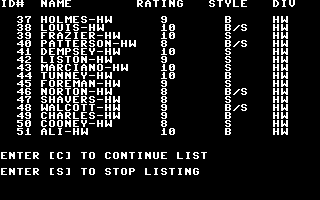
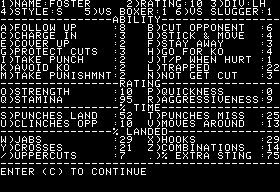
The hook is immediate: pick two fighters, settle on a division and distance, then make the first strategic call before the bell. Ringside Seat turns boxing into a contest of managerial nerve. Sending a man in with Charge In or Go For The Knockout sounds thrilling until you remember stamina, strength, style, and more than 20 other ratings are quietly determining whether that gamble has legs.
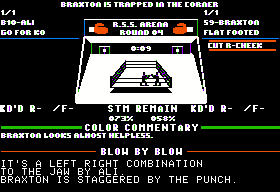
What starts to click is the rhythm of reassessment. Each round asks you to choose from a compact but meaningful set of instructions: Fight Flat Footed, Cover Up, Stick & Move, Stay Away, Protect Cuts, and the more aggressive options. You are trying to read a fight from its blow-by-blow account rather than react with joystick reflexes, which gives every change of plan a satisfying coach-at-ringside tension.
That same restraint can become frustrating if you want immediate control over every exchange. Once the strategies are locked, you watch the fighters carry out the round, and the drama rests on interpretation, ratings, and patience. Still, the option to show cumulative judging during the bout or hold it back until the end lets you choose between tactical information and a more suspenseful wait for the decision.
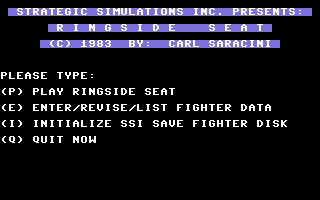
The range of formats makes the basic system go further than a single exhibition. You can manage against the computer, hand the other corner to another person, or let the computer run the whole fight. Choosing among eight weight classes, setting anywhere from three to 15 rounds, and saving fighters or unfinished bouts gives the game the feel of a boxing hobby you can return to rather than a one-night novelty.
Graphics
The action is shown through text and semi-animated ring screens as the fighters meet in the center and the round plays out. It is a functional view built for following a bout exchange by exchange, not a detailed recreation of televised boxing.

Story
Ringside Seat finds its drama in the contest itself. A fighter surviving pressure, a manager changing course after a difficult round, or a close scorecard building toward the final bell can create the kind of sporting narrative boxing fans already know how to read.
The roster of more than 45 notable fighters gives those matchups extra flavor. Selecting a familiar name and deciding whether a boxer-slugger type should fight as a boxer or a slugger adds a small but welcome layer of pre-fight imagination to each booking.
There is no need for a scripted tale when the game is asking a simpler question: did your corner make the right calls? The strongest stories here are the ones you can retell afterward—when you pressed too hard, protected a cut at the right time, or watched the judges settle an argument.
Overall Experience
Ringside Seat is a thoughtful boxing management game with a pleasingly direct focus. It understands that the tension of boxing is not only in the punch; it is in deciding whether to risk another round of pressure, conserve a tiring fighter, or trust that the score is already in hand.
Its text-led, watch-the-fight structure asks more of your imagination than an action boxing game, and that will be a hard stop for some. Give it an hour, though, and the accumulation of ratings, styles, strategies, cuts, round limits, and judging pressure starts to make each decision feel less like selecting a menu item and more like working a corner.
For a gamer who likes sports simulations where informed choices matter more than twitch skill, the payoff is worth it. The two-player format is especially well suited to a friendly argument over tactics, while the computer-managed option makes it easy to stage and observe dream matchups. Ringside Seat is narrow in scope, but it goes deep where it counts: the uneasy space between the bell and the next decision.


Reviews
There are no reviews yet.