Retro Replay Retro Gaming History, Reviews & Emulation
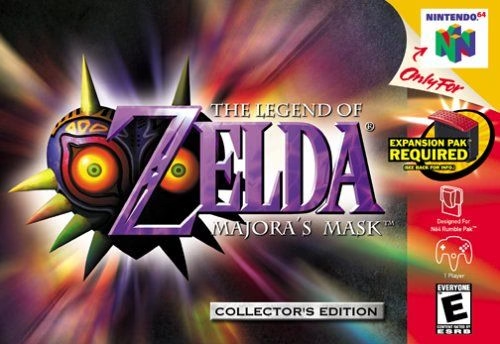
There’s nothing like a giant, angry-looking moon threatening to destroy the world to ruin a perfectly good afternoon of exploring.
And in The Legend of Zelda: Majora’s Mask, that moon wasn’t particularly interested in waiting for you.
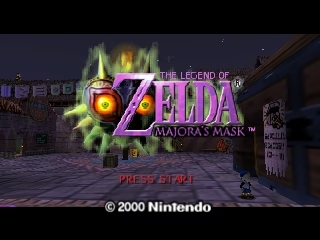
On 26 October 2000, Nintendo released Majora’s Mask in North America for the Nintendo 64, following up one of the most beloved games of its generation, Ocarina of Time.
Those were some pretty big shoes to fill.
I’d enjoyed Ocarina of Time tremendously, and I was certainly interested in another adventure with Link. I actually bought both of the N64 Zelda games used. Back then, buying every new game on release day wasn’t really an option for me. It wasn’t until the disc-based console generations that I started picking up more games at launch.
 But whether I played something on its first day or discovered it a little later never mattered much once I got into the adventure.
And Majora’s Mask was definitely an adventure worth having.
This game was a banger! I loved it! Not quite as much as Ocarina of Time, but it was a great experience with some genuinely creative ideas.
And one mechanic that drove me absolutely crazy.
A Familiar Hero in a Very Different World
Rather than sending Link back into Hyrule for another confrontation with Ganondorf, Majora’s Mask took the series in an unexpected direction.
Following the events of Ocarina of Time, Link finds himself in the strange land of Termina, where the mischievous Skull Kid has come into possession of a powerful and dangerous mask.
Unfortunately for everyone living in Termina, Skull Kid has also set the moon on a collision course with the world.
And Link has just three days to stop it.
No pressure.
Although Majora’s Mask used the same basic engine and many familiar elements from Ocarina of Time, the atmosphere was noticeably different.
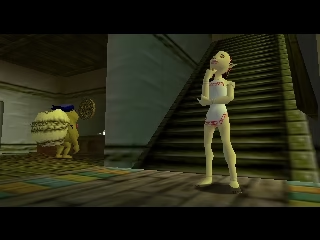
Termina was a strange place, filled with eccentric characters, mysterious locations, and people dealing with the looming possibility that their entire world was about to end.
 And that moon!
Hanging overhead with its enormous, unsettling face, it was a constant reminder that something terrible was coming.
I liked the darker atmosphere. It worked with the story, and it gave Majora’s Mask a distinctive personality.
Where Ocarina of Time felt like a grand fantasy adventure, Majora’s Mask was something more unusual. It was a little creepy, sometimes melancholy, and frequently downright bizarre.
But it was still unmistakably Zelda.
Three Days to Save the World. Seriously?
Now, I’ve never been particularly fond of games that impose time limits.
I like exploring. I like poking around in places I probably shouldn’t be. I like getting distracted by side quests, collecting things, and occasionally forgetting what I was supposed to be doing in the first place.
That’s part of the fun of an adventure game!
And Majora’s Mask took that approach and threw a ticking clock right in my face.
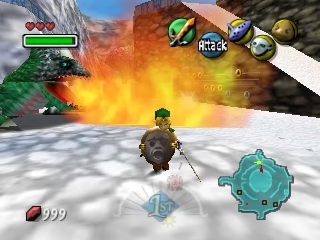
The game’s central mechanic was a repeating three-day cycle. As time passed, the people of Termina went about their daily routines, events unfolded, and that enormous moon crept closer to the ground.
If the clock ran out, it was game over.
Fortunately, Link could use the Song of Time to return to the beginning of the cycle, retaining important items and accomplishments while resetting many events and unfinished activities.
It was a clever idea.
I hated it.
 Well, maybe that’s putting it a little strongly. I understood what Nintendo was trying to accomplish, and the mechanic certainly made the game different.
But I’ve never enjoyed being rushed through an adventure.
I don’t want to feel like I’m racing against a stopwatch every time I decide to wander off and explore something interesting.
And while Majora’s Mask gave players ways to manipulate the flow of time, the mechanic remained a constant part of the experience.
For the record: The developers originally considered a repeating seven-day cycle before condensing it into three days. Apparently, keeping track of an entire week’s worth of schedules and events was a little too ambitious, even for Nintendo.
I can appreciate the creativity behind the system.
That doesn’t mean I have to enjoy it.
The Many Faces of Link
One of my favorite additions to Majora’s Mask was the expanded mask system.
Masks had already appeared in Ocarina of Time, but the sequel made them a central part of the adventure.
Some provided useful abilities, while others opened up new opportunities for exploration, solving puzzles, or interacting with the people of Termina.
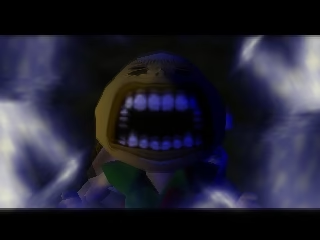
And several transformed Link into entirely different forms.
The Deku Mask allowed him to become a Deku Scrub, with unique movement and abilities. The Goron Mask turned him into a powerful, rolling powerhouse, while the Zora Mask made underwater exploration a completely different experience.
Each transformation brought new mechanics and approaches to navigating the world.
I enjoyed that variety.
And collecting masks was fun, too.
Rather than simply adding another weapon or piece of equipment to your inventory, the masks often changed what you could do or how you approached a situation.
It was a creative way to expand the familiar Zelda formula without abandoning what made the series enjoyable.
And unlike the countdown clock, this was an innovation I could get behind.
A Different Kind of Zelda Adventure
Another interesting aspect of Majora’s Mask was how much attention it devoted to the people living in Termina.
Clock Town served as the center of the adventure, and its inhabitants followed routines that changed throughout the three-day cycle.
Characters went to work, met friends, worried about their problems, and reacted to the approaching disaster.
You could learn their schedules, help them with their troubles, and sometimes uncover surprisingly touching little stories.
This gave the game’s side missions a different flavor from the usual collection of errands and fetch quests.
You weren’t simply helping someone find a missing object or defeat a monster. You were occasionally helping people confront their problems while the end of the world approached.
And that darker, more personal storytelling suited the setting.
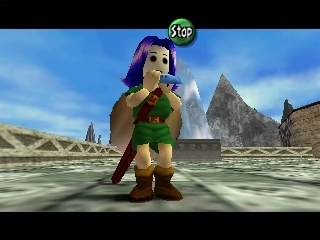
The main adventure also featured four major temples, along with a collection of puzzles, enemies, and bosses that made good use of the game’s unusual mechanics.
There was plenty of traditional Zelda gameplay beneath all the experimentation.
Exploration, combat, puzzles, interesting characters, and the satisfaction of discovering new abilities were all still there.
It was just wrapped in a decidedly stranger package.
Following Ocarina of Time Was Never Going to Be Easy
I think Majora’s Mask deserves credit for not simply trying to repeat Ocarina of Time.
The developers could have produced another conventional Hyrule adventure using the same engine, familiar mechanics, and recognizable characters.
Instead, they tried something different.
The repeating time cycle, transformation masks, unusual setting, and darker story all helped give Majora’s Mask its own identity.
And while I didn’t enjoy every one of those choices, I appreciated the willingness to experiment.
That doesn’t mean I preferred it to Ocarina of Time.
I didn’t.
For me, Ocarina was a more satisfying overall adventure, without the constant pressure of a ticking clock.
But that doesn’t diminish what Majora’s Mask accomplished.
It was a great game that took the series in an unexpected direction, introducing some genuinely clever ideas while preserving the exploration and adventure that made Zelda special.
Even if I occasionally wanted to tell that enormous moon to give me five more minutes.
Twenty-Six Years Later
I haven’t revisited Majora’s Mask since moving on from the Nintendo 64.
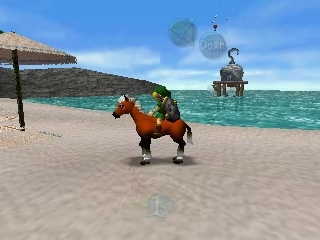 So I’m looking back at it through the memories of that original experience, rather than pretending I’ve recently played through it again.
And those memories are largely positive.
I remember enjoying the strange world, collecting masks, experimenting with transformations, and appreciating the darker story.
I also remember how much I disliked that damned clock.
Maybe if I returned to Termina today, I’d have a different appreciation for the three-day cycle and everything the developers built around it.
Or maybe I’d still be grumbling every time I had to restart the clock.
Either way, Majora’s Mask earned its place among the great Zelda adventures.
I may prefer Ocarina of Time, but I respect Majora’s Mask for having the courage to be something different.
A great Zelda game? Absolutely. My favorite? No. But certainly one worth remembering.
What about you? Did you prefer Ocarina of Time or Majora’s Mask? And did you enjoy the three-day time cycle, or did you find it as frustrating as I did?
#GamesWithGalt #MajorasMask #LegendOfZelda #Nintendo64 #N64 #GamingHistory #RetroGaming #AdventureGames