Retro Replay Retro Gaming History, Reviews & Emulation
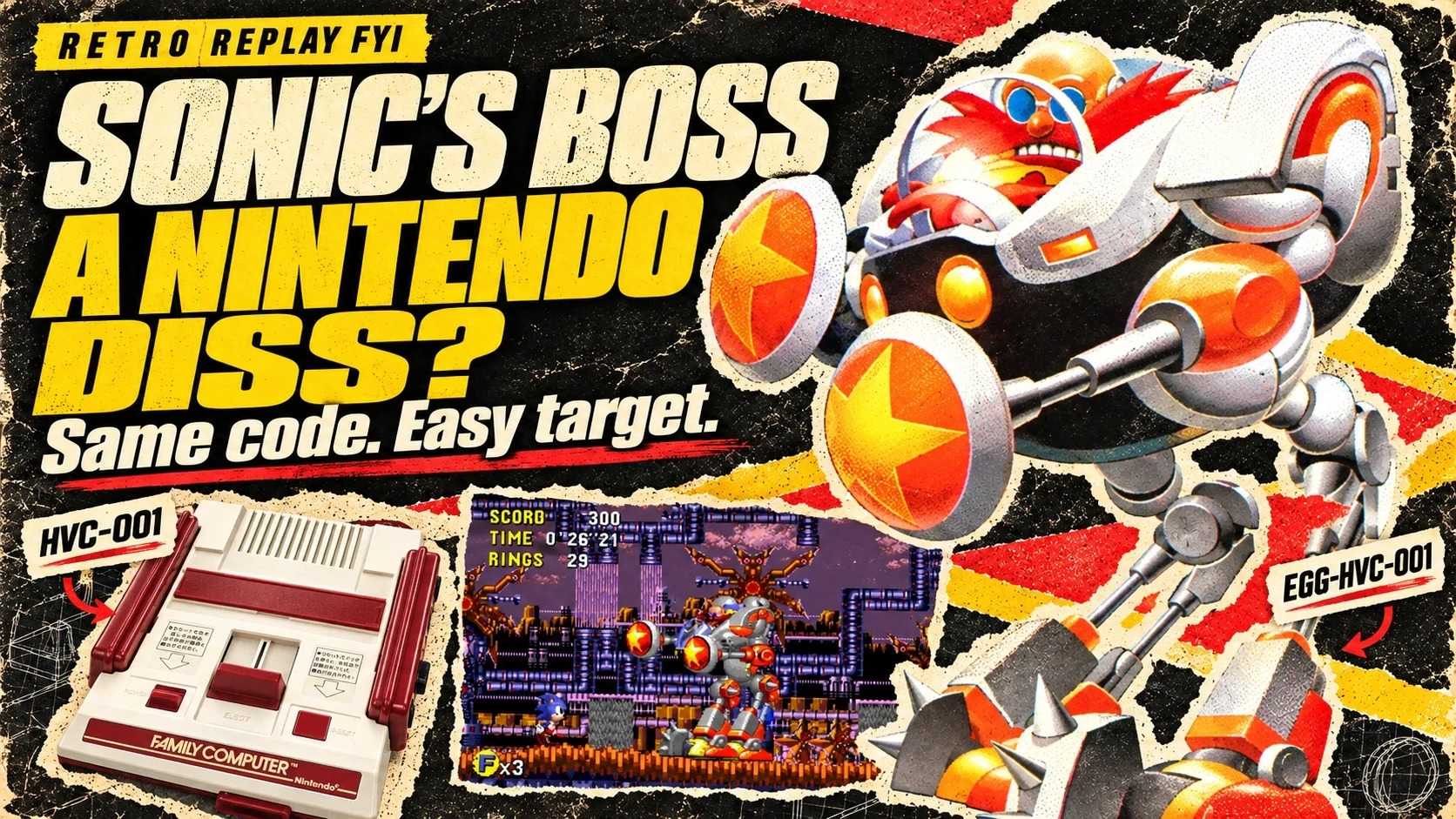
Sonic CD’s first boss has a name that looks as though somebody forgot to replace a part number: EGG-HVC-001. Then you look up Nintendo’s original Famicom and find its model number: HVC-001. Oh, Sega. Even the paperwork?
That’s a wonderfully petty little discovery for anyone who remembers choosing sides in the console wars. You could argue about Mario and Sonic all afternoon, then boot up Sonic CD and unknowingly spend your first boss fight smacking a machine with Nintendo’s hardware code in its name.
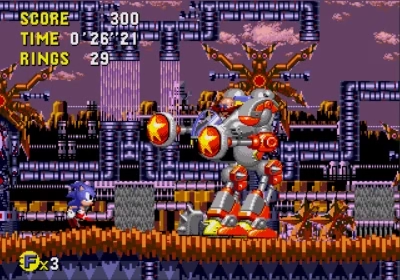
Eggman brought the Famicom number
The robot waits at the end of Palmtree Panic, where the tropical opening gives way to Eggman’s machinery. He’s perched inside a white-and-orange walker with long metal legs and large circular hands. It looks considerably more expensive than the trouble it gives Sonic. Eggman really ought to ask about a warranty.
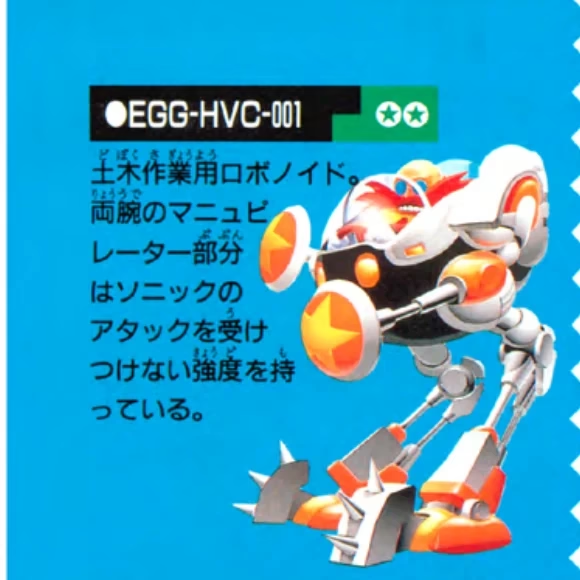
Its name isn’t something a fan invented afterward. Sega’s original Japanese instruction booklet prints EGG-HVC-001 beside the robot on page 31. Nintendo’s own Famicom hardware page lists HVC-001 under the console’s specifications. Both halves of the comparison are sitting right there in the companies’ own material.
For American readers, the Famicom is the Japanese system whose overseas counterpart was the Nintendo Entertainment System. The specific model number here belongs to that red-and-cream Japanese machine. This isn’t a reference to the Super Nintendo, despite Sonic CD arriving while Sega and Nintendo were busy fighting over the 16-bit living room.
A very plausible little elbow to the ribs
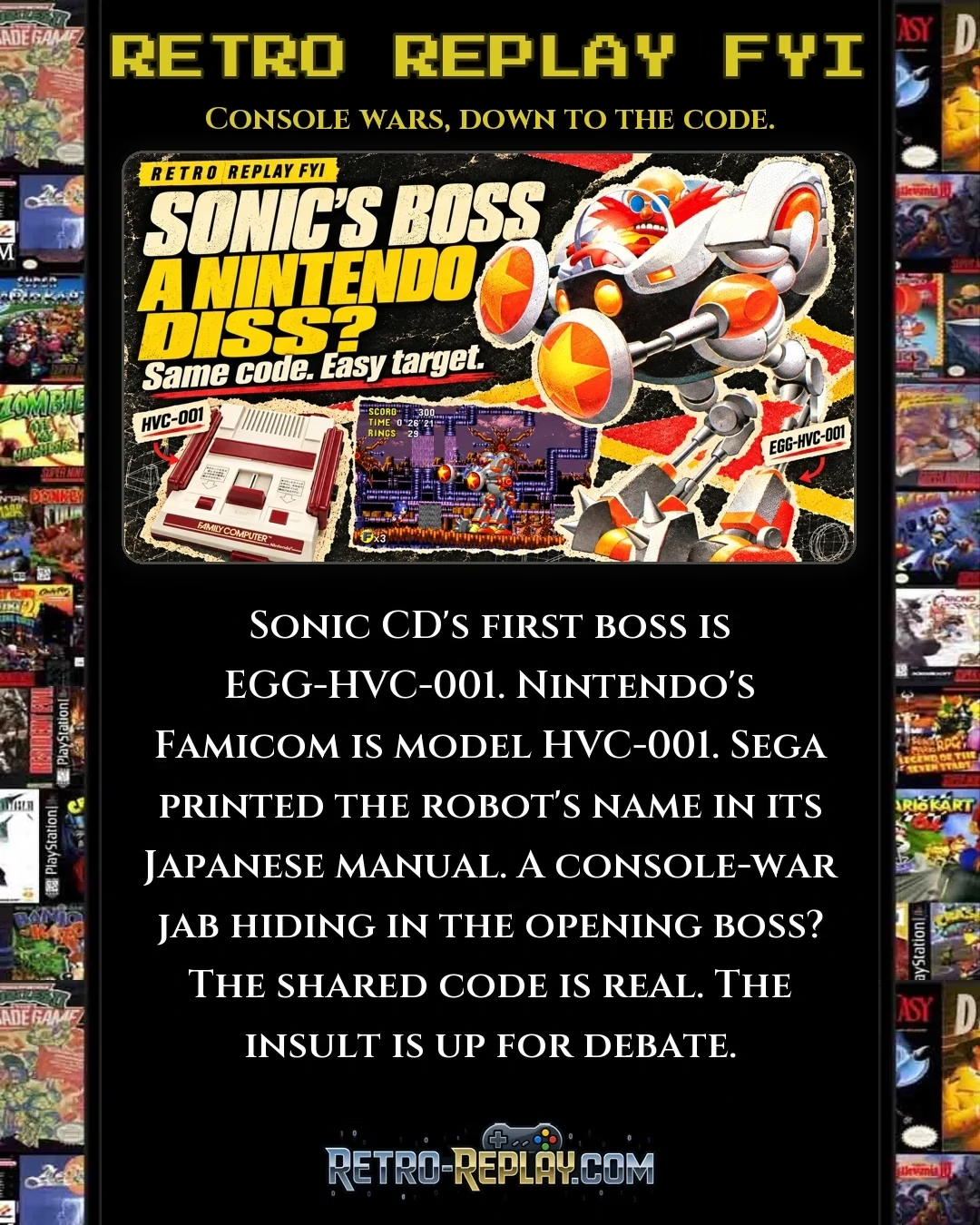
Giving the opening boss a rival console’s model number certainly invites a joke, especially when the machine doesn’t put up much of a fight. What I couldn’t find was a developer saying the name was chosen to insult Nintendo. The shared code is documented; the deliberate console-war diss remains an interpretation. A very entertaining one.
And it fits the fun of poking around these old games. You might know every turn in Green Hill and still miss a joke tucked into a Japanese enemy guide. Sonic’s smaller-screen outings had their own surprises, too: the Game Gear versions of Sonic the Hedgehog and Sonic the Hedgehog 2 are different adventures from their Genesis namesakes, with different levels and boss encounters to learn.
EGG-HVC-001, though, earns a special place in the scrapbook. All those giant machines Eggman could have built, and this one sends you looking up a Nintendo specification sheet. That’s an unusual way to lose a boss fight.
Sources
- Sega: Sonic the Hedgehog CD Japanese instruction booklet, printed page 31 (PDF page 16), the original EGG-HVC-001 name and illustration.
- Nintendo: Famicom hardware and specifications, confirming the console’s HVC-001 model number.
- Sonic Wiki Zone: EGG-HVC-001, the updated destination for the supplied trivia reference and its boss overview.
More #RetroReplayFYI
Eggman’s printed biography gets even stranger: the Sonic Heroes manual calls him a feminist and a self-professed gentleman. Apparently the giant robots weren’t keeping his publicist busy enough.