 Retro Replay Retro Gaming History, Reviews & Emulation
Retro Replay Review
Gameplay
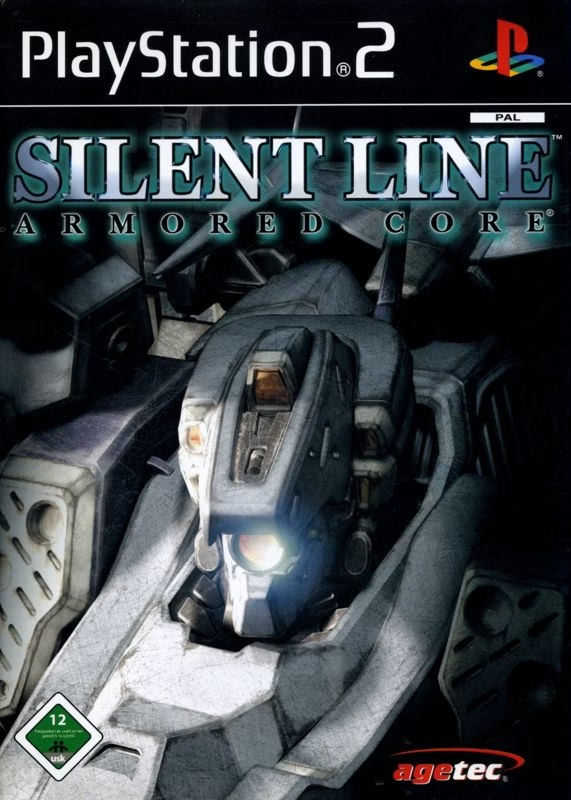
The best moments in Silent Line: Armored Core arrive after a frustrating mission makes you admit that the mech, not just your aim, needs work. You pilot a Raven through combat jobs on foot and in the air, firing machine guns and missiles while trying to keep a handle on your machine’s resources. At first, the familiar PS2 movement and aiming feel demanding, especially when you are learning to manage positioning and track opponents at the same time. Give it some patience. The controls begin to make sense once you stop treating the garage as an optional break between missions.
Assembly is the heart of the game. Heads, cores, arms, legs, weapons, and other parts let you tune weight, energy, and firepower across hundreds of possible components. A powerful weapon is not automatically the right answer if it burdens the rest of the machine, and that tradeoff gives victories a personal quality. You are not merely bringing a stronger robot to a mission. You are bringing a solution you assembled, tested, and hopefully can afford to maintain.
Money pressure keeps that tinkering honest. Credits buy equipment, but ammunition and repair costs also come out of your earnings, so sloppy wins can sting. That makes efficient mission play as important as raw destruction. The arena and AI-controlled copies of your own mech add worthwhile side challenges, and you can train those copies rather than leaving them as static curiosities. If you are coming from Armored Core 3, carrying equipment forward makes this direct sequel especially inviting. Newcomers should expect to restart, rebuild, and learn from bad results.
Graphics
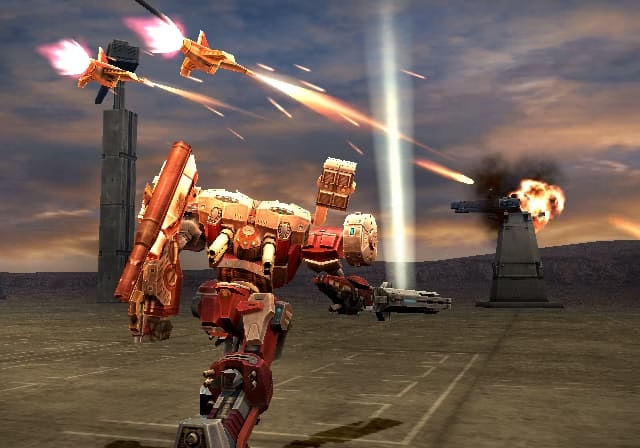
The PS2 battlefields have a pleasingly heavy, industrial look. Angular red, gray, and yellow mechs fight across wide concrete yards with boxy shoulder missile racks and clearly different weapon shapes. Towers and hangar walls rise around them, while dark hills and a cloudy purple-orange sky break up the gray distance. Orange beams and bright white-blue booster flames provide the sharpest bursts of color.
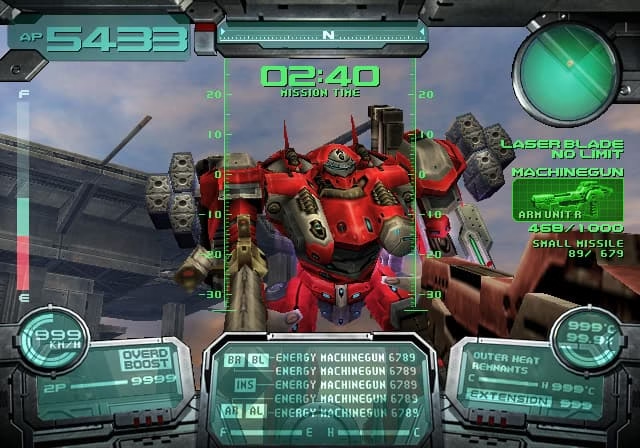
The standard camera sits behind your machine, and a cockpit view can put a nearby red opponent directly in your sights. Both views suit the blunt, mechanical combat. The environments can look bare, though, with large flat stretches of ground and sparse structures that do not have much detail beyond their imposing concrete forms.
Story
Silent Line starts from a promising piece of Armored Core history: after the destruction of the earlier AI controller, humanity has returned to the surface. That return does not bring peace. A newly discovered megacity lies behind a defensive boundary that destroys anything approaching it, and the mystery of that boundary gives the mercenary work a strong forward pull.
You are a Raven hired by the government to investigate the Silent Line, with corporate interests circling the situation as well. It is a useful frame for the mission structure because every assignment feels tied to a dangerous place nobody fully understands. The game does not need to turn its setup into a sweeping character drama to create tension. The sense of operating near an armed, forbidden border does a lot of the work.
The story is most rewarding if you enjoy a sparse sci-fi setup that leaves room for your own focus on the job at hand. You take contracts, prepare a machine, and push closer to a threat that has already proven it can erase intruders. For extra context on the setting and the practical rules around assembly and missions, the original PlayStation 2 manual is a useful companion.
Overall Experience
This is not a game that flatters you immediately. It asks for comfort with older console controls, repeated experimentation, and the willingness to accept that a failed mission may be a design problem rather than a reflex problem. That can be aggravating when you just want to get back into action, but it is also where the game gets its bite. A revised build can make a previously miserable job feel manageable.
The sequel has real depth for anyone who enjoys studying a loadout before pulling the trigger. Its dozens of missions, hundreds of parts, arena fights, and financial consequences create a loop that rewards deliberate play. You can fly, unload missiles, and chase targets, but the lasting satisfaction comes from knowing why this particular mech can handle this particular contract.
Silent Line: Armored Core lands as a solid but demanding PS2 mech game rather than an effortless classic. The bare industrial arenas and adjustment-heavy controls may wear down anyone looking for instant arcade thrills. If you like the idea of earning progress through careful construction and efficient sorties, however, its hard-edged approach is worth the investment.


Reviews
There are no reviews yet.