 Retro Replay Retro Gaming History, Reviews & Emulation


Retro Replay Review
Gameplay
The first hour of LovePlus has a deceptively ordinary pull. You are a new student in Towano, dividing time among studying, school activities, committee work, and a part-time job while getting to know Manaka, Rinko, or Nene. Conversations and choices gradually shape affection, so the early game feels less like hunting for one perfect answer and more like deciding whose company you want to pursue.
That pacing starts to click when you accept that the 100-day confession deadline is only a threshold. Reaching a confession opens the ongoing relationship instead of rolling credits on the romance, and that is the unusual promise at the center of the game. Dates, phone calls, and touch-driven interactions continue, while a girl’s clothing, hair, and behavior can respond to her preferences. It is a more sustained idea of dating than the genre usually offers.
The real-world clock is both the cleverest and most divisive part. Appointments and seasonal events tied to the DS calendar can make checking in feel surprisingly intimate, especially if you enjoy folding a game into your actual routine. They can just as easily become pressure if your schedule is unpredictable or you dislike a game expecting repeat visits. Skip Mode is a sensible escape hatch because it lets you advance on your own schedule, though missing some real-calendar events weakens the very texture that makes LovePlus distinctive.
There is useful context in Tokimeki Memorial, another Konami school-life dating sim, but LovePlus earns its own reputation by treating the post-confession relationship as the main event. The original Konami LovePlus guide is also worth consulting if you want a clearer sense of its real-time dating structure and Skip Mode before committing.
Graphics
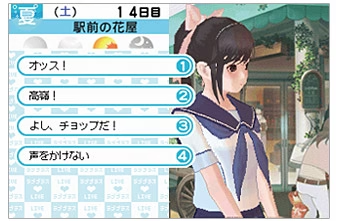
During close conversations, the three-dimensional anime-styled girls face you in parks, a cafe, school grounds, and a sunny seaside spot. Rinko’s short dark hair and yellow clip stand apart from Manaka’s dark ponytail, while sailor uniforms give way to casual pink and gray tops. Cherry blossoms, sunflowers, and detailed shopfronts lend the locations more warmth than the DS’s low-resolution character models can manage. The close framing is intimate and the expressions land in still poses, but angular hair and coarse edges are hard to ignore.
Story
LovePlus is not chasing a mystery, a villain, or a climactic quest. Its story is everyday interaction: getting closer to a classmate through the places and obligations that make up student life. That modest scope is a strength because it gives the three routes room to feel rooted in different social situations rather than in genre melodrama.
Manaka is the high-achieving tennis teammate who has been sheltered, Rinko is the younger library-committee colleague who likes books and music but keeps her distance, and Nene is the older student who works with you at a family restaurant and often carries other people’s expectations. Those setups give you clear reasons to be curious about each of them. More importantly, they suggest different emotional temperatures without reducing the choice to a cosmetic preference.
The ongoing relationship structure changes how the romance reads. A confession is not a final reward after a route, but the moment when ordinary contact takes on a different meaning. If you want a tightly authored plot with escalating stakes, the day-to-day focus may feel slight. If you value gradual familiarity and the idea that dating continues after someone says yes, LovePlus has a quietly persuasive point of view.
Overall Experience
LovePlus asks for patience, time, and a willingness to meet it halfway. Its strongest moments are likely to come from repetition that becomes comforting: a call, an appointment, a familiar character in a new bit of everyday context. That is an unusually bold design choice for a handheld dating sim, even if it also means the game can feel demanding rather than relaxing.
You should give it a chance if you enjoy relationship-focused games that let routine carry emotional weight and you are comfortable engaging with a Japanese-language original. The three heroines have enough distinct starting points to make your choice matter, and the move beyond confession gives the game a purpose many romance games abandon too early.
Skip it if you want fast narrative payoff or hate tying game progress to a real calendar. LovePlus is at its best when you let it occupy a small place in your day, not when you try to force it into a weekend binge. For the right kind of player, that can turn its limitations into the reason it stays memorable.


Reviews
There are no reviews yet.