 Retro Replay Retro Gaming History, Reviews & Emulation
Retro Replay Review
Gameplay
Storyteller has a wonderfully immediate hook: a level tells you the kind of story it wants, and you build that story one comic panel at a time. You place a setting, drop in characters, and watch their relationships steer the result. That makes the premise easy to understand even if you usually bounce off puzzle games that bury their ideas under complicated systems.
The puzzle is that the panels are not just slots to fill. A character’s place in the sequence matters, as do the people around them. Love, lies, revenge, betrayal, heroes, villains, dragons, and vampires are less like decorative story props than ingredients whose interactions you need to test. When a solution finally works, it feels satisfying because you have identified the little bit of narrative logic the level was asking for.
The drag-and-drop format encourages you to poke at possibilities instead of fearing a wrong move. Still, that same openness can turn against the game when a title leaves you unsure which interaction it expects. At that point, progress may come from cycling through character and setting combinations rather than from a clean flash of deduction. If you enjoy playful trial and error, that is part of the fun. If you need every puzzle to point clearly toward a single line of reasoning, some levels may wear thin.
For a concise overview of its premise and panel-building approach, the official Storyteller page is useful. More importantly, the game itself understands that a simple prompt can have several plausible dramatic answers, and it gets good mileage out of asking you to find the one it recognizes.
Graphics
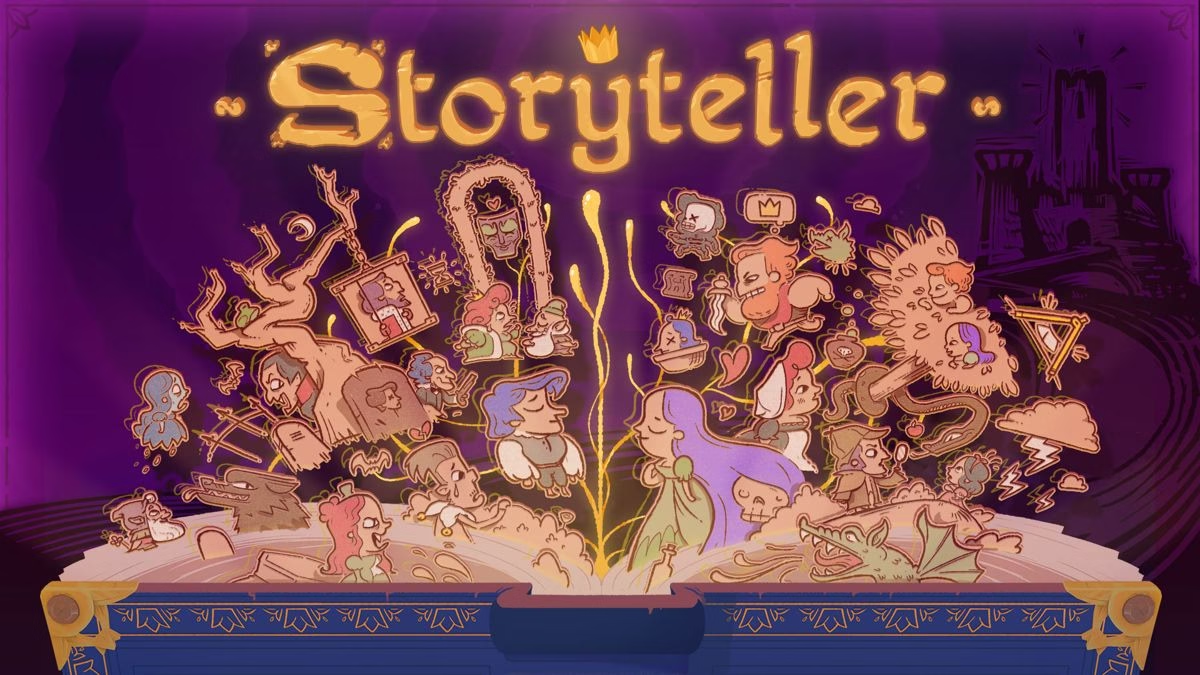
The game uses comic-panel artwork, so each completed arrangement reads like a tiny illustrated story page. The panel format keeps the focus on who is sharing a scene and how the sequence is developing. It is a clean fit for a game built around rearranging narrative pieces.
Story
Storyteller does not ask you to follow one long tale so much as construct a library of miniature ones. Each puzzle title supplies a dramatic destination, while your choices determine the route. That gives familiar material such as romance, villainy, monsters, and betrayal a pleasantly toy-box quality.
The strongest narrative pleasure comes from seeing how quickly a small change can redirect a scene. Put different people into the same situation and the meaning shifts. The relationships create enough context for each solution to feel like a compact punch line.
That simplicity is also the limit. These are deliberately compressed stories, built to serve a puzzle rather than linger as fully developed drama. The emotional beats work best as clever setups and outcomes, not as material you should expect to carry the weight of a character-driven adventure.
Overall Experience
Storyteller is at its best when you approach it with curiosity instead of a need to solve every prompt immediately. It invites you to make a ridiculous arrangement, observe the result, and refine it into the story the level demands. That hands-on experimentation gives the game a personality that many more conventional logic puzzles lack.
The occasional brute-force feeling prevents it from being an essential puzzle masterpiece. Some challenges can leave you searching the possibility space, particularly when a solution does not immediately suggest itself. Even so, the central idea remains strong because it turns cause and effect into something you can literally rearrange.
Give it a chance if you like puzzles with a creative, low-pressure surface and enjoy figuring out how fictional relationships produce consequences. It is less suited to you if you want dense systems, lengthy narrative payoff, or strictly deductive puzzles. For everyone else, it is a clever collection of bite-size storytelling problems with enough charm to make failed experiments entertaining.



Reviews
There are no reviews yet.