 Retro Replay Retro Gaming History, Reviews & Emulation

Retro Replay Review
Gameplay
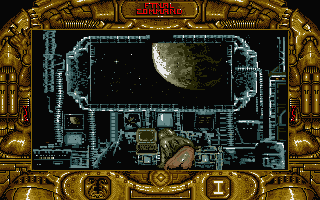
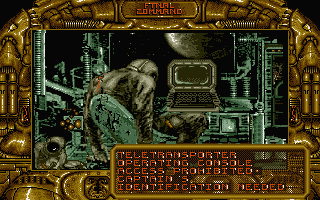
Final Command starts with a clear assignment and immediately asks you to do the work of an investigator. You move through the world from a first-person viewpoint, inspect what you find, collect items, and use them to untangle the mystery around Ipsos III’s destroyed teleportation factory. There is a satisfying little pull in being sent somewhere that has already gone wrong: you are not saving the day through action scenes, but reconstructing what happened from the spaces and problems left behind.
The all-mouse control scheme is one of the game’s friendlier ideas. When the pointer changes over an interactive object, you know it is worth examining; one click brings up a set of commands, and another chooses the action. That is more welcoming than having to memorize a row of verbs, while still preserving the deliberate pace of a classic graphic adventure. You spend your time looking carefully rather than wrestling with the interface.
What starts to click is the rhythm of search, collection, and deduction. You are steadily building a small mental inventory of objects, locations, and unresolved obstacles. Frustration can set in if you want constant forward momentum, because this kind of adventure asks you to linger over the environment and make the right connection rather than pushing you onward. Give it a chance if you enjoy puzzles as the main event; skip it if you need a faster, more action-led science-fiction trip.
Graphics
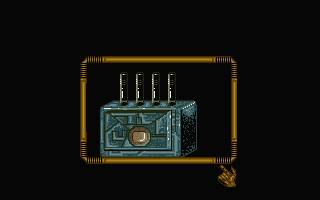
Final Command shows its science-fiction world through a first-person exploration view, with animated sequences carrying the story between stretches of investigation. The cursor changing shape over interactive items is also a useful on-screen cue, helping your eyes separate scenery from objects worth trying.
Story
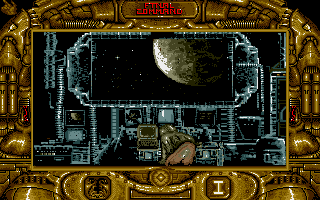
The central mystery is direct and effective. Scientists have created a teleportation device manufactured on Ipsos III, an explosion has destroyed the factory, and contact with the investigating spacecraft has been lost. As special agent YG 30, you are sent to learn what happened and retrieve the teleportation database.
That mission gives the puzzles a purpose beyond simply opening the next door. Every item and obstacle sits inside an investigation into a disaster and a missing ship, so the game has a natural reason to keep you probing deeper. The premise is familiar science-fiction territory, but it is a good fit for an adventure built around cautious exploration.
Animated story sequences help mark out the narrative, while most of the tension comes from your own progress through the investigation. Do not come expecting a sprawling character drama. Come for a focused mystery in which the unanswered questions are the motivation to keep searching.
Overall Experience
Final Command is a solid, somewhat reserved adventure rather than a must-play landmark. Its best quality is how cleanly its premise, first-person exploration, item use, and puzzles line up: you have a mission, a suspicious location, and a practical interface for picking the place apart. When you are in the mood for that patient style of problem solving, it has a dependable old-school charm.
The trade-off is that nearly all of its momentum depends on whether its puzzles engage you. There is no indication here of a broader action layer to break up the investigation, so a stalled solution is likely to feel more noticeable than it would in a busier genre mix. The three save slots on the game disk are worth using carefully, especially before committing to a line of experimentation.
At 6.8, Final Command lands in the worthwhile-but-specialized range. Adventure veterans and sci-fi mystery fans can find a pleasant, focused case to crack, particularly if they appreciate mouse-driven exploration and a slower tempo. Everyone else may admire the setup more than they enjoy the stop-and-think demands of the journey.

Reviews
There are no reviews yet.