 Retro Replay Retro Gaming History, Reviews & Emulation

Retro Replay Review
Gameplay
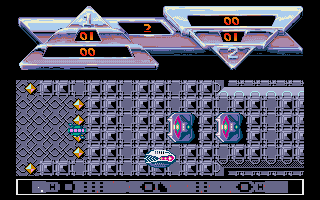
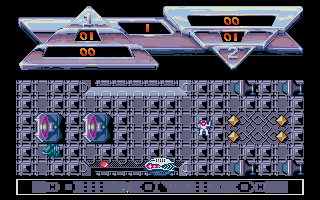
Return to Genesis is at its strongest when you are threading the needle between destruction and restraint. You are asked to shoot through side-scrolling stages full of Mechanauts, but the scientists you are meant to save are also vulnerable to your fire. It is a simple complication, yet a good one: the game turns a familiar “shoot everything” instinct into the exact habit that can cost you useful rewards.
Rescuing scientists is not merely a high-minded optional objective. Each scientist and their clones is tied to a piece of equipment that can be activated while that scientist is aboard. That gives recovery a practical payoff and makes a successful run feel more considered than one where you simply clear the stage by force. You can shoot the scientists to win the level, but it is plainly the poorer choice when extra weapons are on the line.
The collision rule is the other notable twist. Smashing into the environment does not damage your ship; instead, it abruptly reverses your direction at full speed. That is less forgiving than it first sounds, because a mistake in positioning can fling you back through the action when you were trying to press forward. Once you adapt, it gives the movement a distinct rhythm, though anyone wanting the steady, conventional flow of a standard shooter may find it awkward.
Fifty levels and twelve scientists per level give the rescue loop plenty of room to repeat, so your enjoyment depends on whether that core tension grips you. The basic shooting is straightforward, but choosing whom to save and preserving their equipment gives the campaign a reason to demand care. It is a decent fit for a player who enjoys arcade shooters that punish indiscriminate fire rather than reward it.
Graphics
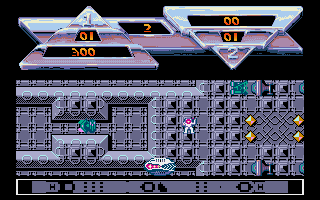
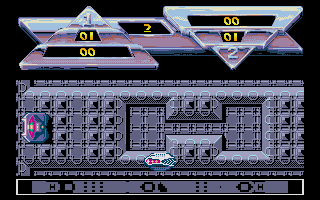
The action is shown in a 2D side-scrolling view, keeping your ship, enemies, and stranded scientists in the same active lane of play. That layout suits the game’s central problem: you need to identify a target before firing, because the people you want to collect are mixed into a shooter built around constant threats.
Story
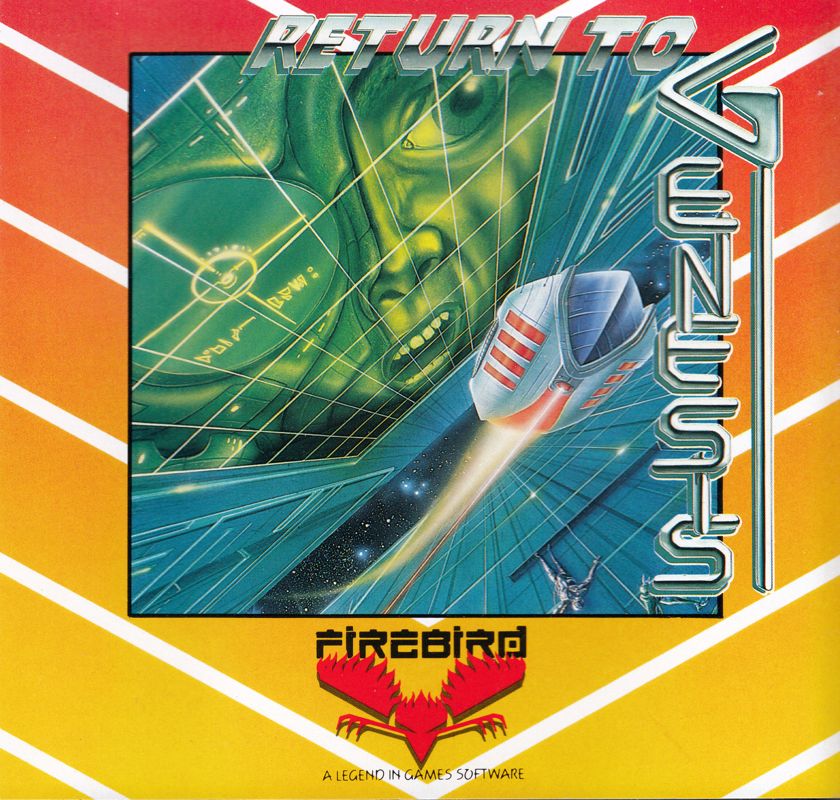
The setup is pulpy science-fiction in the most direct way: twelve scientists in the Zephyr system have been cloned fifty times to speed their secret work, then the Mechanauts invade and put the entire operation at risk. You are sent in to recover the scientists and force the invaders out.
It is not a premise that asks you to untangle motives or linger on the scientists’ projects. Its purpose is to explain why there are so many people to rescue and why every pickup matters beyond a point tally. The cloning detail is especially useful because it turns the enormous rescue count into part of the fiction rather than a purely arbitrary arcade requirement.
The story’s best contribution is how neatly it feeds the game’s central moral nuisance. The people you are saving can also be destroyed, and victory is possible without treating them well. That makes the mission feel slightly more pointed than a simple alien-clearing exercise, even if the narrative remains a frame for the action.
Overall Experience
Return to Genesis is a modest shooter with one smart idea at its center: rescued civilians become equipment, so careless shooting carries a tangible cost. That alone does not transform it into a deep tactical game, but it adds welcome friction to a genre that often runs on automatic aggression.
The forced direction reversal on environmental contact is the feature most likely to divide you. It creates frantic recoveries and demands awareness of your ship’s placement, but it can also turn a collision into an unwelcome loss of momentum. Give it enough time to become familiar before deciding it is clumsy; the game is deliberately asking you to manage space differently.
If you enjoy late-1980s arcade shooters and like the idea of playing carefully for better equipment, Return to Genesis is worth a look. If you mainly want uninterrupted blasting and effortless forward momentum, its scientist-saving demands and reversal rule may feel more irritating than inventive. The concept earns the game more interest than its straightforward premise initially suggests, even if the repetition across fifty levels keeps it from being an essential genre standout.


Reviews
There are no reviews yet.