 Retro Replay Retro Gaming History, Reviews & Emulation
Retro Replay Review
Gameplay
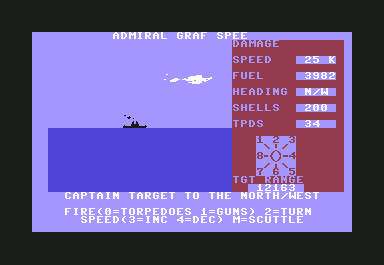
The first hour of Admiral Graf Spee is built around a simple, tense routine: watch the South Atlantic map, chase blinking enemy markers, and line up your course and speed with the target. You are not dropped into instant broadside action. Instead, you spend time making the Graf Spee close the gap, which gives every contact a little uncertainty. Is that dot a transport worth hunting, or a battleship about to turn your raid into a disaster?
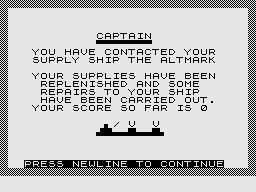
That uncertainty is where the game has its best moments. Cargo ships are tempting prey, while battleships demand caution, and the difference matters because you are managing a finite raiding run rather than isolated fights. Fuel, ammunition, and damage all hang over the mission. The Altmark’s appearances to restock supplies and make small repairs offer a welcome reprieve after successful engagements, but they do not erase bad decisions.
Frustration sets in if you need constant action or detailed tactical control. Much of the experience is waiting for a target to come into range after you have carefully matched its movement. The basic loop can feel thin, and the difficulty spike from easy prey to formidable warships is blunt. Still, there is a clean strategic satisfaction in deciding when to press an advantage and when preserving the ship matters more than one more sinking.
Graphics
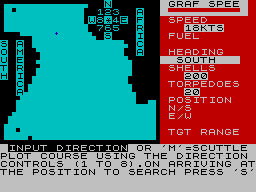
The game is seen from a top-down map view, where enemy ships register as blinking dots across the South Atlantic. It is a sparse picture, but it suits the hunt: you can quickly see the contacts you are trying to intercept and focus on their movement rather than decorative detail.
Story
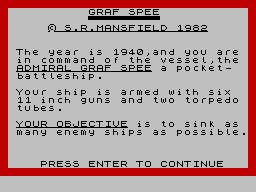
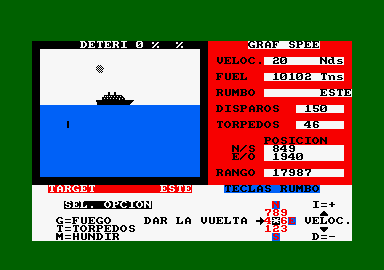
There is no sprawling character drama here; the story comes from the captain’s career as it develops through your results. You command the German cruiser Admiral Graf Spee on a wartime mission to disrupt Allied transport routes, and each successful engagement pushes the campaign toward a more triumphant outcome.
The multiple endings are the game’s strongest narrative hook. Sink enough enemy ships and the high command may allow you to retire with full honors. Fail to survive the Allied response, and the campaign ends on their terms. There is also the possibility of following the ship’s historical fate, which adds a grim option to a game otherwise driven by score-minded raiding.
That structure gives your victories a purpose beyond simply clearing another target. You are trying to build a record while keeping a valuable ship alive, and the endings make the final state of the Graf Spee feel consequential even when the moment-to-moment action is austere.
Overall Experience
Admiral Graf Spee is a modest but credible early naval strategy game. Its strongest quality is the pressure it creates from limited resources and uncertain targets. A blinking contact is never merely a thing to shoot at; it could be an easy haul, a costly delay, or the enemy force that ends your voyage.
The dated simplicity is impossible to ignore. If you want elaborate ship handling, rich battle detail, or a fast-paced World War II campaign, this will likely feel too bare and too slow. Its patience requirement is real, and the chase-and-intercept routine does not have enough variation to carry every session.
Give it a chance if you enjoy old-school simulations that ask you to make do with a map, a vulnerable ship, and imperfect information. The payoff is not spectacle but a hard-earned campaign outcome: a run of successful raids, a battered escape after resupply, or a final decision that echoes history. That narrow tension keeps it interesting, even if it never rises above a middling naval sim.


Reviews
There are no reviews yet.