 Retro Replay Retro Gaming History, Reviews & Emulation
Retro Replay Review
Gameplay
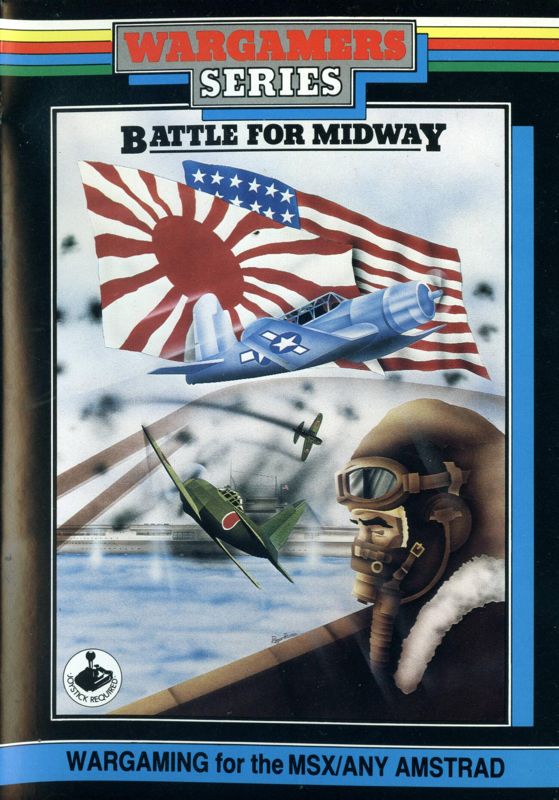
The first hour has a sharp, anxious pull because Battle for Midway immediately puts you in charge of a situation you cannot casually recover from. Japan is coming for Midway, and you have Enterprise, Hornet, and Yorktown under the banner of two task forces to stop its carrier divisions. Your objective is plain: protect the island while destroying or driving away the attacking force. That clarity works in the game’s favor; you spend your time thinking about the enemy rather than decoding a vague mission.
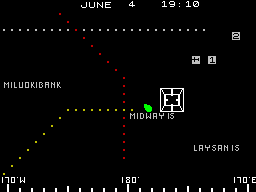
The strategy layer is where its historical premise earns its keep. You command Task Force 16 and Task Force 17 in real time, and the pressure comes from having to make decisions while the battle continues around you. This is not a relaxed turn-by-turn naval puzzle. If you enjoy being forced to act on imperfect timing and live with the consequences, the game has a satisfying urgency.
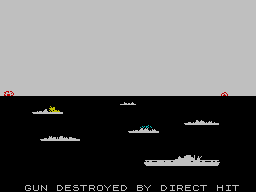
Its defining twist is the switch from commander to gunner. When Midway or one of your task forces comes under air attack, you personally man the guns and shoot at incoming planes until the attack ends or your gun is destroyed. That can be exciting because the larger campaign suddenly has a direct, personal consequence. It can also frustrate you if you came strictly for fleet command: the game asks for arcade shooting competence at the exact moments when you may be most invested in your wider plan.
Graphics
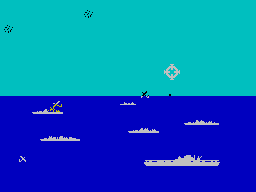
The diagonal-down battle view suits the naval focus, giving you a top-down angle on the conflict rather than a cinematic deck-level perspective. Aircraft attacks are the clearest visual priority, since you must track swooping planes closely enough to shoot them down during the defensive sequences.
Story
Battle for Midway starts from a clean, effective wartime briefing: American intelligence has cracked a Japanese coded message, revealing an attack intended to seize Midway and destroy the Pacific fleet. It wastes no time turning that intelligence into a problem with immediate stakes. Midway cannot fall, and the carriers cannot be thrown away.
There is no need for a complicated character drama here. The game’s story is the battle itself, framed through the burden of command. You are sent out with named carriers and a concise warning, then left to prove whether the fleet can survive the trap.
That framing works because it keeps every objective grounded. Protecting Midway is not an abstract score condition; it is the center of the mission. The historical setting gives the action weight without slowing it down, and the repeated need to defend your forces makes the command role feel more exposed than in many strategy games.
Overall Experience
Battle for Midway is most interesting when it refuses to stay in one genre. The real-time task-force command gives you a strategic responsibility, while the gun sequences demand that you personally help keep ships and island defenses alive. The combination creates tension that a pure shooter or pure naval strategy game would not quite match.
The trade-off is that the game can feel demanding in two different ways. You need to think like a commander, but you also need to react like a gunner when aircraft arrive. That split focus will either make the battle feel brilliantly hands-on or make it seem like the game is interrupting its own strongest ideas. Your taste for older arcade-strategy hybrids matters a great deal.
At its best, it turns the Battle of Midway into a compact command crisis: make the right calls, then defend them yourself when the sky fills with attackers. Give it a chance if that mix sounds appealing and you value tension over comfort. It is a worthwhile historical strategy curiosity, though not one with the smooth focus or consistency needed to rise beyond a solid, qualified recommendation.


Reviews
There are no reviews yet.