 Retro Replay Retro Gaming History, Reviews & Emulation
Retro Replay Review
Gameplay
The strongest part of Bismarck is the tension between what you know and what you need to know. Air searches let you hunt across the map, weather forecasts complicate your judgement, and every ship movement matters because the German side is trying to break free while the British side cannot afford to search blindly forever. It is a good fit for you if the thought of planning a naval interception sounds more exciting than quick reflex action.
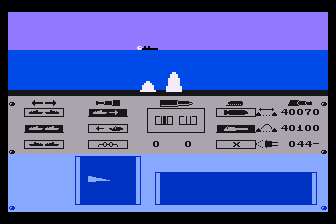
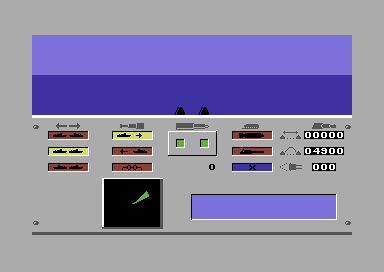
Once battle begins, the game gives you plenty to worry about. You can direct deck-gun and torpedo fire, while also controlling repairs in the middle of the fight. That mix turns combat into more than a simple exchange of shots: a bad engagement can leave you trying to save a damaged ship while still pursuing the larger objective. The German victory conditions give the chase real shape, too. Escaping south or getting back to France after sinking enemy ships means survival alone is not the whole job.
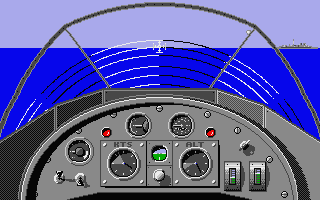
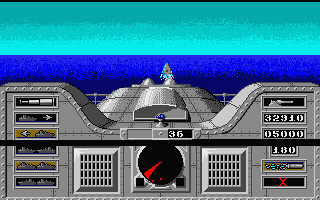
The Swordfish sequences add a welcome change of pace. Flying a Fairey Swordfish to make a torpedo run puts you directly into one small, dangerous part of the wider operation, rather than keeping every decision at map level. It also makes the game unusually broad for its era, moving between fleet command and first-person aviation without losing sight of the Bismarck hunt.
That ambition is also where frustration can set in. Bismarck asks you to juggle searching, forecasting, maneuvering, fighting, and damage control, so it can feel demanding before its rhythm clicks. Stick with it if you enjoy making deliberate decisions under pressure. If you mainly want a fast naval action game, its simulation-minded pace may feel like work.
Graphics
The game shifts between a top-down map for the wider hunt and a first-person view when you fly a Swordfish torpedo attack. That change in viewpoint is its clearest visual strength: you can move from plotting fleets across the North Atlantic to personally lining up an aerial strike.
Story
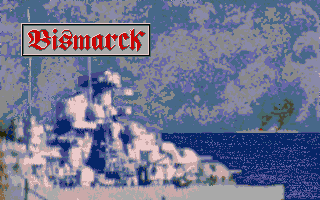
This is history used as a pressure cooker rather than a character drama. Set during Operation Rheinübung in May 1941, the central question is immediate: can Bismarck evade the Allied fleet and reach a position from which it can raid supply convoys?
Taking either command gives the scenario two distinct emotional angles. As Germany, you are protecting a valuable battleship and looking for a route out. As Britain, you are trying to close a moving net before that opportunity disappears. The same North Atlantic situation becomes either an escape story or a pursuit story depending on your side.
That focused setup works because the objectives are concrete. The German player has defined ways to win, including escaping south or returning to France after sinking enemy ships, while the British side is tasked with preventing that outcome. There is no need for a sprawling plot when the chase itself supplies the stakes.
Overall Experience
Bismarck is a solid, focused historical strategy game whose best moments come from uncertainty. Searches fail to settle the question, weather affects your thinking, ships must be moved with purpose, and contact can turn into a fight that demands attention to weapons and repairs. It captures the feeling of commanding an operation rather than simply reenacting a battle.
Its 6.3 score feels fair. The design has real depth and an admirably wide range of duties, but that range makes it less approachable than a more streamlined strategy game. You will get more from it if you are willing to learn through a few tense, imperfect attempts rather than expecting immediate command of the situation.
Give it a chance if World War II naval history, cat-and-mouse strategy, and slower tactical decision-making are already your comfort zone. The payoff is a chase with genuine stakes and room for different approaches on either side. For everyone else, its dense workload may outweigh the pleasure of the hunt.

Reviews
There are no reviews yet.