 Retro Replay Retro Gaming History, Reviews & Emulation
Retro Replay Review
Gameplay
The first few minutes are charming because Sports-A-Roni refuses to pretend it is a serious athletics game. You choose events from a menu styled as nine television screens, then plunge into contests that turn Olympic-pageantry logic inside out. A sack race through Mexico has you alternately hitting left and right for speed while steering around open manholes. In Venice, a wall-running event first asks you to time a run beneath a parrot so it can drop the hat you need to score. That level of silliness gives the compilation a genuine hook.
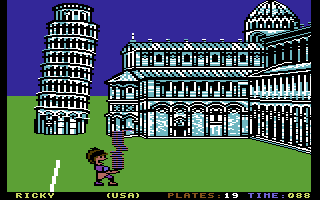
Its better events ask you to make a small risk-reward decision rather than simply hammer buttons. The Pile Of Plates lets you choose how ambitious to be before the run: carry more plates for a higher potential score, but move too quickly and the load tumbles. You also have to work the character’s arms against the wobble, so a safe, modest run can beat somebody who begins with a towering stack and drops most of it. Boot Throwing similarly builds a usable little contest out of deciding between an empty boot and a heavier water-filled one, then building momentum without tiring out before release.
Elsewhere, the controls can turn the joke into a chore. Pole Climbing relies on repeating a specific up/fire/down sequence, with errors sending your climber back down, while Pillow Fight uses distinct combinations for strikes and blocks. These are the kinds of events that reward practice, but they can feel fussy before their timing clicks. River Jump is particularly unforgiving: you manage the drooping pole during an automatic run, then must release at the right moment to clear the water. You will get more from Sports-A-Roni by treating each event as a brief contest to master with another person, not as a polished all-round sports challenge.
Competition and practice modes are welcome, and the mix of turn-based and head-to-head events gives a group some variety. Still, the game insists on at least two entered names even if you intend to play alone, and not every event supports the same kind of opponent setup. The largest practical irritation comes after the medals: once the selected events are done, the session ends. Want a rematch? You must reload and go through player selection again. On tape, even reaching the medal table can involve a long wait while the program reads to the end.
Graphics
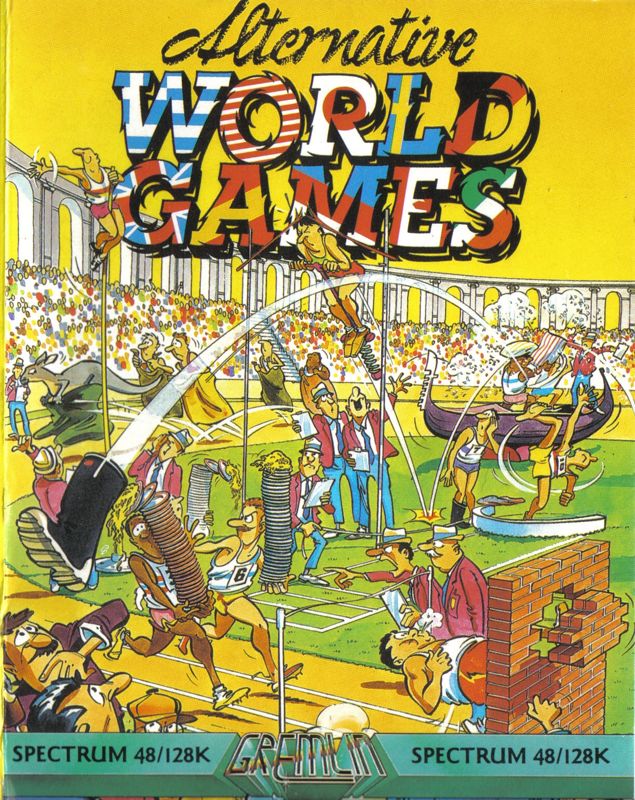
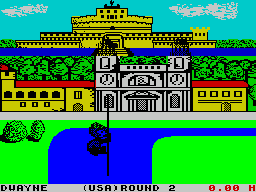
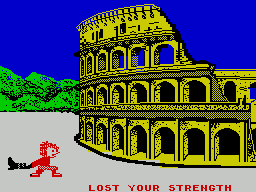
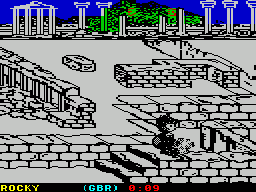
The TV-bank selection screen is the clearest visual joke, turning the event menu into a row of sporting channels that animate when you make a choice. The events move between recognizable locations—Mexico for the sack race, Pisa for the plate event, the Colosseum for boot throwing, Venice for several contests, and Greek temple ruins for pogo sticking—giving each absurd discipline a different postcard backdrop.
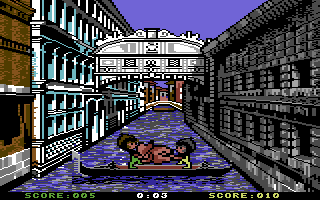
Characters communicate their predicament through the action itself: plates wobble, a boot circles before its throw, a climber can slide down a pole, and a pillow fighter can be knocked from a gondola into the water. It is simple, direct cartoon sport rather than anything graceful, which fits a game built around athletes making fools of themselves.
Story
There is no campaign to carry you from event to event. Sports-A-Roni’s “story” is its running gag: this is an international Olympiad for people who would rather throw a boot, bounce around ruins on a pogo stick, or slap an opponent with pillows than compete in a proper sport.
The locations supply just enough context for the punchlines. Pisa naturally hosts the plate challenge; Venice gets gondola pillow fights and the wall-running hat stunt; an Italian Colosseum frames boot throwing with a straight-faced tourist-postcard absurdity. The game understands that each event only needs one strong comic image.
That lightness works in short bursts, especially when a human rival turns a bad run into a shared laugh. Do not expect the countries or characters to develop beyond their role in the next gag. The medal table supplies the endpoint, not a narrative payoff.
Overall Experience
Sports-A-Roni is more memorable for its willingness to be ridiculous than for the consistency of its eight games. When you are trading scores in plate carrying, trying not to overcook a boot swing, or laughing at a failed attempt to acquire a parrot-delivered hat, it captures the scrappy competitive spirit that oddball multiplayer compilations need.
The rougher side is impossible to ignore. Several events demand precision through button patterns and timing, and the structure makes repeat play needlessly laborious. A compilation should make “one more round” effortless; here, the reload requirement puts a heavy brake on that instinct. The scoring and medal table give the session a finish line, but not much reason to endure the setup again immediately.
Give it a chance if you enjoy 1980s sports parodies, have a friend ready to share in its eccentric rules, and can forgive some stiff event design. Solo play against the computer can help you learn the available events, but the game is livelier when someone else is suffering the same manholes, wobbling plates, and collapsing pole climbs. It is a middling game with a better sense of humor than many of its contemporaries.


Reviews
There are no reviews yet.