 Retro Replay Retro Gaming History, Reviews & Emulation
Retro Replay Review
Gameplay
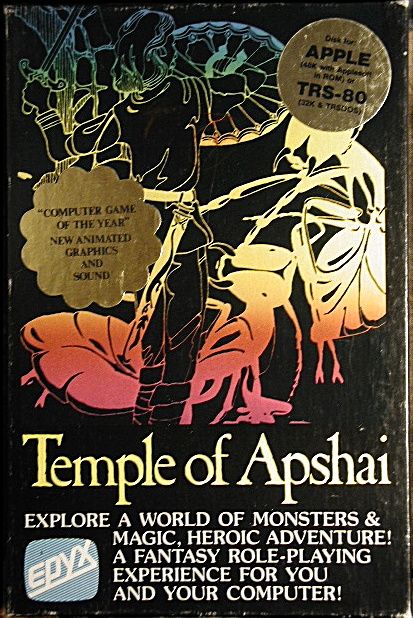
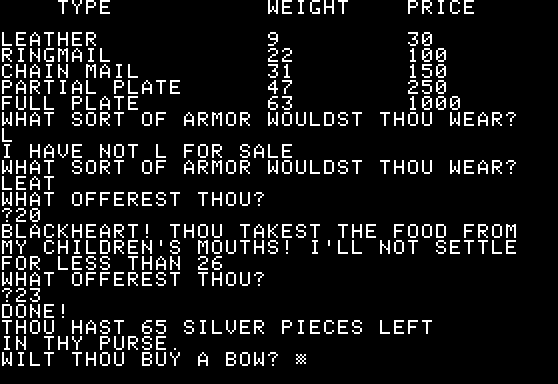
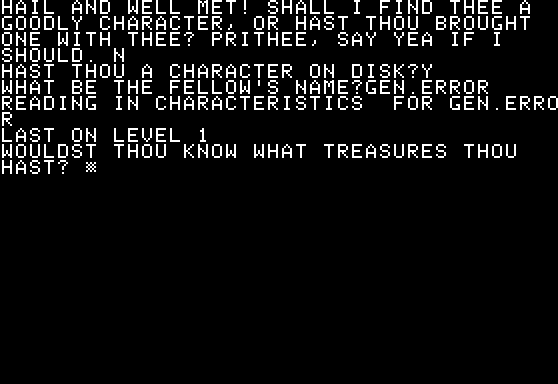
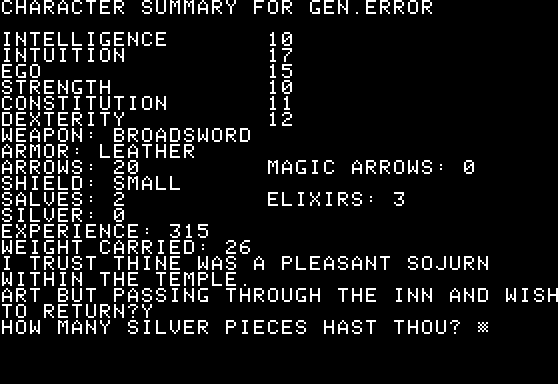
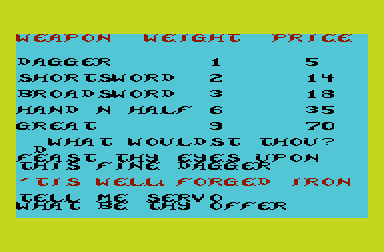
Temple of Apshai introduces players to an early, graphical dungeon crawl where every move carries weight. You begin at the Innkeeper’s shop, allocating Dungeons & Dragons–style attributes and purchasing equipment, or importing characters from other adventures. This blend of tabletop stat management and digital convenience makes for a satisfying setup phase that still resonates with modern RPG sensibilities.
Once inside the temple corridors, exploration unfolds in a turn-based, top-down view that reveals only your immediate surroundings. You examine walls for secret doors, probe for traps, and scavenge rooms for gold and useful items. The careful pace of movement—selecting direction, then stepping one to nine spaces—keeps you mindful of fatigue, which can climb to 100% and leave you helpless if you overexert yourself near a lurking Giant Bombardier Beetle or skeletal warrior.
Combat likewise feels strategic rather than frantic. You can thrust for greater damage, parry incoming blows, or loosed arrows from a distance. In moments of desperation, you might even attempt to parley with certain monsters. Every decision—attacking, evading, or retreating—hinges on your remaining fatigue, armor class, and the strength of your weapons, ensuring each encounter demands thoughtful consideration.
The inclusion of detailed room descriptions in the printed manual elevates the gameplay beyond its simple graphics. Before stepping into a new chamber, you read evocative text that hints at lurking dangers, hidden treasures, or secret passages. This marriage of prose and pixel art creates a tension-filled atmosphere that rewards patient exploration and careful note-taking.
Graphics
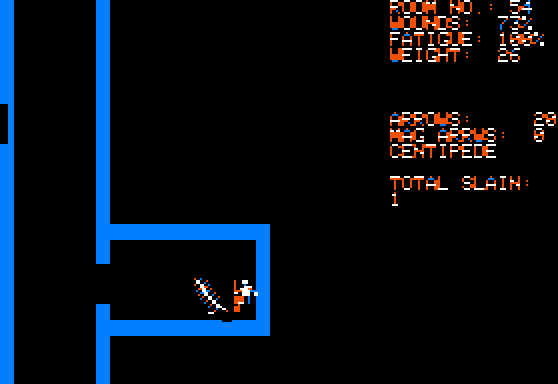
By today’s standards, Temple of Apshai’s visuals are stark and minimal, but they were revolutionary in 1979. The left side of the screen displays your current room in monochrome shapes, while the right side lists character stats, inventory, and status effects. There’s no scrolling map—only a snapshot of what lies immediately around you.
To compensate for its Spartan visuals, the game’s manual provides richly detailed illustrations and lengthy room descriptions. These textual embellishments paint vivid scenes of dripping stone corridors, flickering torchlight, and hidden alcoves, letting your imagination fill in the graphical gaps. This interplay between crude on-screen art and descriptive text creates a uniquely immersive experience.
While there’s no sound or animation beyond the occasional flicker of the display, the minimal interface remains functional. Every keypress—whether probing for traps, opening a door, or firing an arrow—is deliberate. Though the graphics may feel archaic, they succeed in conveying essential information without overwhelming the player, a design lesson that still holds value.
Overall, the simplicity of the presentation invites you to focus on atmosphere, strategy, and story. In an era before cinematic cutscenes or real-time 3D, Temple of Apshai proved that imagination, aided by text and basic visuals, could deliver a compelling fantasy adventure.
Story
At its core, Temple of Apshai offers a minimalist narrative: delve into a monster-infested ruin, recover treasure, and return to the Innkeeper victorious. Yet the game’s manual weaves a framework of lore, describing the temple’s ancient builders, the curse that fell upon its halls, and the nature of its many denizens.
Each room’s accompanying description adds layers of story to what would otherwise be a grid of corridors. You learn of sacrificial chambers, hidden vaults, and the restless spirits that haunt certain levels. These narrative snippets spark curiosity, encouraging you to map each floor and uncover secrets that lie beyond locked doors and deadly traps.
Dialogue is sparse but impactful. Occasional attempts to speak with strange beasts or restless ghosts may yield clues, warnings, or cryptic taunts. These fleeting exchanges remind you that the temple itself is alive with history and mystery, and that every treasure you seize comes at a perilous cost.
Ultimately, the story emerges organically through exploration and discovery. Players forge their own legends as they record maps by hand, note trap locations, and negotiate with creatures of darkness. It’s an old-school approach that rewards patience, curiosity, and a willingness to let imagination shape the narrative.
Overall Experience
Temple of Apshai stands as a cornerstone of computer role-playing games, laying groundwork still felt in modern dungeon crawlers. Its blend of tabletop character creation, turn-based tactics, and atmospheric descriptions delivers a challenge that feels fair yet unforgiving. Fatigue management and careful resource allocation keep each expedition tense and engaging.
For retro gamers and RPG historians, the title offers priceless insight into the evolution of game design. You’ll appreciate how early developers used simple graphics and rich text to create immersive worlds long before powerful hardware or sophisticated engines existed. Even today, the sense of discovery and risk remains potent.
Admittedly, newcomers may find the interface archaic and the pace deliberate. There are no quest markers, auto-save systems, or coded tutorials—just you, your character sheet, and a printed manual. But for those willing to embrace its old-school ethos, Temple of Apshai rewards meticulous play with genuine suspense and the joy of uncovering lost treasures.
In sum, Temple of Apshai is not merely a relic; it’s a testament to the creative spirit that launched the CRPG genre. Whether you’re mapping dungeon corridors by hand or savoring every line of the manual, you’ll discover why this pioneering adventure remains a must-play for fans of classic role-playing games.


Reviews
There are no reviews yet.