 Retro Replay Retro Gaming History, Reviews & Emulation
Retro Replay Review
Gameplay
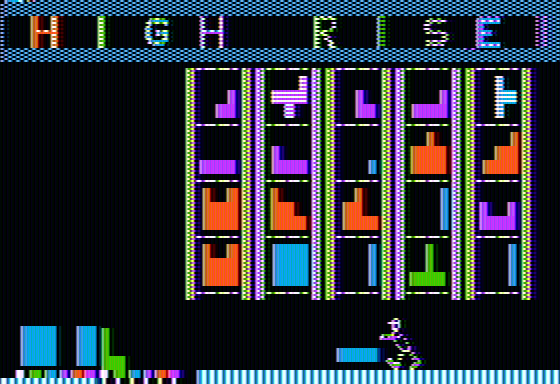
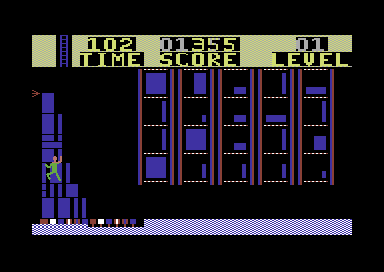
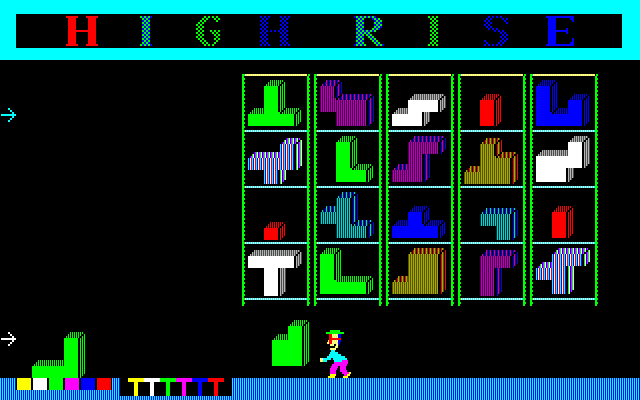
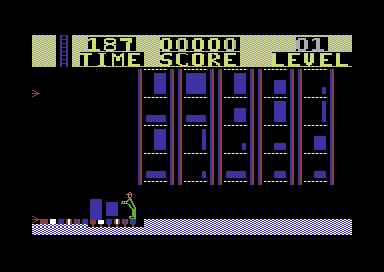
Highrise begins with a task you can understand in seconds: Barnaby stands beneath five chutes of blocks, selects what he needs, positions it at a springboard, and sends it toward the building area. Your aim is to make a tower tall enough to reach the ladder above. That simple loop is strong because each block is both a possible solution and a possible disaster.
What starts to click is that you are not merely stacking for height. You have to consider which blocks belong where, since a poor choice or awkward position leaves the tower unstable and vulnerable to collapse. Reaching upward feels satisfying precisely because the game makes you earn every safe layer; a tower that looks promising can still be a bad foundation for the next decision.
The time limit gives the puzzle its edge. Later levels allow less time, so you cannot endlessly inspect every option and wait for the perfect move. That can be frustrating when haste pushes you into a shaky build, but it is also where Highrise finds its character. You are balancing deliberate construction against the need to act now.
Instructor mode is more than a consolation option. Use it first if the timed game feels harsh: without the clock, you can concentrate on the logic of block selection and positioning, then bring that understanding back into the faster levels. The payoff is a game that asks for both composure and speed rather than treating quick reactions as a substitute for thought.
Graphics
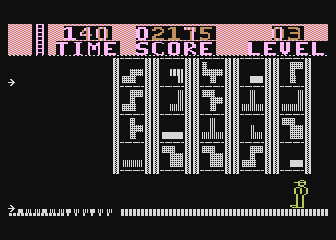
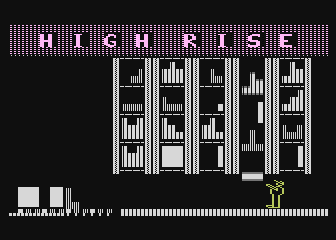
The side-view layout keeps the important pieces in front of you: Barnaby working beneath five block chutes, the springboard, the rising tower, and the ladder at the top of the screen. It is a practical arrangement for a puzzle about judging placement and climbing toward a visible goal.
Story
Highrise keeps its premise lean. Barnaby needs to build high enough to climb to a ladder, and that is the entire motivation you need from one level to the next. The climb is not background decoration; it is the direct reward for building well.
That bare setup suits the game’s structure. Every completed tower creates a tiny, self-contained arc: collect the right pieces, make the structure hold, reach the required height, and move on. The sense of progress comes from conquering a new construction problem rather than from plot turns.
Because the next level reduces the available time, advancement also carries its own tension. Getting Barnaby to the ladder does not just mark success; it puts you into a stricter version of the same challenge. If you like games that let the objective do the storytelling, Highrise is admirably direct.
Overall Experience
Highrise is a focused puzzle game with a good central contradiction: you must build carefully, but the game increasingly refuses to let you take your time. That pressure makes its collapses sting, yet it also makes a clean, stable tower feel like a genuine accomplishment rather than a routine answer.
Its best moments come after you stop treating the blocks as interchangeable. Once you understand that placement and selection determine whether your tower can survive, the frantic movement under the chutes has a purpose. The game becomes less about simply reaching upward and more about making smart decisions before the clock closes in.
Give it a chance if you enjoy compact arcade puzzles that demand planning under pressure. Start with Instructor mode if you want room to learn, then move to the timed levels when you are ready for the real test. Highrise does not need a complicated premise to stay compelling; its tower-building challenge is sturdy enough on its own.



Reviews
There are no reviews yet.