 Retro Replay Retro Gaming History, Reviews & Emulation

Retro Replay Review
Gameplay
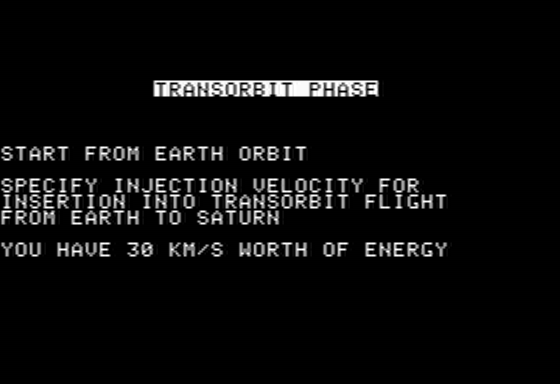
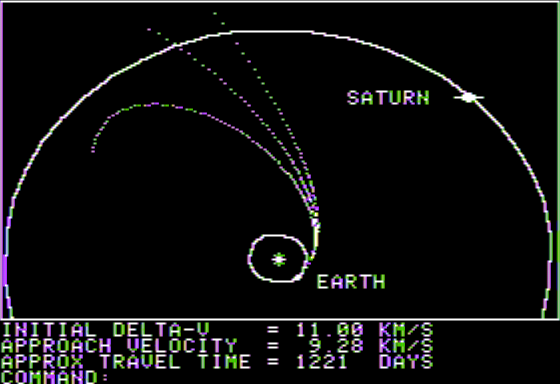
Saturn Navigator starts with a destination almost absurdly far away, then makes you earn every bit of progress toward it. You are not simply piloting around a space backdrop; you are working through a modeled journey from Earth to an orbiting Saturn station. The structure gives that huge trip a welcome shape, dividing it into Transorbit, Approach, Orbit, and Rendezvous rather than leaving you with one vague, intimidating objective.
What begins to click is the logic behind the journey. This is a simulation built around scientific principles of spaceflight, and its satisfaction comes from taking those principles seriously enough to reach the next stage. The JPL pedigree matters here: Saturn Navigator has the feel of a game made by someone interested in the actual problem of getting a craft from one orbit to another, not merely borrowing spaceflight as a theme.
That seriousness also makes it a demanding recommendation. Frustration can set in quickly if you want an immediate sense of motion or a forgiving arcade-style ride. You need to enjoy the process of understanding a complex system and applying that knowledge toward a precise rendezvous. For simulation-minded players, though, the payoff is unusually clear: a difficult trip feels like an accomplishment because the game has made you engage with why the trip is difficult.

Graphics
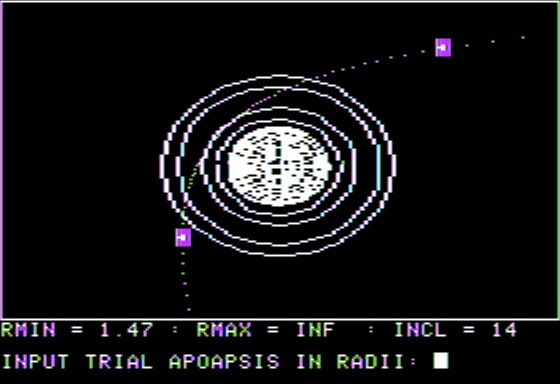
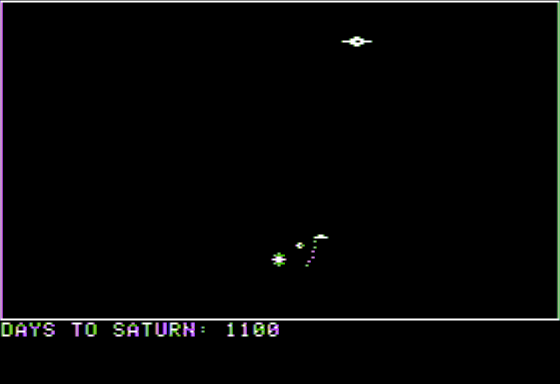
The third-person spaceflight view keeps the focus on your spacecraft and its voyage from Earth toward Saturn. Saturn Navigator is concerned with the route, the orbit, and the meeting point; its imagery serves that scientific spaceflight challenge directly.
Story
There is no character drama driving Saturn Navigator. Its story is the mission itself: launch from Earth, travel outward, and rendezvous with an imaginary station orbiting Saturn. That bare setup is enough because the scale of the trip supplies its own tension.
The four stages give the mission a natural arc. Transorbit establishes the departure, Approach narrows the distance, Orbit turns the journey into a positional problem, and Rendezvous provides the destination. Even without a conventional plot, you can feel the stakes rise as the broad ambition of reaching Saturn turns into the exacting requirement of meeting something already in orbit there.
The imaginary station is a smart focal point. A voyage to Saturn could easily be too open-ended for a game, but the station gives the simulation a concrete finish line. You are not traveling outward just to admire the idea of space; you have a defined mission to complete.
Overall Experience
Saturn Navigator is a narrow, fascinating kind of game: an early spaceflight simulation that values rigor over instant accessibility. Its stand-alone status means you do not need the original Flight Simulator disk, but it still carries the same spirit of subLOGIC’s simulation work—learn a demanding model, make careful decisions, and take pride in a result you did not get for free.
You should give it a chance if the phrase “scientific principles of spaceflight” sounds like the point rather than a warning label. The game’s complexity is not incidental decoration; it is the reason to play. Expect resistance at first, especially if you are used to games that explain their goals through constant action, but stick with its staged journey and the mission gains a satisfying sense of forward momentum.
It is less suited to anyone looking for a casual space adventure. Saturn Navigator asks you to meet it on its own terms, and it will not soften the central challenge of orbital travel. But as a focused simulation of an Earth-to-Saturn rendezvous, it has real character: austere, brainy, and rewarding for the right kind of curious player.



Reviews
There are no reviews yet.