 Retro Replay Retro Gaming History, Reviews & Emulation
Retro Replay Review
Gameplay
Star Blaster opens with the clean, urgent rhythm that old shooters live or die on: your fighter meets a continuous stream of aliens, you keep firing, and survival depends on staying composed as each wave presses in. There is little distance between starting a game and understanding the job. You are alone against an invasion, and every moment asks whether you can clear enough space to keep going.
The right-to-left scrolling is its most memorable wrinkle. If you have played a lot of side-scrolling shooters, your instincts may briefly tug the other way, and that small adjustment gives Star Blaster a personality beyond its familiar Earth-under-attack setup. It is not a reinvention of the genre, but it changes the feel of reading incoming danger enough to make the first few attempts more interesting.
Each attack wave brings a different enemy type, so the action has some forward momentum even within its stripped-down arcade framework. Reaching the dreaded Annihilator gives the run a proper target, while destroying the final mothership does not end the game so much as dare you to prove the win was not a fluke. The loop restarts at a tougher level, making this a game for chasing endurance and improvement rather than checking off a final ending.

Graphics
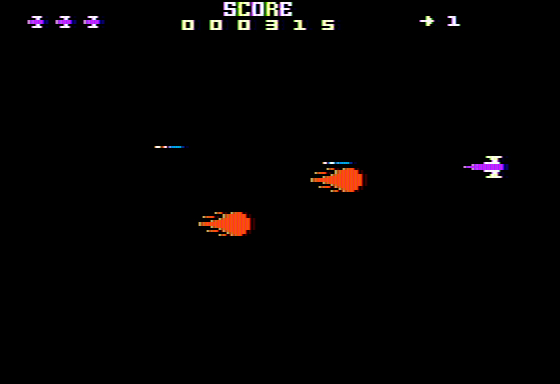
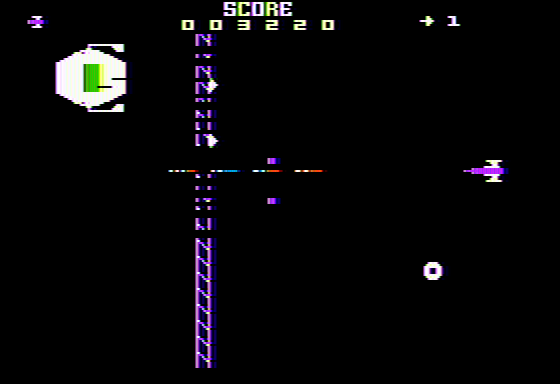
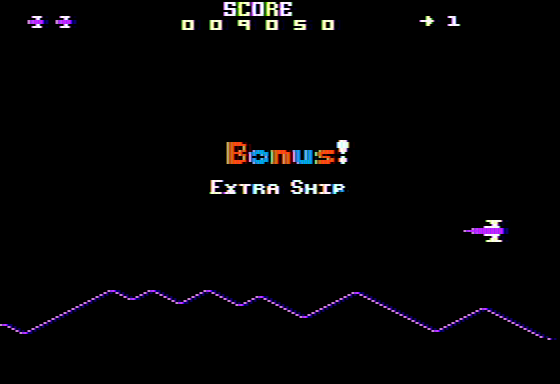
The action is viewed from the side in a 2D scrolling battlefield, with your solitary ship flying right to left into successive alien formations. The changing enemy types from wave to wave give the scrolling encounters some useful variety, and the straightforward view keeps attention on incoming threats.
Story
The story is classic arcade shorthand: an alien invasion force wants Earth destroyed, and one space fighter is sent to stop it. It is a premise you have seen countless times, but Star Blaster does not waste time pretending it needs more justification for putting a ship and an armada on a collision course.
The Annihilator supplies a named threat at the end of the assault, which helps the waves feel like they are building toward something rather than simply repeating forever. That said, the narrative exists to frame the shooting, not to add drama between stages.
If you want characters, twists, or a developed science-fiction world, this will feel skeletal. If all you need is a clear reason to blast aliens before they erase Earth, it does its modest job.
Overall Experience
Star Blaster is an appealing artifact of early shooter design because it is so concentrated. You get one ship, a stream of alien waves, a tougher repeat loop, and no room to hide from the central test of timing and persistence. The first hour is likely to be a series of short, stubborn attempts as you acclimate to the reversed scrolling direction and push farther into the invasion.
Its limits are equally plain. Repetition is built into the design, and the increased-difficulty loop means the payoff is personal mastery rather than new destinations or a more elaborate finale. That can make frustration arrive fast if you need frequent surprises.
Give it a chance if you enjoy the lean, demanding logic of early arcade shooters and like the idea of a familiar format with one directional oddity. It is not a sprawling space adventure, but it has the kind of blunt, repeatable challenge that can keep you feeding another attempt to the machine.


Reviews
There are no reviews yet.