 Retro Replay Retro Gaming History, Reviews & Emulation

Retro Replay Review
Gameplay
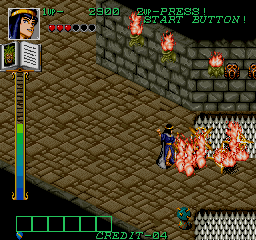
Gate of Doom is a diagonally viewed, eight-direction beat ’em up whose combat immediately asks for commitment. Heroes can attack in every direction, but cannot move during an attack, making spacing and timing more important than in a brawler that permits constant hit-and-run movement. That restriction gives encounters a more deliberate rhythm, though it can feel stiff when enemies crowd the screen.
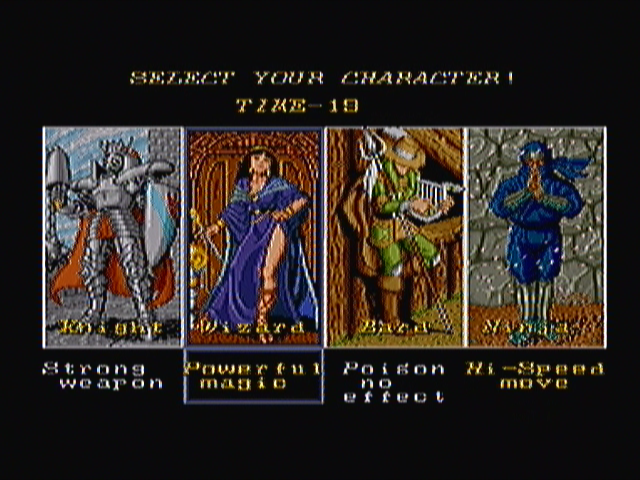
The four-character lineup supplies genuine tactical variety. The Knight brings a strong morning star, the Wizard attacks with a flame pillar, the Bard uses an elastic spetum and resists poison, while the Ninja trades heavier force for fast movement and shurikens. Every hero uses a mid-range weapon, so selection changes the feel of positioning rather than abandoning the game’s basic combat language.
Magic is the game’s most distinctive system. A book continuously cycles through spells, and activating magic at the right page transforms the character into an elemental form such as a tornado, sparkling cloud, or bush of fire until the magic meter empties. It is an unusual risk-and-reward mechanic: players must watch the spell page while surviving the action, rather than simply firing a chosen special move on demand.
Chests provide health and magic restoration alongside armor parts that improve statistics, giving exploration a practical payoff. Skeletons, ghouls, kobolds, and other fantasy threats keep pressure on the player, particularly because some can poison or confuse a hero. Two-player co-op is a natural fit for the crowded arcade format, letting the contrasting character abilities complement one another.
Graphics
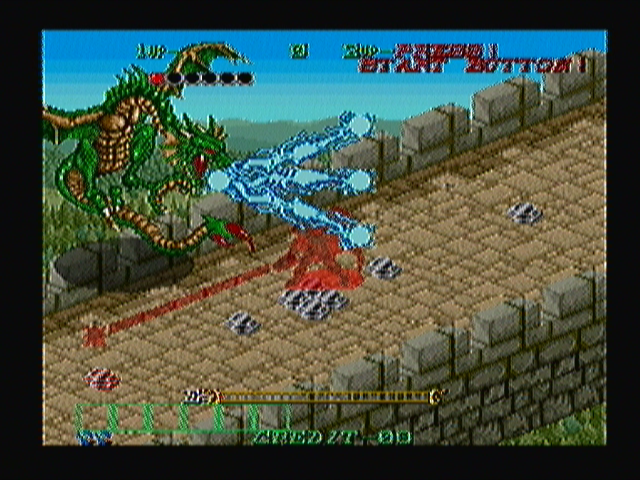
The game presents its fantasy action from an isometric perspective, a useful choice for a brawler focused on movement and attacks in eight directions. That angled view distinguishes its battlefields from the side-on format associated with many arcade beat ’em ups and helps sell the idea of pushing through a hostile realm rather than advancing along a single flat lane.
Its visual identity is rooted in classic dark fantasy imagery: demons, devils, skeletons, ghouls, kobolds, magical gems, and a threatened kingdom. The character roster also creates a readable genre spread, from armored Knight to spellcasting Wizard, poison-resistant Bard, and quick Ninja.
The magic transformations provide the most flamboyant presentation cue. Turning into elemental phenomena gives special attacks a stronger visual role than a conventional projectile or weapon swing would, while the animated spell book at the edge of the screen communicates the changing magic selection. The result is an arcade presentation built around legibility and supernatural spectacle rather than subtlety.
Story
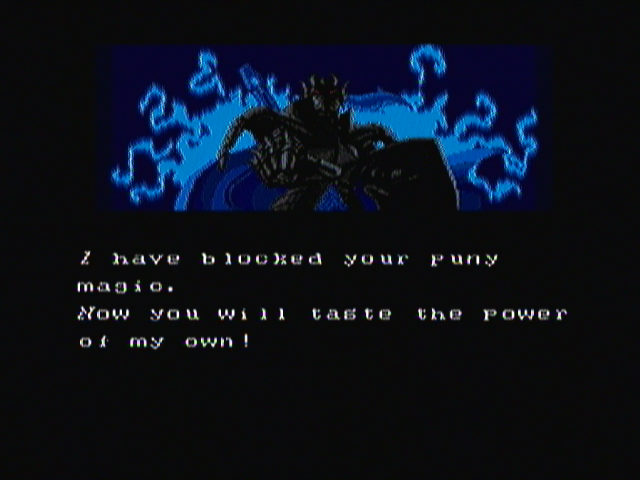
Gate of Doom frames its action with an ancient Etrulian legend. Should the kingdom’s people fall into wickedness, demons and devils are destined to emerge through the Gate of Doom and claim the land. It is a direct, high-stakes premise that efficiently establishes why the world is full of monsters.
Four heroes are summoned by the Force Divine to oppose the invasion. Their mission is to destroy the monsters of darkness and use a magic gem and magic crown to seal the gate forever. The story gives the party a shared purpose while leaving the player-facing differentiation to their abilities in combat.
This is fundamentally a fantasy rescue narrative designed to support arcade momentum. The legend, relics, and demonic threat provide clear stakes without distracting from the fighting, item collection, and push toward the gate. Players looking for elaborate character drama will find the premise functional rather than expansive, but the setup is well suited to the game’s format.
Overall Experience
Gate of Doom is best approached as a focused arcade brawler with unusual systems rather than as a free-flowing action game. Its inability to move while attacking can make combat feel constrained, but it also creates a recognizable cadence in which weapon range, enemy placement, and movement choice matter. Players willing to adapt to that cadence will get more from it than those seeking loose, highly mobile combat.
The differing heroes, status ailments, collectible improvements, and cycling spell book give the game more texture than a simple march through enemy waves. Co-op further strengthens the design, since two players can bring different strengths to the same dangerous encounters. The magic system in particular rewards attention and adds personality to every character’s offensive options.
This is a strong fit for fans of dark fantasy arcade action, isometric brawlers, and co-op games that value deliberate positioning. Its design is more rigid than its premise is complex, yet the elemental transformations and varied roster keep it from feeling generic. Gate of Doom remains an interesting, imperfect example of fantasy beat ’em up design.



Reviews
There are no reviews yet.