 Retro Replay Retro Gaming History, Reviews & Emulation
Retro Replay Review
Gameplay
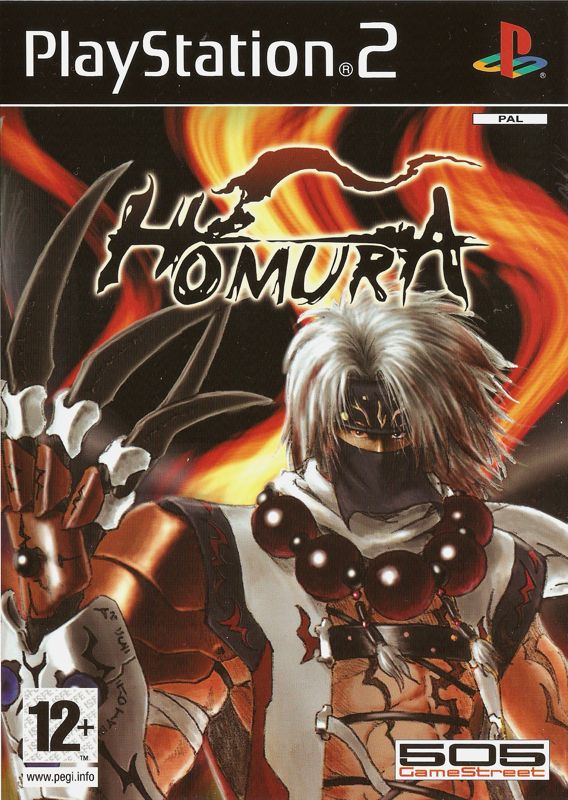
The first few enemy volleys tell you exactly why Homura is worth your attention. You are not simply threading your way through bullet patterns; at the right moment, Homura can swing his sword and knock enemy bullets back into the crowd. That reversal feels great. A threatening screen becomes an opportunity, and the more bullets you catch in one slash, the more your score multiplier climbs.
That move has the restraint a good scoring system needs. After every slash, you must wait a few seconds for it to recharge. You cannot lazily erase danger whenever the screen gets crowded. Instead, you start weighing a safer dodge against a higher-value counterattack, and the game’s tension comes from making that call under pressure. The sword is not just a novelty; it changes the rhythm of a top-down shooter built around incoming fire.
Regular projectile fire remains your dependable tool, while powerful specials can wipe out enemies or heavily damage a boss. They give you a way to recover when a pattern has gone wrong, but the sword remains the interesting choice. Enemy money fills a meter that adds option helpers beside Homura, gradually building your offensive strength and making survival feel tied to steady clearing.
There are four stages, each with a route choice before its paths reconnect for the same boss encounter. That does not turn Homura into a huge branching campaign, but it does add a little variation to repeat runs. The game is at its best when you treat each route as another chance to refine your timing, score more aggressively, and learn when a slash is worth the recharge window.
Graphics
Homura uses a top-down, anime-styled fantasy shooter view, keeping Homura, enemy waves, and their bullet patterns in the same focused play space. The adjustable aspect ratio is a welcome touch, including a sideways option for a vertically oriented arcade-style screen.
Story
Homura begins with a fallen angel stealing Heaven’s Divine Crystal and using it to control Shogun Ieyasu Tokugawa, leading to the occupation of Osaka Castle. Heaven’s ruling families need someone unaffected by the crystal’s power, and their answer is Homura: a prisoner with both angel and human blood.
The setup gives his mission a personal reason to matter. Homura initially refuses to help, then learns that his mother is among the victims in Osaka. Picking up his sword becomes more than obedience to a heavenly council; it is a direct response to what the crystal’s theft has done to his family.
It is a clean action-game premise rather than a reason to slow down between battles. The fallen-angel conflict, Heaven’s council, and historical Osaka backdrop give the demon-filled stages a clear destination, while Homura’s immunity neatly explains why he is the one person who can take the fight forward.
Overall Experience
Homura earns its place through one sharp idea executed where it counts: returning bullets is both a survival technique and a scoring gamble. You can play cautiously with standard shots and specials, but the game becomes much more exciting once you begin stepping into danger to turn a packed volley against its owners.
The limited stage count means the value is in replaying, not in a long first clear. Route selections, score multipliers, helper upgrades, and a gallery that expands as you progress all encourage another attempt. If you only want a sprawling shooter campaign, four stages may feel slight; if you enjoy chasing cleaner, bolder runs, the compact structure is easier to revisit.
Give Homura a chance if bullet hell usually appeals to you but you want a more active answer than pure dodging. The recharge on the sword prevents its best trick from becoming effortless, and that balance is what makes the payoff land. A successful large deflection has the kind of immediate, earned satisfaction that keeps a short arcade shooter in rotation.

Reviews
There are no reviews yet.