 Retro Replay Retro Gaming History, Reviews & Emulation
Retro Replay Review
Gameplay
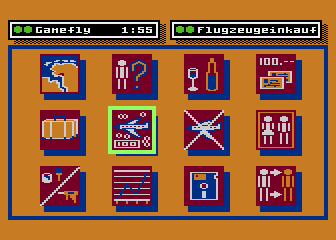
The first hour of Airline is about getting comfortable with its monthly routine. Each player runs an airline, has two minutes to make decisions, then waits for the computer to calculate what those choices actually did. That structure creates a good competitive rhythm: plan your routes, handle the business around them, commit, and live with the balance sheet. It feels closer to taking turns around a strategy board game than piloting aircraft, which is exactly where its strength lies.
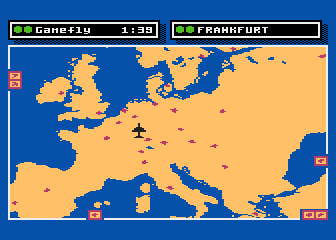
Route planning is the center of the game, but it is not enough to just send planes wherever you expect money to be. You also need to account for personnel and service goods, while fares and freight give you more ways to shape a company. Buying and selling aircraft adds another layer of judgment. There is a satisfying push and pull in deciding whether to expand, adjust prices, or spend your limited time fixing the weak spots in the network you already own.
The timer is the feature that will either hook you or irritate you. Two minutes per month prevents endless calculation and makes multiplayer turns move with urgency, but it also means you need to learn the menus well enough to make choices quickly. Maintenance and result menus remain available after time expires, which is a sensible mercy, yet the core decisions still have to happen under pressure. Against other people, that pressure is the point.
Random disruptions such as strikes and winter cancellations keep a tidy plan from becoming automatic. They can be frustrating when a flight falls apart for reasons outside your control, but they also force you to think beyond a single ideal month. The scoring goal helps here: money matters, but customer satisfaction matters too, so a rich airline is not necessarily the winning airline. That makes the race to 100 points more interesting than a plain profit contest.
Graphics
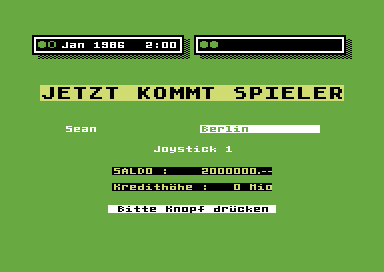
Airline is entirely menu-based. You spend your time looking at decision and results screens rather than aircraft in action, with the profitability of individual flights and the overall financial balance serving as the key visual feedback after each round.
Story
There is no character-led story pulling you from month to month. Your airline’s story is the one you create through expansion, bad calculations, cancelled flights, and the slow climb toward 100 points.
That absence suits the game’s competitive focus. Rather than asking you to care about a scripted airline empire, it asks whether your decisions can survive contact with rival companies, unhappy customers, and a bit of bad luck.
The closest thing to a narrative payoff comes from the result phase. Seeing which flights made money and which choices dragged down the company gives each month a small aftermath, and a multiplayer campaign can build its own grudges as rivals pull ahead or stumble.
Overall Experience
Airline is at its best with a group that enjoys numbers, negotiation-free rivalry, and a little time pressure. The two-to-four-player format gives every monthly deadline a purpose: you are not optimizing in a vacuum, you are trying to reach the finish before someone else finds a stronger balance of profit and satisfaction.
It does ask you to meet it on its own terms. This is not a game for someone who wants hands-on flying or a lavish simulation of airports and travel. The pleasure comes from making a compact set of business decisions, then reading the consequences and revising the plan before the next clock starts.
For patient strategy fans, the payoff is real. The game turns a simple airline-management premise into a sharp race where routes, pricing, staffing, supplies, freight, and unexpected cancellations can all matter. Its rigid menu-driven format will feel dry to some, but the score system and timed turns give the accounting enough competitive bite to make another month tempting.


Reviews
There are no reviews yet.