 Retro Replay Retro Gaming History, Reviews & Emulation
Retro Replay Review
Gameplay
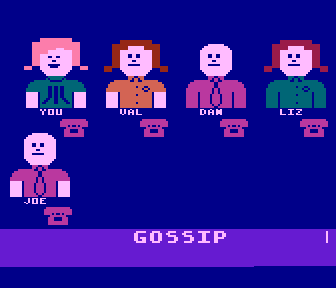
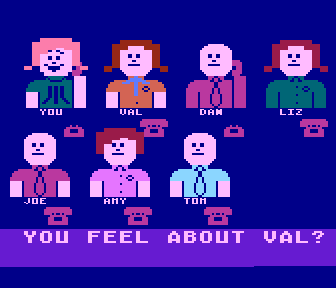
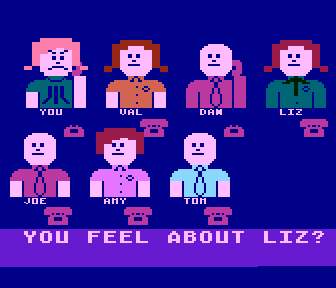
Gossip begins with a wonderfully mean little question: can you make yourself the most popular person in a room by telling everyone what to think about everyone else? Your tools are phone calls. You can tell another person that you like or dislike somebody, or relay information about how one person feels about another. Then the game processes those conversations and updates its model of the group.
That makes the first stretch feel more like poking at an experiment than playing a conventional strategy game. A single call can seem inconsequential when you do not yet understand the web of opinions underneath it. Keep making calls, though, and the point starts to click. You are not merely choosing “like” or “dislike”; you are deciding which relationship to nudge, which piece of information to spread, and how aggressively to chase popularity.
The tension comes from having a small group—between three and seven computer-controlled people—whose attitudes can be influenced indirectly. Gossip asks you to think a step beyond the immediate move. If you enjoy testing a system, watching for patterns, and accepting that social manipulation can be messy, its modest loop has real bite. If you need constant action or clear dramatic set pieces, repeated phone calls and behind-the-scenes calculation may feel dry fast.
Graphics
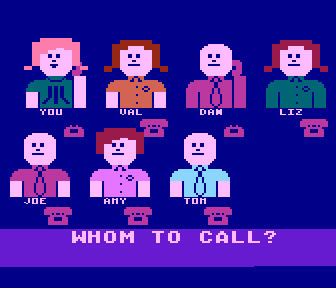
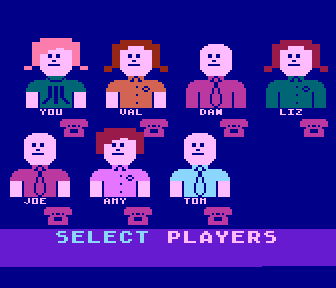
Gossip keeps your attention on the social model: the calls you make, the opinions you circulate, and the popularity outcome those choices produce.
Story
There is no authored tale pulling you from scene to scene. Instead, the story is the one you create by meddling in a little social circle. Every claim that someone likes or dislikes someone else becomes a potential turning point in your own version of the group’s history.
That premise is more interesting than it first sounds because it makes information itself the drama. You are not just trying to be liked; you are choosing what feelings to reveal and what judgments to pass along. The resulting narrative is necessarily personal: perhaps you become the center of the group, perhaps your interference produces a social situation that no longer favors you.
It is a very stripped-down kind of storytelling, but it fits the subject. Gossip understands that a relationship can change because of a sentence repeated to the wrong person, and it makes that unstable chain of reactions the whole point.
Overall Experience
Gossip is less a polished social adventure than a compact simulation experiment with a sharp premise. Its age shows in the narrowness of the activity, yet that narrowness is also why the idea comes through so clearly. There is no clutter between you and the central challenge of engineering popularity.
The payoff depends on whether you find the group’s shifting attitudes compelling enough to keep probing. When it works, you start treating each phone call like a calculated rumor: not guaranteed to land as intended, but capable of changing the balance of the group. That is a satisfying mental shift, and it gives the game more character than its simple action list suggests.
Give it a chance if you like early simulations, social systems, or oddball games built around a single unusual question. Skip it if you want a richly scripted world or a broad set of activities. Gossip is a small game, but it takes its central idea seriously—and its attempt to turn interpersonal influence into something you can play remains genuinely intriguing.



Reviews
There are no reviews yet.