 Retro Replay Retro Gaming History, Reviews & Emulation
Retro Replay Review
Gameplay
The first hour can be exhilarating and disorienting in equal measure. PlanetSide 2 drops you into a continent-sized conflict where infantry, ground vehicles, and aircraft all collide around territory, and there is usually something loud happening nearby. You might be sprinting with a group across an open field one minute, fighting inside a huge structure the next, then watching the front move because another sector has fallen. Few shooters make a single death feel so small while making a successful group push feel so important.
What starts to click is that land is the objective, not simply kills. Continents are divided into sectors, and controlling them feeds the wider territorial struggle. That gives a squad’s choices real weight: defend a point under pressure, attack a neighboring sector, or move to where the faction needs bodies. Planning and communication are essential rather than optional decoration. Go in alone and you can still find fights, but you will often feel swept along by a war you do not understand; join people who are calling targets and movement, and the game becomes much more legible.
The class lineup gives you useful ways to contribute. Light Assault, Heavy Assault, Medic, Engineer, Infiltrator, and Mechanized Assault Exo-Suit cover different combat needs, and you can switch classes rather than being locked into an early choice. Battle rank earns certification points for additional skills, while progression applies across your overall character instead of pinning you to one class. That flexibility encourages experimentation: if a push needs support or a different approach, you can change your role and stay involved.
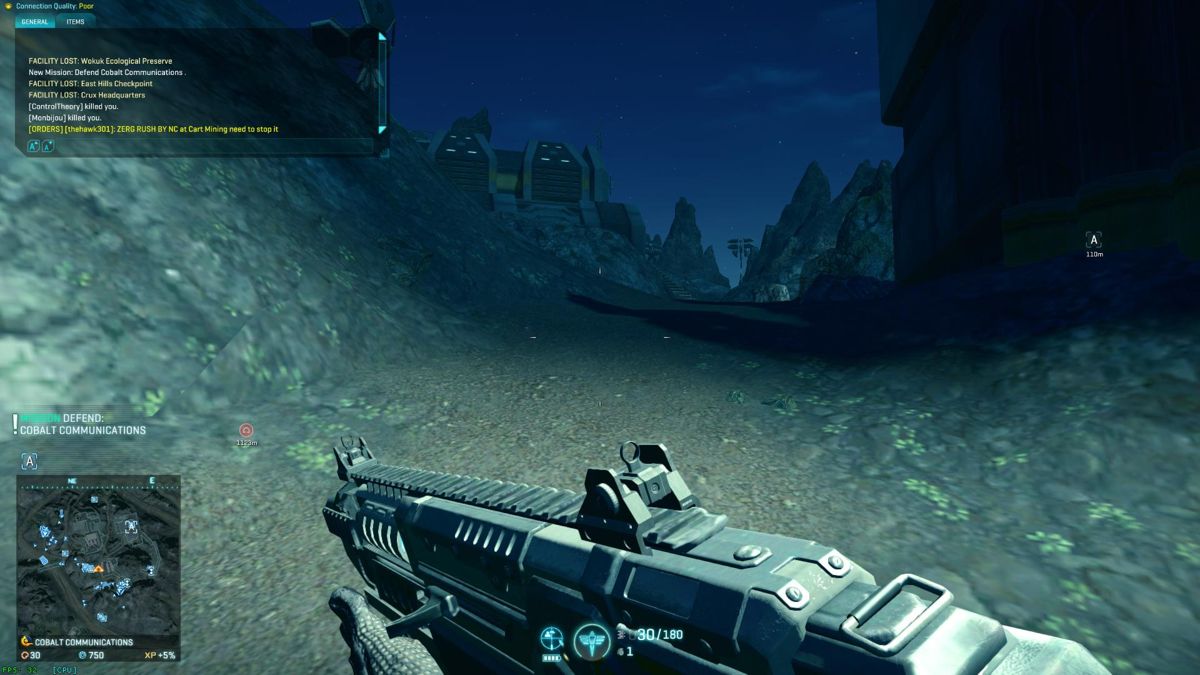
There is friction built into the scale. Huge fights can be confusing, and coordination matters enough that random wandering can turn into repeated, directionless deaths. The day-and-night cycle also changes the character of warfare, so a familiar stretch of ground does not always demand the same approach. If you want carefully balanced, self-contained matches, the sprawling conflict may feel unwieldy. If you enjoy learning how to be useful inside a much bigger operation, the roughness is part of the payoff.
Graphics
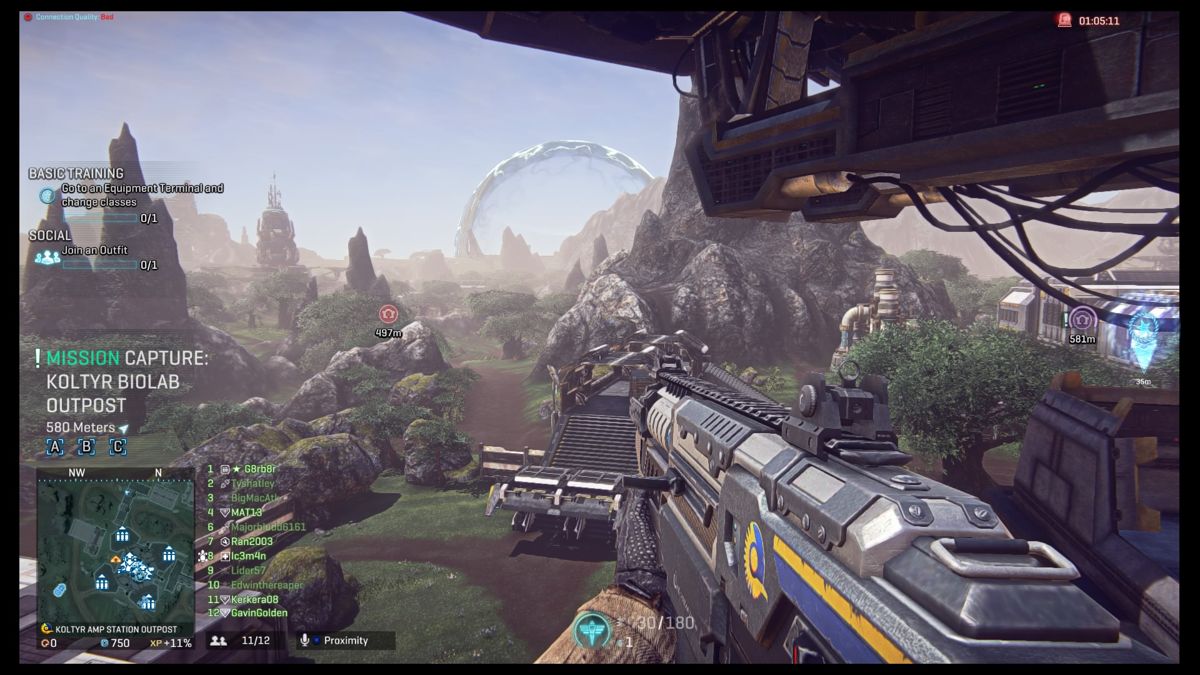
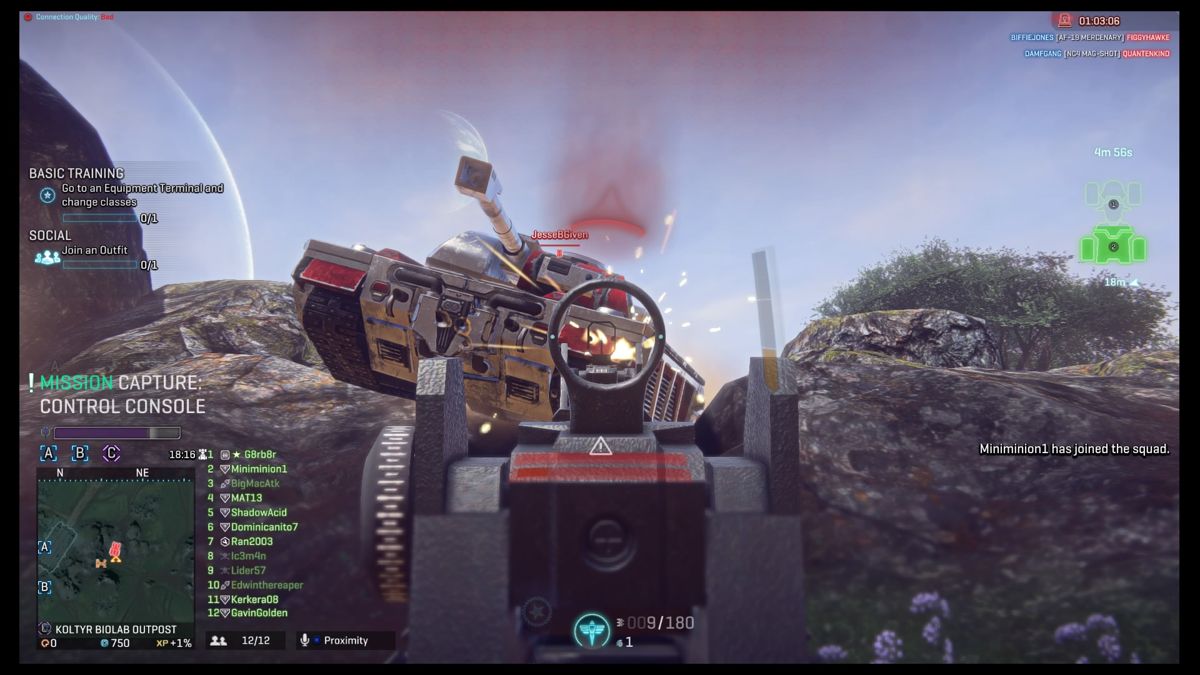
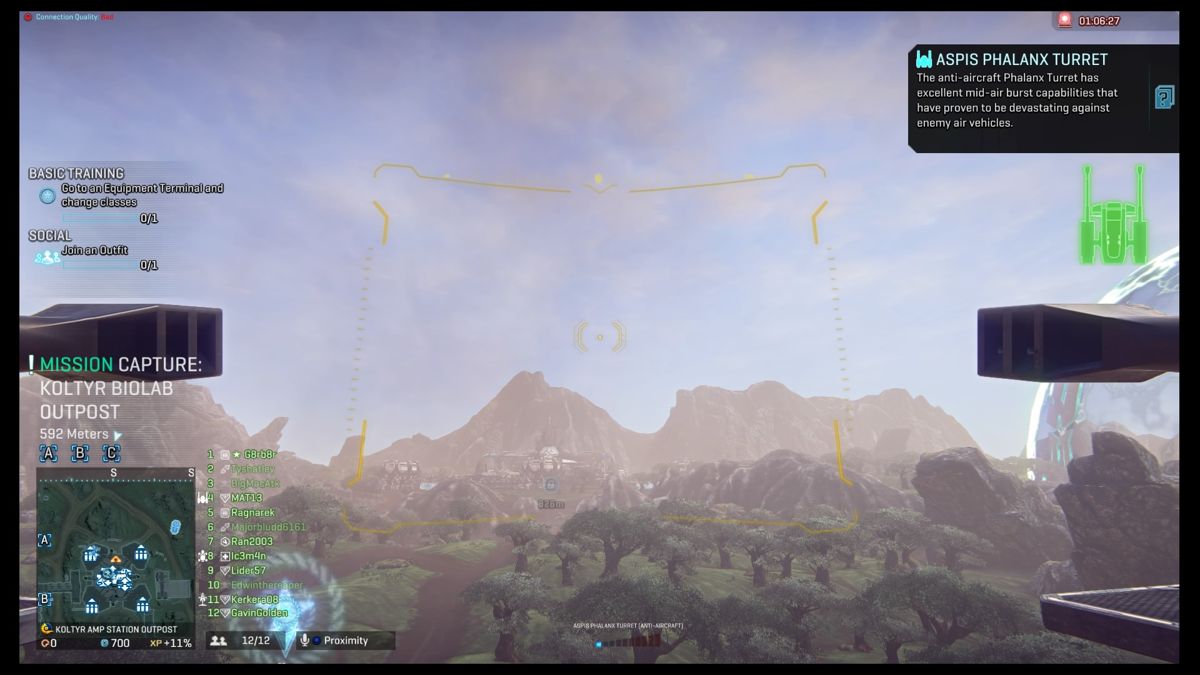
PlanetSide 2’s strongest images come from sheer battlefield density: troops on the ground while land vehicles and aircraft battle around them, spread across open fields, dense urban areas, and enormous structures. The first-person view keeps the scale immediate because you are in the middle of the rush rather than watching it from a distant command screen.
The day-and-night cycle changes the look of the same continent over time and gives long campaigns a shifting backdrop. At its best, the sight of multiple fronts converging around a base communicates the game’s scale before anyone has to explain it.
Story
PlanetSide 2 does not lean on a guided, character-driven campaign. Its story is the ongoing conflict between the Terran Republic, New Conglomerate, and Vanu Sovereignty, played out through the territory each side takes and loses. That is a thin setup if you need authored plot turns to carry you, but it is enough to give your faction choice a continuing context.
The memorable narratives are the ones you help create. A hard defense that holds, a coordinated assault that captures a key sector, or a sudden reversal when a nearby front collapses can become the evening’s story. Because the war persists across a continent rather than resetting into a neat little match, victories and losses feel connected to something larger.
That approach asks you to supply some investment yourself. You will not be pulled forward by a scripted tale; you are pulled forward by the state of the map, your faction’s needs, and the people you decide to fight alongside. For a multiplayer shooter, that can be more involving than a conventional plot, provided you enjoy making your own war stories.
Overall Experience
PlanetSide 2 earns its 8.1 because it commits to a scale most shooters only imitate. A conflict with up to 2,000 participants has inevitable chaos, but it also produces moments no small-team match can recreate: a sprawling combined-arms battle, a desperate hold in a packed urban area, or the slow realization that your squad’s work helped shift a continent.
You will get the most from it by treating communication as part of the game, not an optional extra. Find a squad, pay attention to the territorial objective, and be willing to change class when the situation calls for it. The game rewards that mindset far more reliably than chasing every fight as a solo shooter.
The free-to-play structure includes real-money convenience purchases and cosmetic changes, with an optional subscription offering additional advantages, so it is worth going in clear-eyed about that model. Still, the central experience remains unusually compelling: a persistent sci-fi war where you can take a small role in a very large battle. For more details and current access information, visit the official PlanetSide 2 page.


Reviews
There are no reviews yet.