 Retro Replay Retro Gaming History, Reviews & Emulation


Retro Replay Review
Gameplay
U235 gets to its point quickly: you are looking at a board, a target set of matching elements, and a movement rule that makes every decision feel less safe than it first appears. An element travels in its indicated direction until the board edge or another element stops it. That means you are not merely choosing where to move something; you are committing to its entire route. The first few attempts can feel like sliding pieces into dead ends, but that tension is the game’s strongest hook.
What starts to click is the need to think about the board as a collection of stopping points. Bringing together two or more matching elements simultaneously is a demanding condition, and it makes a near-solution useless if one piece arrives early or shoots past its partner. You will spend time setting up blockers, reconsidering lanes, and noticing that an obstacle which seemed inconvenient is the one thing preventing a crucial piece from escaping.
The special objects give the puzzle boards more bite. Mirrors reflect laser beams, while bombs and detonators can remove barriers. None of these are simple power-ups: the ball can smash a mirror, and a bomb explodes if it collides with the board edge. That creates the right kind of caution. U235 rewards you for pausing before a move and asking what else that move endangers, though its strict sliding rules will frustrate anyone who wants quick, forgiving experimentation.
Graphics
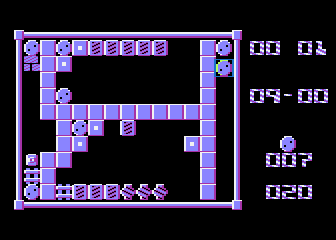
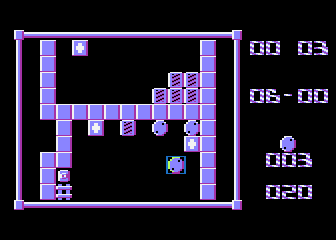
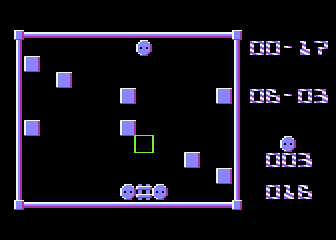
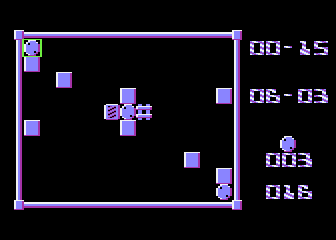
The view is top-down and board-focused, with the action centered on elements moving across a fixed puzzle layout. The screen also keeps the required elements on the right side, so you can check the current objective without losing sight of the board.
Story
The story is a thin sci-fi frame, but it suits the cold logic of the puzzles. The Galactic Federation sends a secret agent to Umhar to neutralize a nuclear threat, giving the abstract job of matching elements a little mission urgency.
Do not expect the premise to carry you through on drama. U235 uses its Galactic Federation assignment as a reason for the boards rather than a rich narrative thread, and that is fine: the real conflict is between your plan and the consequences of a badly timed slide.
Still, the nuclear-threat setup does make the destructive tools feel appropriately dangerous. Mirrors, bombs, detonators, barriers, and the risk of accidental explosions all belong to the same compact sci-fi puzzle language rather than feeling randomly assembled.
Overall Experience
U235 is the kind of puzzle game that can make you feel foolish for a move that looked perfectly sensible seconds ago, then make the eventual solution feel earned. Its strongest moments come when you stop reacting to individual pieces and begin planning how the whole board will settle.
The price of that satisfaction is friction. A piece that continues until it hits an edge or obstacle leaves little room for casual correction, and the simultaneous-matching goal can turn a nearly solved board into a reset-worthy mess. If you enjoy working through rigid spatial problems, that severity is a feature; if you prefer puzzles that let you improvise freely, it may feel punishing.
For an Atari 8-bit puzzler, U235 has a clean, focused concept and enough dangerous interactions to keep its boards from becoming routine. Give it a chance if you like deliberate sliding puzzles with consequences. The payoff is not flashy, but cracking a board after learning to respect every wall, mirror, and bomb is genuinely satisfying.


Reviews
There are no reviews yet.