 Retro Replay Retro Gaming History, Reviews & Emulation

Retro Replay Review
Gameplay
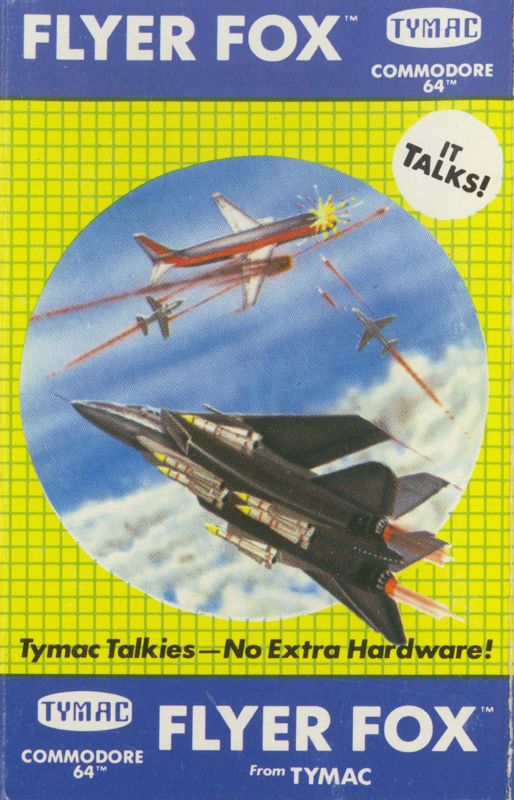
Flyer Fox starts with a premise that still has some bite: you are not simply clearing a sky full of targets, but flying escort for a vulnerable jumbo jet. Automatic takeoff puts you behind the airliner immediately, then enemy fighters arrive and force you to leave its side. That creates the game’s central tension. Chase too eagerly and you risk losing the plane you were sent to defend; hesitate and the attackers get their opening.
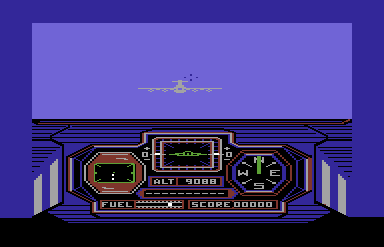
The cockpit view makes this more involved than a simple point-and-shoot exercise. Radar, compass, and artificial horizon all matter because combat can pull you away from the airliner, and you need to navigate back to it rather than merely wait for the next wave. There is a satisfying little rhythm once it clicks: locate an enemy, line up a shot, destroy it, check your position, and return to the jumbo before the situation worsens.
The catch is that Flyer Fox is demanding in a fairly uncompromising way. The airliner’s damage status is always a concern, while fuel creates another hard limit on every sortie. If the jumbo goes down or you run dry before eliminating the enemies, the mission is over. Later levels raise the heat with more agile fighters that shoot back, so success depends on staying oriented as much as shooting accurately.
This is a good fit if you enjoy old-school games that ask you to learn their instruments and accept a stern fail state. If you only want immediate arcade thrills, the need to monitor navigation and defend a second craft can feel more stressful than liberating. For the right mood, though, that pressure is exactly what gives Flyer Fox its identity.

Graphics
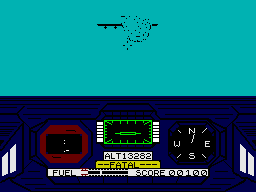
The action is viewed from inside the Flyer Fox cockpit, with the radar, compass, artificial horizon, and airliner damage readout sharing space with the aerial combat. It is a functional view built around keeping track of the fight and your location rather than offering a detached view of the battlefield.
Story
There is not much narrative baggage between you and the mission. Civil aviation has become dangerously exposed to aerial terrorists, and the Flyer Fox exists as the answer: a fighter dispatched to shepherd commercial airliners through hostile skies. It is a clean, immediate excuse to put a valuable target in danger and make every enemy approach matter.
The protected jumbo is more than background flavor because its survival directly determines whether you win. Watching its damage level turns the setup into a practical concern, not just a briefing-screen hook. You are flying security, and the game keeps you accountable for the result.
The synthesized radio messages from the airliner are a particularly memorable period touch. They give the mission a sense of contact with the aircraft behind you, helping the escort setup feel more urgent than a standard isolated dogfight. For more history and release information, see Flyer Fox’s game history.
Overall Experience
Flyer Fox earns its modest reputation through focus. It takes one escort scenario and squeezes tension from it through navigation, fuel management, and the constant need to protect something that cannot protect itself. The first hour is less about spectacle than learning how easily a pursuit can become a mistake when you lose track of the airliner.
Its rougher edge is also inseparable from its appeal. You are expected to use the cockpit tools, endure failure, and improve through familiarity rather than rely on a forgiving progression system. That can make the game feel punishing, especially once enemies become faster and start firing back, but the stakes are unusually clear at every moment.
At a 6.6, Flyer Fox lands as an interesting, tightly constructed 1980s cockpit shooter rather than an essential one. Give it a chance if the idea of escort duty, instruments, and tense returns to a damaged airliner sounds more exciting than another free-roaming shooting gallery. Its payoff is the feeling of holding a messy mission together under pressure.


Reviews
There are no reviews yet.