 Retro Replay Retro Gaming History, Reviews & Emulation
Retro Replay Review
Gameplay
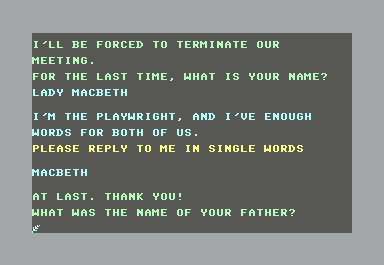
The first hour makes its expectations clear: Macbeth wants you to work. Its command-line parser expects prepositions and, at times, adverbs, so the familiar adventure-game habit of hammering out short verb-noun commands will only get you so far. Fortunately, it repeats failed commands and highlights the troublesome words, which turns parser friction into a clue about how carefully it wants to be read.
The opening section has the most approachable shape, alternating graphical scenes with text as Macbeth moves through the first four scenes of the play. Riddles and an ancient script give you something more active than simply reenacting known events, especially since deciphering them may let you alter the future king’s fate. Having the 1623 text in hand is less a cute extra than essential equipment; the right noun often lives in Shakespeare’s wording rather than in ordinary adventure-game logic.
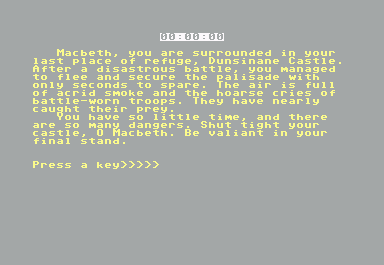
Then the game tightens the screws. Lady Macbeth’s text-only section covers seven scenes and adds a real-time hour limit while you organize a banquet, place the king and retinue, prepare a sleeping draught, and push Macbeth toward murder. The later Dunsinane sequence again puts you under a fifty-minute clock as fire and hostile troops close in, making secret rooms and puzzle solutions feel urgent rather than merely academic. Between them sits the witch assistant’s ingredient hunt, a welcome comic-relief detour that still demands you solve riddles drawn from the witches’ incantation.
Graphics
The first adventure alternates its text with graphical scenes, while the witch-focused portion also uses graphical scenes to frame its riddle hunt. Most of Macbeth is deliberately text-led, especially Lady Macbeth’s demanding chapter and the Dunsinane siege, so the pictures function as occasional landmarks rather than a replacement for close reading.
Story
Macbeth’s smartest decision is refusing to flatten Shakespeare into a sequence of famous murders. You inhabit Macbeth’s early steps toward the crown, shift into Lady Macbeth’s more exacting perspective, wander the heath with a witch’s assistant, and return to Macbeth as Dunsinane faces siege. That changing viewpoint gives the play’s momentum a gameable shape without pretending the source is just a backdrop for generic fantasy puzzles.
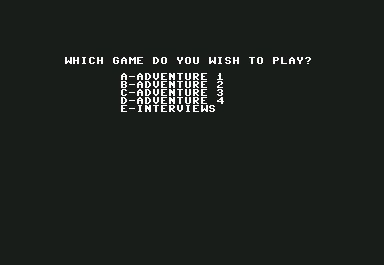
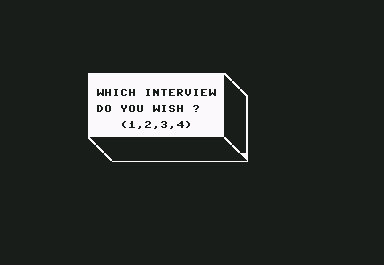
The included play matters because the game is openly in conversation with it. Names, objects, wording, and motivations are part of the challenge, and the four interviews with Shakespeare push that relationship even further. They sound more like oral examinations than optional lore: a stern invitation to explain what the Macbeths mean and why they act as they do.
There is a real tension between the fixed tragedy everyone knows and the game’s promise that you might interfere with fate. That tension is exactly why the early script puzzle and the later witches’ material have bite. You are not asked to forget the destination; you are asked to test how much agency can exist inside a story built around doom.
Overall Experience
Macbeth is wonderfully uncompromising. It makes Shakespeare literacy part of play rather than dressing, and it asks for patience with a fussy parser, hard riddles, and timers that can turn a stalled solution into a genuine setback. If you want to relax into a breezy adventure, Lady Macbeth’s hour-long management crisis alone may feel like homework with a ticking clock.
But for a gamer who enjoys old-school interactive fiction and knows the play—or is willing to learn it closely—the payoff is unusually rich. The changing structure keeps the adaptation from becoming one long text crawl: graphical early scenes, a severe text-only middle, comic witchcraft, scholarly interviews, then a pressured castle siege. Each section asks for a different kind of attention while staying rooted in the same tragedy.
Give it a chance if you relish treating literature as a puzzle to be argued with, quoted, and picked apart. Keep the play open beside you, read failed parser responses carefully, and expect progress to come from better interpretation as much as better navigation. It is a difficult, peculiar adventure, but its seriousness about Shakespeare is precisely what makes it memorable.


Reviews
There are no reviews yet.