 Retro Replay Retro Replay gaming reviews, news, emulation, geek stuff and more!

Retro Replay Review
Gameplay
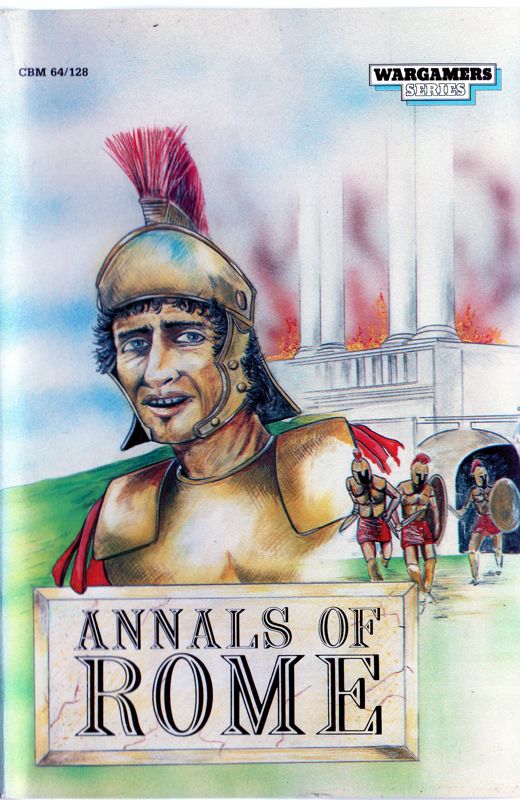
Annals of Rome places you squarely in the halls of power as a Roman senator, tasked with expanding your dominion from 273 BC onward. Each turn unfolds in a series of well-defined phases, beginning with economic calculations for population growth and tax revenue. Managing these resources carefully is crucial—low taxation keeps public morale high, but if you overextend your military campaigns without sufficient funds, rebellions can spark and your armies may falter on distant fronts.
(HEY YOU!! We hope you enjoy! We try not to run ads. So basically, this is a very expensive hobby running this site. Please consider joining us for updates, forums, and more. Network w/ us to make some cash or friends while retro gaming, and you can win some free retro games for posting. Okay, carry on 👍)
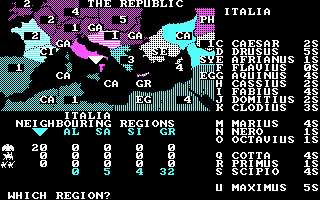
After the economic report, the game shifts focus to your generals. You can shuffle your commanders across provinces, reinforcing border garrisons or launching ambitious invasions. Each officer carries unique strengths and weaknesses, so assigning command requires strategic foresight. As campaigns progress, you’ll balance sieges, field battles, and skirmishes, all resolved through a turn-based system that rewards careful planning and adaptability.
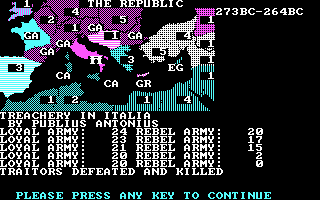
Civil unrest is a constant threat in Annals of Rome. Disgruntled officers may plot rebellion, leading to full-scale civil wars if you aren’t vigilant. Fortunately, the game offers pre-emptive diplomatic and military options to quell dissent before it erupts. Meanwhile, skirmishes with Carthaginians, Vandals, Parthians, Persians, and other factions unfold in parallel, creating a dynamic geopolitical landscape where your decisions ripple across the ancient world.
Historical accuracy shines through in every mechanic—from the ebb and flow of tribal migrations to the logistical challenges of maintaining supply lines across vast territories. Turn phases mirror real-world constraints, making each move feel weighty and consequential. By interweaving economic, military, and political layers, Annals of Rome offers a deep, turn-based strategy experience that rewards patience and thoughtful decision-making.
Graphics
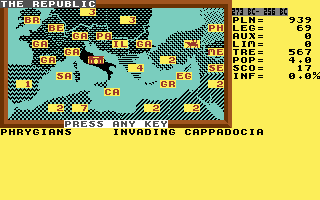
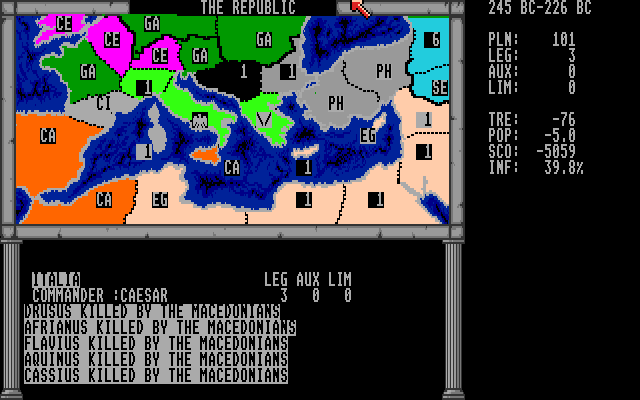
While Annals of Rome doesn’t chase groundbreaking visuals, its presentation is tailored to evoke the ancient Mediterranean. Province maps are rendered in muted earth tones, punctuated by icons representing armies, cities, and resources. This stylized approach ensures critical information remains clear, even on cluttered battlefields or sprawling territorial overviews.
Unit sprites and fortifications feature period-appropriate designs—Roman legionaries in segmented armor, Carthaginian elephants lumbering across plains, Parthian horse archers poised for hit-and-run tactics. Animations are functional rather than flashy, with marching columns and siege engines moving at a deliberate pace that matches the game’s strategic tempo. These modest visuals never distract from decision-making, keeping the focus firmly on your next strategic maneuver.
City and province interfaces utilize parchment-inspired backdrops, complete with hand-drawn icons that capture the flavor of antiquity. Informational panels present data—tax rates, troop morale, population counts—in clear, easy-to-read tables that avoid overwhelming newcomers. Even in the heat of multi-front wars, the UI remains responsive, allowing you to toggle views quickly between economic reports and tactical deployments.
Dynamic weather and seasonal overlays add a subtle layer of immersion. A winter turn might slow down army movement or reduce tax yields, while summer months boost crop output and morale. Though these effects are represented through simple color shifts and icon changes rather than elaborate particle effects, they reinforce the game’s focus on authentic, historically grounded strategy.
Story
Annals of Rome doesn’t rely on scripted cutscenes or character-driven narratives; instead, its story emerges from the interplay of your choices and the historical forces at work. Starting as a Roman senator in an era of burgeoning empires, you’ll witness firsthand the rise and fall of rival powers. Each campaign is like a blank scroll, waiting for your decisions to inscribe a unique chronicle of conquest and diplomacy.
The game’s historical modeling ensures that major events—such as Carthage’s resurgence or Parthia’s eastern campaigns—unfold in unpredictable patterns. You might see a long stalemate with the Carthaginians broken by a daring amphibious assault, or find new alliances forged against Vandals pillaging the western provinces. These emergent narratives create a personalized story that feels both authentic and endlessly replayable.
Civil wars add dramatic tension to the overarching campaign. When your own officers raise the banner of rebellion, you face a moral and strategic dilemma: negotiate with traitors to preserve stability, or crush dissent to maintain absolute power? Each choice carries consequences for public opinion and regional loyalty, weaving a complex tapestry of political intrigue that rivals any scripted tale.
Although there’s no central character arc, the evolving map of the ancient world—and your imprint upon it—becomes its own epic. As provinces shift allegiance and new threats arise beyond the horizon, you’ll find yourself fully immersed in the grand sweep of history, crafting your own saga of Rome’s ascendancy.
Overall Experience
Annals of Rome delivers a richly layered strategy experience that balances depth with accessibility. Its turn-based phases guide you through economic planning, command assignments, and battlefield engagements in a logical sequence that never feels overwhelming. Newcomers can quickly grasp the core systems, while veterans of the genre will appreciate the game’s historical fidelity and strategic nuance.
The pacing is deliberate, encouraging thoughtful decision-making over frantic clicks. Every turn invites you to weigh short-term gains against long-term stability: raise taxes to fund a massive campaign now, or cultivate prosperity and loyalty for future expansion? These constant trade-offs generate tension and satisfaction when your strategies pay off, whether you’re subduing a rebel province or engineering a decisive victory against a rival empire.
Replay value is high, thanks to variable historical scenarios and AI-driven faction behavior. No two campaigns unfold in exactly the same way, and each playthrough reveals new tactical opportunities or diplomatic challenges. Multiplayer options further extend the game’s lifespan, pitting your Senate against rival players in epic contests for Mediterranean supremacy.
Ultimately, Annals of Rome is a compelling choice for strategy enthusiasts and history buffs alike. Its blend of political intrigue, resource management, and turn-based warfare captures the spirit of the ancient world, inviting you to write your own chapter in Rome’s storied annals.



Reviews
There are no reviews yet.