 Retro Replay Retro Replay gaming reviews, news, emulation, geek stuff and more!
Retro Replay Review
Gameplay
Hugo II: Whodunit? puts you in control of Penelope—Hugo’s resourceful wife—as she investigates a grisly murder in her great-uncle’s mansion. Movement is handled with the arrow keys, while the text parser at the bottom of the screen responds to simple verb–noun commands, much like Sierra’s early AGI titles. You’ll spend much of your time typing commands like “LOOK AT BOOKSHELF” or “OPEN DOOR” to uncover clues, navigate secret passages, and interact with suspects.
(HEY YOU!! We hope you enjoy! We try not to run ads. So basically, this is a very expensive hobby running this site. Please consider joining us for updates, forums, and more. Network w/ us to make some cash or friends while retro gaming, and you can win some free retro games for posting. Okay, carry on 👍)
The puzzles are cleverly interwoven with the narrative. Early on, you must figure out how Hugo got locked in a hidden room, and later you switch between Penelope and Hugo to solve different parts of the mystery. This dual-character mechanic adds variety to the challenges and keeps the investigation feeling fresh. Some solutions require keen observation—examining every object and listening to every snippet of dialogue—while others rely on trial and error, so patience and note-taking are rewarded.
Despite its vintage parser limitations, the game remains surprisingly intuitive. Common synonyms and simple phrases usually work, but you’ll occasionally run into frustrating “I don’t understand that” moments. To ease that, the manual provides a useful list of accepted commands. Overall, Hugo II’s gameplay loop—explore, interrogate, puzzle-solve—strikes a satisfying balance between narrative progression and old-school adventure-game challenge.
Graphics
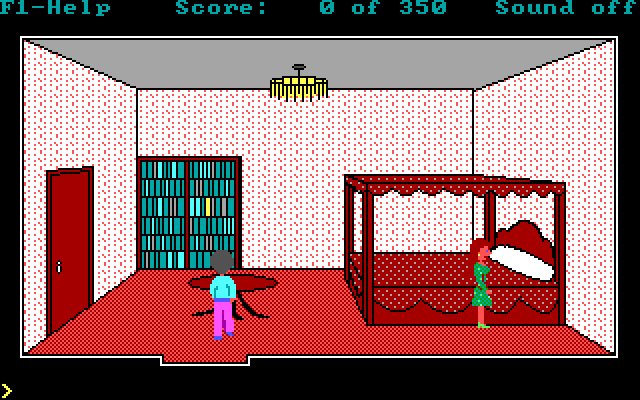
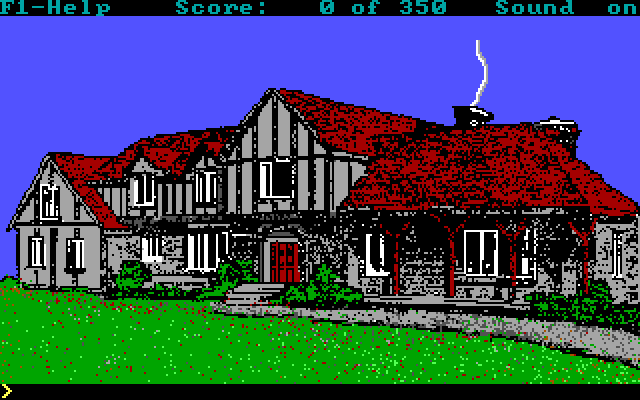
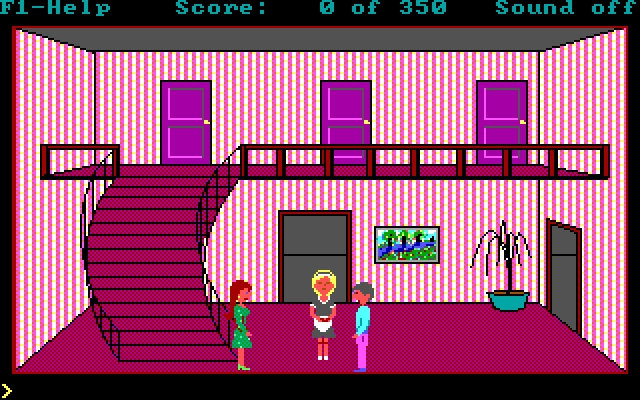
Visually, Hugo II: Whodunit? embraces the charming simplicity of early ’90s adventure games. The graphics are built on an AGI-style engine, featuring a modest palette and blocky sprites that convey character and setting with surprising clarity. Each room in Uncle Horace’s mansion is drawn with carefully placed props—bookshelves, oil paintings, flickering chandeliers—that set a suitably mysterious, atmospheric tone.
Character animations are limited to a few frames, but they manage to communicate essential actions: Penelope’s inquisitive glance, Hugo’s flustered pacing in the hidden room, and Uncle Horace’s final, fateful gesture. Background details, such as the ornate wallpaper patterns and the grainy wood-panel floors, evoke a classic whodunit vibe and create an immersive environment for sleuthing.
While you won’t find photo-realistic textures or dynamic lighting effects here, the game’s retro aesthetic has its own appeal. The pixel art style feels warm and nostalgic, reminding players of simpler times when imagination filled in the gaps left by low resolution. For fans of vintage adventure games, Hugo II’s visuals hit just the right note between clarity and period charm.
Story
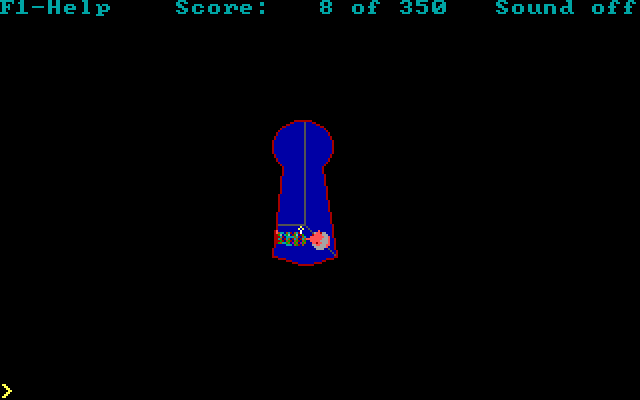
The narrative kicks off with a simple premise: Penelope wakes to see her great-uncle murdered through a keyhole. From that moment, the plot unfolds like a classic detective novel, complete with locked rooms, hidden passages, and a house full of potential suspects. Every nook and cranny of the mansion holds a new twist, and no one is above suspicion.
Characterization is concise but effective. Penelope is determined and resourceful, Hugo is bumbling yet endearing, and the supporting cast—from the dour butler to the mysterious housekeeper—each brings a unique shade of suspicion to the proceedings. Dialogues and written notes scattered throughout the mansion flesh out backstories and motives, making each revelation feel earned.
Pacing is one of Hugo II’s strongest suits. The murder is solved in stages: initial evidence gathering, suspect interviews, puzzle-driven breakthroughs, and a final dramatic confrontation. Throughout, the game rewards keen observation and logical deduction rather than brute-force guesswork. By the time the culprit is unmasked, you’ll feel like a bona fide detective, having pieced together clues across multiple rooms and timeframes.
Overall Experience
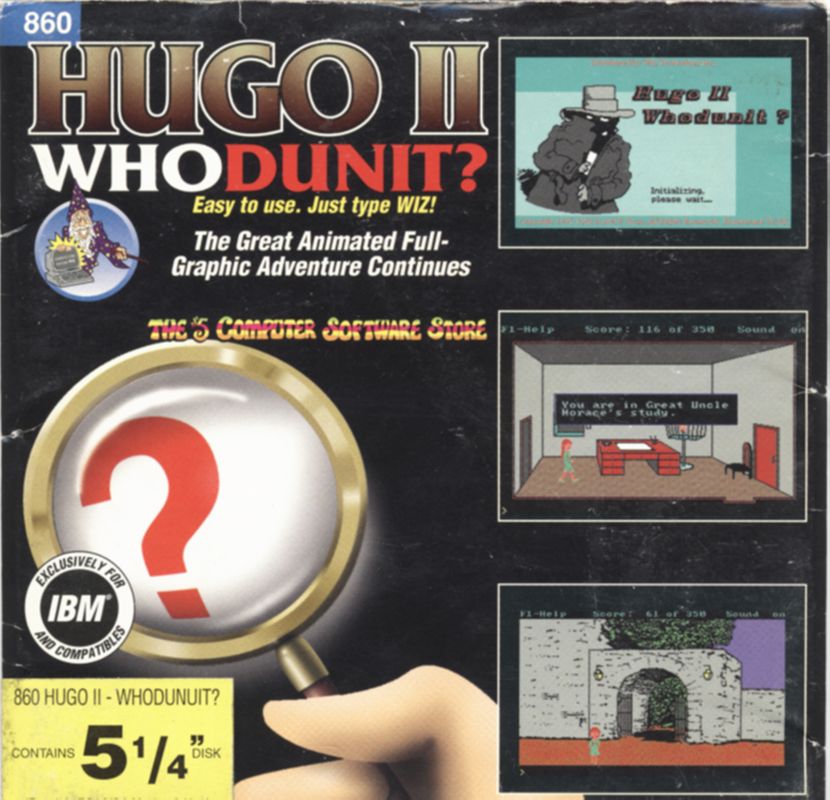
Hugo II: Whodunit? offers an engaging blend of classic adventure-game mechanics and a captivating murder-mystery plot. The interplay between exploration, puzzle-solving, and storytelling keeps the experience dynamic from start to finish. Even occasional parser quirks feel like part of the retro charm rather than a design flaw.
The game’s relatively short length makes it an ideal weekend mystery: you can dive into the manor, follow every suspicious lead, and reach the dramatic finale without feeling overwhelmed. Replay value comes from experimenting with different command approaches, uncovering every hidden passage, and teasing out optional dialogues you might have missed on your first playthrough.
Whether you’re a longtime fan of Hugo’s adventures or new to the series, Whodunit? stands as a delightful testament to early adventure-game design. Its blend of atmospheric graphics, clever puzzles, and engrossing narrative ensures that, even decades later, the game remains a satisfying whodunit worth investigating.


Reviews
There are no reviews yet.