 Retro Replay Retro Replay gaming reviews, news, emulation, geek stuff and more!

Retro Replay Review
Gameplay
Martian Memorandum refines the classic point-and-click structure established by its predecessor, focusing squarely on investigation and dialogue rather than action or flight sequences. Players take on the role of Tex Murphy, navigating a series of interconnected locations on Mars, from bustling domed cities to dusty outposts. The verb menu interface—Walk, Look, Use, Talk, and Inventory—remains intuitive, allowing both veterans and newcomers to dive straight into the mystery without a steep learning curve.
(HEY YOU!! We hope you enjoy! We try not to run ads. So basically, this is a very expensive hobby running this site. Please consider joining us for updates, forums, and more. Network w/ us to make some cash or friends while retro gaming, and you can win some free retro games for posting. Okay, carry on 👍)
Interrogation and choice drive every encounter. Tex’s success hinges on asking the right questions, presenting evidence at pivotal moments, and determining which leads merit further pursuit. Unlike many adventures of its era, wrong decisions can close off entire branches of the plot or even trigger an untimely game over. This risk-reward balance keeps players alert and invested, as each dialogue option carries weight and can reshape the investigation’s course.
Object‐based puzzles are present but used sparingly; the emphasis is squarely on uncovering information rather than inventory juggling. When puzzles do arise, they’re logical extensions of the narrative—repairing a broken power converter or decrypting a security panel feels organic, not tacked on. A helpful hint system can be toggled on for those who prefer a gentler experience, but purists can opt out and hunt for every clue on their own.
Graphics
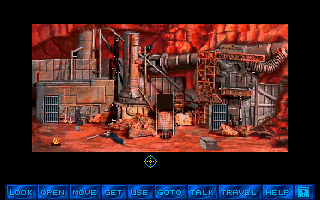
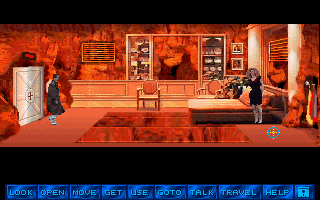
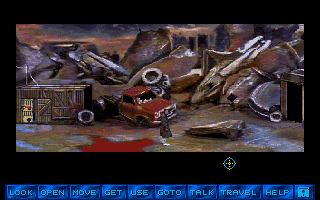
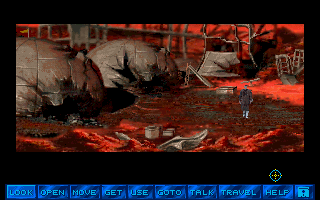
Using 256-color VGA visuals, Martian Memorandum presents a striking vision of a near-future Mars. The environments, though pixelated by today’s standards, are richly detailed: neon-lit arcades pulse with life, while the crimson hue of Martian plains evokes a constant sense of alien desolation. Backgrounds are hand-painted, lending each scene a distinct mood that reinforces Tex’s solitary quest through a half-terraformed world.
Character portraits and cut-scene animations leverage full-motion video techniques, giving NPCs expressive faces and Tex a gravelly monologue that brings the detective’s personality to life. While motion quality can feel choppy, the performances are earnest and often wryly humorous, grounding the player in a gritty sci-fi noir atmosphere. Subtle touches—like the flicker of a malfunctioning overhead light or the slow rotation of a Martian terraforming rig—add ambience and depth to every locale.
Although the frame rate dips occasionally during more elaborate scripted sequences, sound design compensates with layered effects: the hum of life support systems, distant machinery, and the echo of Tex’s footsteps in cavernous industrial corridors. The minimalist musical score underscores tense dialogues without ever overwhelming them, ensuring the visuals and voice work remain the story’s focal point.
Story
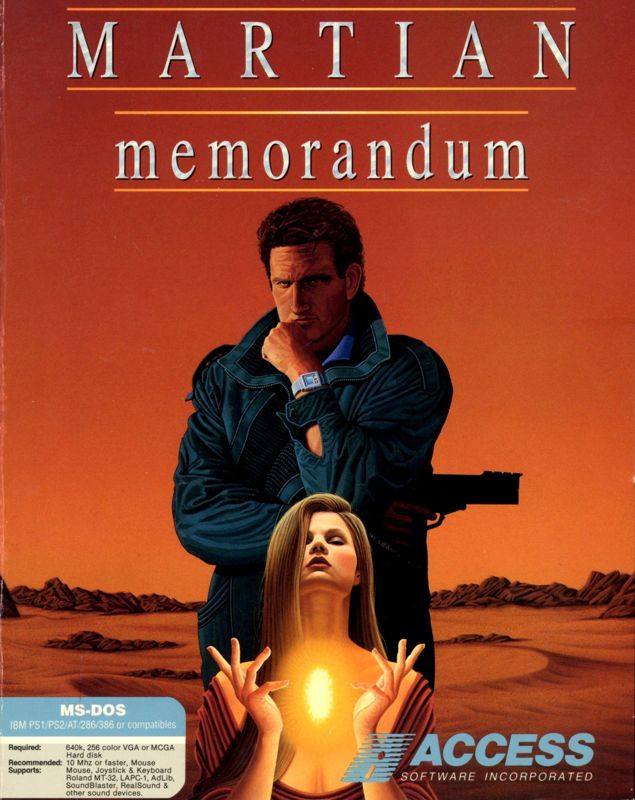
Picking up six years after Mean Streets, Martian Memorandum finds Tex Murphy down on his luck—broke, disillusioned, and desperate for a case that will pull him back from the brink. When Marshall Alexander, a powerful Martian industrialist, hires him to locate his missing daughter Alexis, Tex quickly discovers that more than one secret lies buried beneath the red dust. What begins as a simple missing-persons case escalates into a web of corporate espionage and political intrigue.
The narrative is driven by memorable characters, each with their own motivations and hidden agendas. Alexis herself evolves from passive missing person to key player, while Marshall’s cold pragmatism hints at darker forces at play. Tex’s snarky one-liners and world-weary narration provide both levity and exposition, ensuring the pacing never drags despite the intricate plot threads.
Branching conversations and multiple endings give the story replay value. Players who bulldoze through suspects without gathering all the evidence may find dead ends or premature conclusions, while more meticulous investigators can unlock hidden scenes and alternative resolutions. This layered approach rewards patience and curiosity, anchoring Martian Memorandum as a standout in narrative-driven gaming.
Overall Experience
Martian Memorandum stands as a testament to classic adventure design, balancing cerebral puzzles with character-driven storytelling. Its decision to remove action-based sequences in favor of pure investigation pays dividends, inviting players to think their way through mysteries rather than rely on reflexes. The result is a cohesive, immersive experience that places Mars itself at the heart of the narrative.
While some modern gamers may balk at the occasional dead-end and the dated visuals, those who embrace its retro charm will find a richly rewarding detective yarn. The blend of sultry noir aesthetics and futuristic world-building creates an atmosphere uniquely its own, offering a glimpse into an alternate future that feels grounded and lived-in.
For fans of adventure gaming and noir mysteries, Martian Memorandum remains a must-play. It may not boast the technical polish of today’s blockbusters, but its strengths lie in its writing, its compulsively playable interfaces, and its memorable lead in Tex Murphy. If you’re seeking a thoughtfully paced mystery with genuine consequences for your choices, this Martian journey is well worth booking passage for.


Reviews
There are no reviews yet.