 Retro Replay Retro Gaming History, Reviews & Emulation
Retro Replay Review
Gameplay
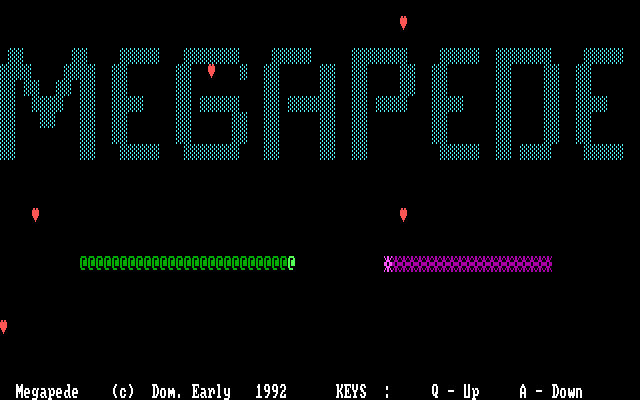
Megapede gets moving immediately. You have a base, four-direction movement, missiles, and an enemy that is already working its way down toward you. At first, picking off each megapede segment seems wonderfully clean: one shot, one segment gone. Then the field starts to matter. The creature uses screen edges and bunkers to change its route, and suddenly standing still to line up a shot becomes a bad habit.
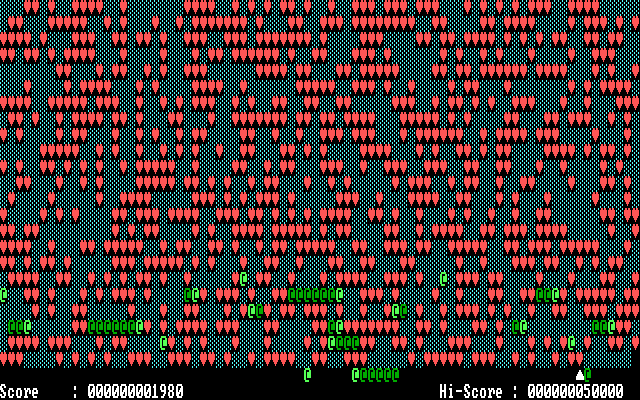
The grow pills are where the game earns its tension. A segment dies in a single hit, but each pill needs ten, so you constantly have to judge whether to spend precious shots limiting the megapede’s growth or focus on the body before it gets too low. Bunkers create the same nasty choice. They take ten shots to remove, interfere with your fire, and help speed the descent, so clearing them can be necessary without ever feeling comfortably safe.
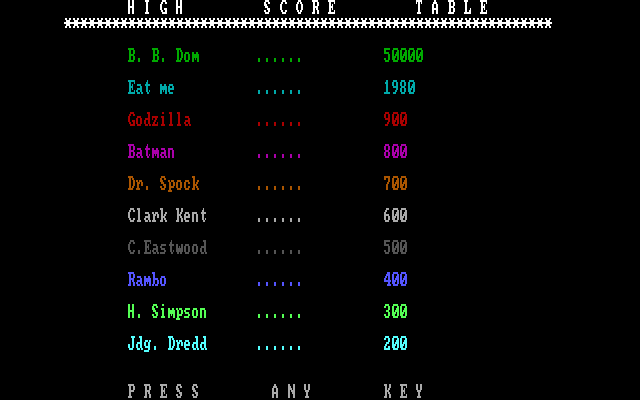
The spider makes that pressure less predictable by scurrying across the field and leaving more grow pills behind. Since contact with it also ends the game, Megapede asks you to track several immediate threats while preserving room to move. With only one life, the first hour can feel harsh, especially when a crowded lower screen turns a small mistake into an instant ending. But that severity gives a decent run real weight, and the high-score table supplies the right kind of old-school reason to go again.
Graphics
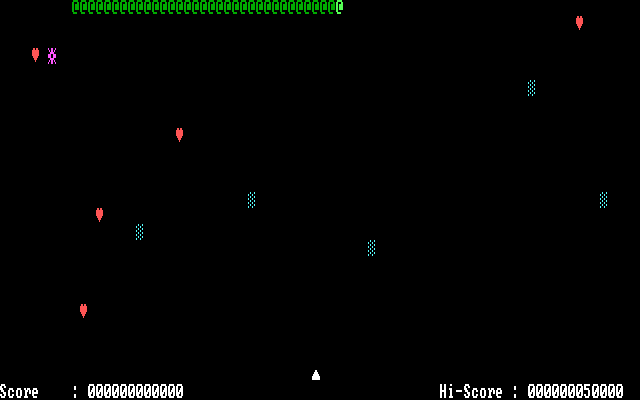
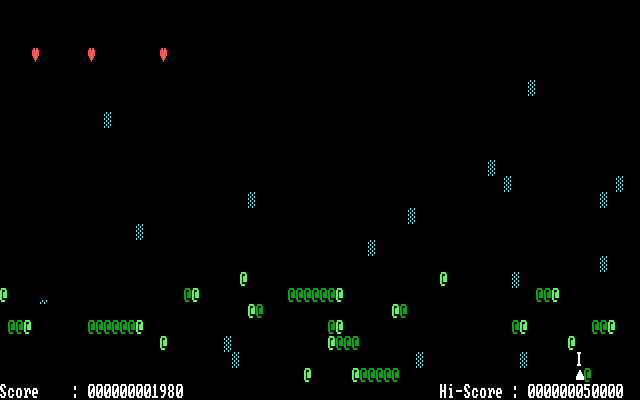
Everything is drawn in ASCII, giving Megapede a stark DOS-terminal look. The base, crawling megapede, bunkers, pills, and spider are reduced to text characters, so this is a game you read at a glance rather than admire for detailed artwork. That stripped-down view suits the action: incoming hazards and your firing lanes stay easy to parse when the board gets crowded.
Story
Megapede tells its story in pure arcade shorthand: a growing creature is coming down the screen, and your base has to survive it. You are not asked to absorb a premise before playing; the danger appears in the playfield and the objective is immediately clear.
The growing pills give the conflict a small but effective sense of escalation. They turn the megapede from a fixed target into a threat you must manage, while the bunkers make the battlefield itself feel hostile rather than neutral.
That bare setup is enough for a score-chaser. The tension comes from watching the enemy’s route bend lower and lower, knowing that a touch ends the run. If you need characters or a developed plot to stay invested, this will feel thin; if you enjoy a game that communicates everything through mounting pressure, it does the job.
Overall Experience
Megapede is a compact, demanding Centipede-style arcade game that understands why the formula works. It starts with direct shooting, then adds enough competing priorities—segments, pills, bunkers, and the spider—to make your decisions under pressure matter. The rules are simple, but the field can become surprisingly awkward in a hurry.
Its biggest strength is also its limitation. A single life makes each run sharp and meaningful, yet it leaves little room to learn through recovery. You will either appreciate the immediate restart-and-improve rhythm or find that a sudden loss cuts a promising attempt short before it has time to build.
Give it a chance if you like stripped-down arcade games built around scores, positioning, and quick threat assessment. The ASCII look and unforgiving structure make it feel distinctly of its DOS era, but the escalating-board tension still lands. It is not deep in the modern sense; it is focused, mean, and satisfying when you finally keep the lower half of the screen under control.


Reviews
There are no reviews yet.