 Retro Replay Retro Gaming History, Reviews & Emulation


Retro Replay Review
Gameplay
O-Pong starts with an instantly familiar challenge: put the puck in the other goal before it gets past you. Your paddle is both your striker and your last line of defense, so even a short match asks you to judge when to push forward and when to stay home. That back-and-forth is the whole game, and it is a sturdy foundation.
The first-to-three format keeps rounds brisk. A single goal changes the pressure immediately, especially when you are one point from losing. There is no lengthy buildup before the match becomes competitive; you can sit down, understand the objective, and be reacting to the puck within moments.
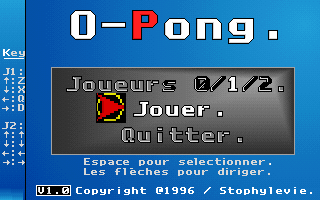
Two-player play is the reason to return. Against another person, every attempt to score leaves an opening to exploit, and the basic air-hockey rules become a small contest of nerve and positioning. The CPU mode is useful when you want a solo round, but the game naturally feels more alive when somebody is on the other side of the table.
Its limitation is equally obvious: O-Pong is narrowly focused. If you want a game that develops beyond its central match, the repeat loop will feel thin quickly. But if a clean, short paddle-versus-puck duel sounds like enough, it wastes none of your time getting there.

Graphics
The top-down view puts the table, goals, paddle, and puck in front of you without clutter. For a game built around fast positional decisions, that straightforward angle makes it easy to see where the puck is headed and how much goal you have left exposed.

Story
O-Pong does not lean on a narrative to give its matches meaning. The score itself supplies the tiny drama: an early lead feels comfortable until the other side pulls even, and the final point becomes the whole focus.
That stripped-down approach fits the arcade air-hockey setup. You are not being asked to invest in characters or a larger conflict; the contest begins when the puck is in play and ends when someone reaches three.
As a result, the game’s only real tension comes from competition. Bring a friend who enjoys settling a score in a few minutes, and that is enough context for the match to matter.
Overall Experience
O-Pong is a small, direct air-hockey game whose value rests on how much you enjoy its one-on-one exchange. It understands the basic pleasure of batting a puck toward a goal while scrambling to protect your own, and it keeps the match length short enough that a rematch is always tempting.
You should give it a chance if you want a no-frills DOS paddle game or a quick local duel. The CPU makes it playable alone, but a second human turns its simple rules into a sharper contest of timing, restraint, and opportunism.
The payoff is modest but honest. O-Pong does not have the breadth to hold your attention for long sessions, yet it can fill a few competitive minutes nicely when all you want is an immediate game of digital air hockey.


Reviews
There are no reviews yet.