 Retro Replay Retro Gaming History, Reviews & Emulation
Retro Replay Review
Gameplay
The first few minutes of Railway Challenge can fool you into thinking you are settling in for a quick track-laying race. Connect City A to City B before two AI opponents do: clear enough. But the track itself is only the visible end of a larger chain. You need the infrastructure that lets construction happen, from energy supply and material transport to the locomotives needed for the work, and you arrange those pieces by contracting specialist enterprises.
That extra layer is where the game earns its name. You are not simply drawing the shortest line across a map; you are keeping an industrial plan from developing a costly weak point while rivals work toward the same finish. It gives the race useful tension, because a good route means little if your supporting arrangements are not ready to carry it through. The strategic satisfaction comes from seeing these dependencies click into place, not from the basic act of laying rail.
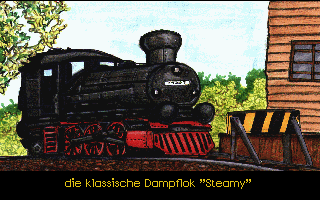
The three locomotive types add welcome variation to the planning. Choosing electric, steam, or diesel slightly changes what your project requires, so the scenarios do not all collapse into exactly the same solution. With 15 scenarios to tackle, there is enough room for the central idea to develop. Frustration will set in if you want immediate, hands-on train action: this is a managerial game that asks for patience with its chain of decisions. For someone who enjoys being pressured into making a practical plan rather than merely admiring a rail network, that trade is worthwhile.
Graphics
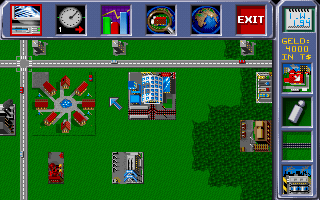
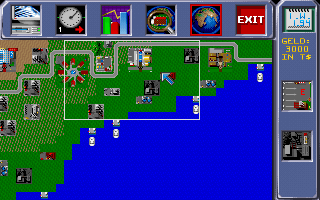
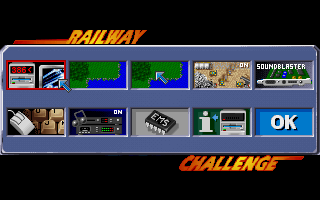
Railway Challenge is shown through an overhead map populated by abstract symbols, with separate menu screens for the individual companies you contract. You are looking at a functional planning board rather than trains rolling through detailed landscapes.
That plain view fits the task well enough: it keeps attention on routes, companies, and requirements. It is unlikely to charm you on looks alone, but the map makes sense for a game built around organizing a railway project.
Story
This is a scenario-driven contest rather than a character-led railway tale. Each setup gives you the same useful dramatic hook: two cities need a rail connection, two competing AI builders want to get there first, and your decisions determine whether your company wins the race.
The real narrative is the escalation of responsibility. What begins as a route-planning job becomes a series of business decisions about how to support construction. That is a modest premise, but it gives the management layer a purpose beyond simply making numbers go up.
Across 15 scenarios, the game leaves room for the situations themselves to provide momentum. You are unlikely to remember Railway Challenge for personalities or plot twists; you will remember the pressure of trying to turn an organized plan into a finished connection before the competition does.
Overall Experience
Railway Challenge is a focused, dry little strategy game with more depth than its simple goal suggests. Its strongest idea is that rails do not appear by magic: building them means organizing the power, materials, companies, and engines behind the project. That makes every successful connection feel earned.
The catch is that nearly all of this happens through menus and symbolic maps. If you need animation, detailed scenery, or the romance of operating trains, the game will feel remote. Its pleasures are administrative and tactical: comparing requirements, choosing a direction, and staying ahead of rival builders.
Give it a chance if a tightly bounded business puzzle sounds better than a train simulator. The AI race stops the management from becoming a leisurely spreadsheet exercise, while the locomotive choices and scenario set give repeat plays a reason to change course. It is not flashy, but its logistical challenges have a pleasingly stubborn edge.


Reviews
There are no reviews yet.