 Retro Replay Retro Replay gaming reviews, news, emulation, geek stuff and more!


Retro Replay Review
Gameplay
The first few minutes make the game’s purpose clear: it wants to get a child clicking, looking, listening, and making simple connections without burying them in complicated rules. Each of its six activities tackles a different early-learning skill, which is a smart structure for younger kids with limited patience. If one task fails to hold attention, there is another room and another kind of question close by.
The ABC Bathroom is the most direct literacy work, asking you to match letters to build puzzles and recognize them through sound and sight. That is straightforward, but it is exactly the sort of repetition that can help letters start to stick. The Music Pond broadens the routine with hidden animals, musical sounds, a critter concert, and sing-along elements. It gives the game a welcome break from letter drills while still asking children to pay attention with their ears.
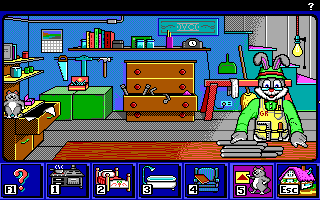
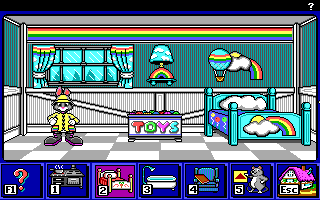
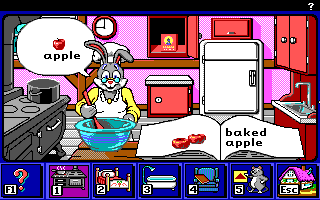
Elsewhere, Grandma’s Kitchen turns storage spaces and ingredients into memory exercises, while the Mix-and-Match Bedroom leans on themes and patterns. Grandpa’s Workshop asks for increasingly fine comparisons between objects by shape, size, and color. None of these activities needs a complicated premise to work; their value comes from making a child notice, recall, and compare. Adults should expect to sit nearby at first, particularly when an activity asks for a sound or a more precise comparison, but the bite-sized format is well suited to shared play.
Graphics
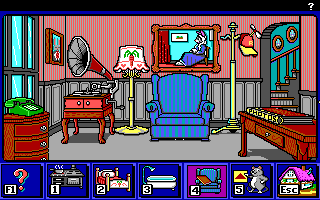
The game is built around familiar child-friendly places: a pond, kitchen, bedroom, bathroom, picture parlor, and workshop. That concrete setup matters for its youngest audience, because letters, ingredients, toys, photos, and objects are tied to places a child can readily understand rather than floating in an abstract worksheet.
Story
There is no large adventure pulling you from one dramatic beat to the next. Reader Rabbit, Grandma, and Grandpa instead serve as friendly anchors for a collection of lessons, with the critter concert adding a little playful character to the music activity.
That light framing is appropriate. A four- or five-year-old does not need a complicated plot before being asked to find an ingredient or identify a letter; they need to understand where they are and what they are doing. The named rooms provide that context quickly.
If you are looking for more of the character’s earlier educational roots, the original Reader Rabbit is useful series context. Ready for Letters feels narrower and more early-childhood-focused, using its household spaces as a simple route between language, listening, memory, and comparison exercises.
Overall Experience
Reader Rabbit’s Ready for Letters earns its place when you treat it as a patient practice box rather than a traditional game. Its variety is the key strength: a child can hear sounds at the pond, work with letters in the bathroom, then switch to objects and patterns before the repetition becomes too stale. That rhythm gives the program more staying power than a single-purpose alphabet exercise.
It will not suit an older child who has already moved beyond basic letter recognition and simple comparisons. For a beginner, though, the tasks target useful foundations without forcing every lesson into the same mold. The kitchen’s recall questions, the bedroom’s pattern matching, and the workshop’s shape, size, and color comparisons all reinforce the habit of looking closely.
The payoff is modest but real: a young learner gets repeated, low-pressure contact with skills that lead into reading and classroom readiness. It is most worth revisiting in short sessions, with an adult ready to encourage rather than take over. For game-specific background, see the Reader Rabbit’s Ready for Letters history; for families with a child at the intended stage, this remains a thoughtfully varied early-literacy companion.


Reviews
There are no reviews yet.